Natufian culture
24
MENTIONS
12
EPISODES
10
PODCASTS
Search complete. 24 mentions across 12 episodes found for "Natufian culture".
Sep 22, 2026

Herman PoppleberryHOST
Intentional burial goes back about 120,000 years.
Herman PoppleberryHOST
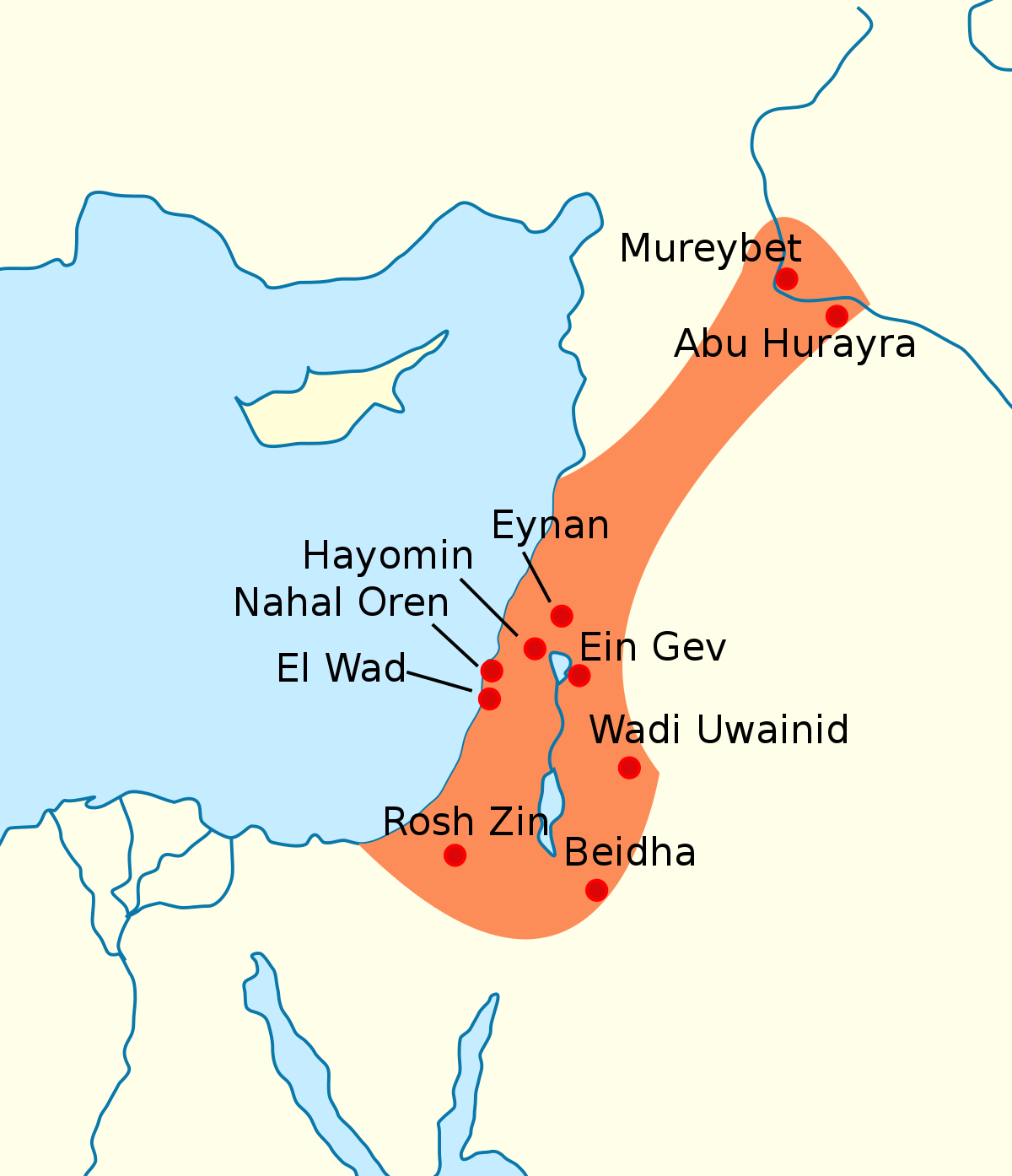
The interesting leap is the Natufian culture in the Levant roughly 15,000 years ago.
Herman PoppleberryHOST
They built stone-constructed graves and designated burial sites.
Herman PoppleberryHOST
That's the earliest evidence of people putting real effort and resources into a grave.

Ruth FreemanSOUNDBITE_SPEAKER
It does, and quite considerably, because if we go back and look at the first evidence of brewing, I mean, that comes from about 13,000 years ago.
Ruth FreemanSOUNDBITE_SPEAKER
So the first evidence is from modern day Israel and from this group of people called the Natufian hunter-gatherers.
Ruth FreemanSOUNDBITE_SPEAKER
And they were interesting because they were hunter-gatherers, but they were sort of semi-settled as well.
Ruth FreemanSOUNDBITE_SPEAKER
And in that cave, they found evidence of brewing.

Dion GinesNARRATOR
This is especially so because the animal bones the archaeologists find are usually fragmentary.
Dion GinesNARRATOR
furthermore we do not have a sort of library collection of the skeletons of the animals or an herbarium of the plants of those times against which the traces which the archaeologists find may be checked we are only beginning to get such collections for the modern wild forms of animals and plants from some of our nuclear areas in the nuclear area in the near east some of the wild animals at least have already become extinct there are no longer wild cattle or wild horses in western asia we know they were there from the finds we've made in caves of late ice age times and from some slightly later sites sites with antiquities of the incipient era so far we know only a very few sites which would suit my notion of the incipient era of cultivation and animal domestication i am closing this chapter with descriptions of two of the best near eastern examples i know of you may not be satisfied that what i am able to describe makes a full-bodied era of development at all remember however that i've told you i'm largely playing a kind of a hunch and also that the archaeological materials of this era will always be extremely difficult to interpret at the beginning of any new way of life there will be a great tendency for people to make do at first with tools and habits they are already used to i would suspect that a great deal of this making do went on almost to the end of this era the natufian an assemblage of the incipient era the assemblage called the natufian comes from the upper layers of a number of caves in palestine traces of its flint industry have also turned up in syria and lebanon we don't know just how old it is i guess that it probably falls within five hundred years either way of about five thousand b c until recently the people who produced the natufian assemblage were thought to have been only cave-dwellers but now at least three open-air natufian sites have been briefly described in their best known dwelling-place on mount carmel the natufian folk lived in the open mouth of a large rock shelter and on the terrace in front of it on the terrace they had set at least two short curving lines of stones but these were hardly architecture they seemed more like benches or perhaps the low walls of open pens there were also one or two small clusters of stones laid like paving and a ring of stones around a hearth or fireplace one very round and regular basin-shaped depression had been cut into the rocky floor of the terrace and there were other less regular basin-like depressions in the newly reported open-air sites there seems to have been huts with rounded corners most of the finds in the natufian layer of the mount carmel cave were flints about eighty per cent of these flint tools were microliths made by the regular working of tiny blades into various tools some having geometric forms the larger flint tools included backed blades burrons scrapers a few arrow points some larger hacking or picking tools and one special type this last was the sickle blade we know a sickle blade of flint when we see one because of a strange polish or sheen which seems to develop on the cutting edge when the blade has been used to cut grasses or grain or perhaps reeds in the natufian we even have found the straight bone handles in which a number of flint sickle blades were set in a line there was a small industry in ground or pecked stone that is abraded not chipped in the natufia this included some pestle and mortar fragments the mortars are said to have a deep and narrow hole and some of the pestles show traces of red ochre we are not sure that these mortars and pestles were also used for grinding food in addition there were one or two bits of carving in stone natufian antiquities in other materials burials and people the natufian industry in bone was quite rich it included beside the sickle hafts mentioned above points and harpoons straight and curved types of fish-hooks awls pins and needles and a variety of beads and pendants There were also beads and pendants of pierced teeth and shell.
Dion GinesNARRATOR
A number of Natufian burials have been found in the caves.
Dion GinesNARRATOR
Some burials were grouped together in one grave.
Dion GinesNARRATOR
The people who were buried within the Mount Carmel cave were laid on their backs, in an extended position, while those on the terrace seem to have been flexed, placed in their graves in a curled up position.
Dion GinesNARRATOR
this may mean no more that it was easier to dig a long hole in cave dirt than in the hard-packed dirt of the terrace the people often had some kind of object buried with them and several of the best collections of beads come from the burials on two of the skulls there were traces of elaborate head-dresses of shell beads the animal bones of the natufian layers show beasts of a modern type but with some differences from those of present-day palestine the bones of the gazelle far outnumber those of the deer since gazelles like a much drier climate than deer palestine must then have had much the same climate that it has to-day some of the animal bones were those of large or dangerous beasts the hyaena the bear the wild boar and the leopard but the natufian people may have had the help of a large domesticated dog if our guess at a date for the natufian is right about seven thousand seven hundred fifty b c this is an earlier dog than was that in the maglamosian of northern europe more recently it has been reported that a domesticated goat is also part of the natufian finds the study of the human bones from the natufian burials is not yet complete until professor mccown's study becomes available we may note professor coon's assessment that these people were of a basically mediterranean type the karim shahir assemblage Karim Shahir differs from the Natufian sites in that it shows traces of a temporary open site or encampment.
Dion GinesNARRATOR
It lies on the top of a bluff in the Kurdish hill country of northeastern Iraq.
Dion GinesNARRATOR
It was dug by Dr. Bruce Howe of the expedition I directed in 1950-51 for the Oriental Institute and the American Schools of Oriental Research.

speaker_6NARRATOR
They were just hunter-gatherers who had found such a reliable food source that they didn't need to move anymore.
speaker_6NARRATOR
Archaeologists call this the Natufian culture, named after the Wadi an-Natuf cave in Israel where it was first identified.
speaker_6NARRATOR
The Natufians lived in permanent villages, but they were harvesting wild plants, not cultivated ones, and they were harvesting a lot of them.
speaker_6NARRATOR
Archaeological sites show massive stone mortars for grinding grain, storage pits lined with plaster, even the earliest evidence of beer making.
speaker_6NARRATOR
These people had figured out how to process wild grains so efficiently that they could support permanent settlements of unprecedented size.

Ruth FreemanGUEST
Yeah, it does, and quite considerably, because if we go back and, and look at the first evidence of brewing, I mean, that comes from about 13,000 years ago.
Ruth FreemanGUEST
So the first evidence is from modern-day Israel, um, from this group of people called the Natufian hunter-gatherers.
Ruth FreemanGUEST
And they were interesting 'cause they were hunter-gatherers, but they were sort of semi-settled as well.
Ruth FreemanGUEST
And in that cave, they found evidence of brewing.
speaker_0NARRATOR
These people call themselves something we'll never know.
speaker_0NARRATOR
Archaeologists call them the Natufians, and they were about to accidentally invent a completely new way of being human.
speaker_0NARRATOR
Here's what made the Natufians different.
speaker_0NARRATOR
They didn't immediately start farming.
speaker_0NARRATOR
They didn't wake up one morning and decide to plant crops.
speaker_0NARRATOR
Gazelle herds migrated through the same valleys every spring and fall, predictable as clockwork.
speaker_0NARRATOR
Fish filled rivers that had been dry during the glacial period.
speaker_0NARRATOR
So the Natufians started building structures that were meant to last.

Giselle KiralyHOST
This is a long time before we previously thought people had harnessed cereal grain production.
Giselle KiralyHOST
The oldest bread ever discovered, by the way, was also Natufian.
Giselle KiralyHOST
It was found in modern-day Jordan and dated to between 14,600 and 11,600 years ago.
Giselle KiralyHOST
So this beer might be older than it.

Darren MarlarHOST
Her age is part of what leads scientists to believe she may have been accused of witchcraft, since women of the time who lived past the age of 40, the average life expectancy of the period, were thought to have dabbled in the dark arts to extend their length of life and cheat death.
Darren MarlarHOST
recently discovered in a tomb in northern Israel, was the body of a 12,000-year-old woman believed to be a witch or Shi shaman dating from the prehistoric Natufian civilization.
Darren MarlarHOST
Within the tomb, archaeologists found 50 complete tortoise shells, the pelvis of a leopard, the wingtip of a golden eagle, the tail of a cow, two marten skulls, the forearm of a wild boar, and a human foot.
Darren MarlarHOST
Curiously, the woman had been covered by ten heavy stones designed to protect the body from wild animals.

James EllisHOST
Ancestor veneration in some form, offerings to the dead, communication with the dead, integration of the dead into family life, uh, calendar observances of the dead, inclusion of the dead in big decisions is found in the overwhelming majority of pre-modern societies.
James EllisHOST
It's found everywhere around the world, across all languages, across all systems, and across all boundaries of major religious traditions.
James EllisHOST
Okay? It's found in the oldest and sort of deepest archeology that we can read and understand, and all the way back to Neanderthals actually burying their dead with grave goods and the T- the Natufians of the Levant twelve thousand years ago, keeping the skulls of their ancestors plastered with clay.
James EllisHOST
Okay? Um, alongside this, we have, uh, the early Chinese, uh, leaving elaborate sort of offerings to named ancestors, the people of the Andes preserving their honored dead as mummies.
James EllisHOST
Of course, we've got the Egyptians that built, uh, one of the most elaborate ancestor worship systems in human history, uh, with practices that kind of continued and then mutated through to the Christian period.

TitusHOST
I mean, well, let's, let's talk about it.
TitusHOST
So we have the Natufians.
TitusHOST
Um, they were, like, somewhere in Is- or, like, you know, the, uh, Israel, Holy Land area.
TitusHOST
And in some of their caves, we've found evidence of beer brewing about 13,000 years ago.
2 more episodes mention Natufian culture.
Create an account to see the whole feed, search across every transcript, and follow the entities you care about.