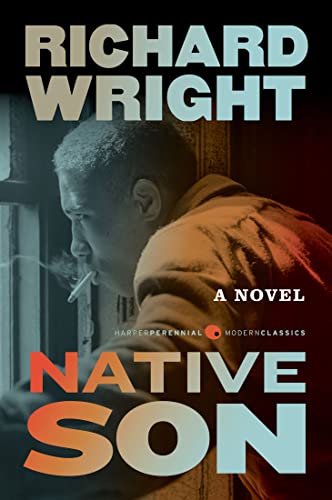
Native Son
Novel by Richard WrightWikipedia
22
MENTIONS
11
EPISODES
10
PODCASTS
Search complete. 22 mentions across 11 episodes found for "Native Son".
Oct 7, 2026

speaker_3HOST
Exactly.
JeanHOST
Now contrast that with Richard Wright's Native Son, set in 1930 Chicago.
JeanHOST
The main character, Bigger Thomas, has the opposite problem of invisibility.
speaker_3HOST
He does.
speaker_3HOST
Native Son deals with hypervisibility, but strictly through the lens of dangerous prejudiced expectations.
speaker_3HOST
Bigger Thomas is trapped in a claustrophobic systemic cycle of extreme poverty and racial violence.
JeanHOST
And Wright doesn't pull any punches with his protagonist.
speaker_3HOST
Yes.

Uncle TrillPANELIST
that Richard Wright book? The famous Richard Wright book.
Uncle TrillPANELIST
Native Son.
Uncle TrillPANELIST
That's what Child of the Ghetto, that's the 99, 2000, 2001 version of Native Son.
Uncle TrillPANELIST
This is a nigga from the ghetto that's telling that story.
Uncle TrillPANELIST
He told his whole life from 89 up until the point.

Patrick DubuqueHOST
I'm going to take a minute to recover from that.
Patrick DubuqueHOST
Okay, well, I have been reading, I've been listening to the audiobook for Native Son by Richard Wright.
Patrick DubuqueHOST
I have now done listening to the audiobook for Native Son by Richard Wright.
Patrick DubuqueHOST
I spent, I would say, the first half of my experience of that basically increasingly dreading the idea of reading that book to the point where I like my wife would be like, can you go to the store and pick something up? And I'd be like, no, I don't want to.
Patrick DubuqueHOST
Cause then I would have to listen to my audio.

Corey BrennanGUEST
I'm big on speaking up on yourself.
Corey BrennanGUEST
Overall, book I'm reading right now, Native Son.
Corey BrennanGUEST
If you haven't read that, pretty good book.
Corey BrennanGUEST
I'm not big on fiction, honestly.

Amy HungerfordHOST
This is pretty much exactly what happened to Richard Wright in 1944.
Amy HungerfordHOST
So, he had published Native Son in 1940 to great acclaim, very successful novel.
Amy HungerfordHOST
In 1944, he completed Black Boy, then called American Hunger, and he had placed it with Harper and Brothers Publishing Company in New York, and they were very happy with it.
Amy HungerfordHOST
It had a first part called and a second part called The Horror and the Glory.
7 MINS LATER
Amy HungerfordHOST
So, what is autobiography? What is this genre that Wright is working with? It raised these kinds of questions on the one hand, but then there was another kind of question, and that was coming from the other side.
Amy HungerfordHOST
This is what William Faulkner wrote to Wright upon reading He said, the good lasting stuff comes out of one's individual imagination and sensitivity to and comprehension of the sufferings of every man, any man, not out of the memory of one's own grief.
Amy HungerfordHOST
I hope you will keep on saying it, but I hope you will say it as an artist, as in Native Son.
Amy HungerfordHOST
So, Faulkner's objection is on the other side.

Jason MylesHOST
The rule is that these people born into poverty have a pathology." You know who well said that? Richard Wright.
Jason MylesHOST
That's basically what Native Son is about.
Jason MylesHOST
These people born into immense poverty for generations will produce A pathological spawn that you can do nothing with.
Jason MylesHOST
He called them little Eichmanns.

Darrell HughsonHOST
I guess.
Darrell HughsonHOST
Don't read Native Son? No, I mean, read Native Son because it's a classic, but only read it once because it's a lot.
Darrell HughsonHOST
I don't love Native Son.
Darrell HughsonHOST
Native Son by Richard Wright.
Elia AgudoHOST
Honestly, I got a B for Richard Wright, but that's not really for this episode.
Darrell HughsonHOST
So true, Bestie.

Jane BaldwinGUEST
So the first one, obviously we've talked at length about, The House of Mirth by Edith Wharton.
Jane BaldwinGUEST
Then My Ántonia by Willa Cather, Native Son by Richard Wright, East of Eden by John Steinbeck, Fahrenheit 451 by Ray Bradbury, Song of Solomon by Toni Morrison, The House on Mango Street by Sandra Cisneros, The Joy Luck Club by Amy Tan, The Poisonwood Bible by Barbara Kingsolver, and Braiding Sweetgrass by Robin Wall Kimmerer, which that last one is not exactly a classic, but [laughs] it's one that I've been meaning to read for a while, and also I thought it was important to include an indigenous work in my personal curriculum about American literature, so.
Anne BogelHOST
It doesn't seem too soon to call that a hugely influential American book.
Jane BaldwinGUEST
Yeah, I would agree with that-
Patrick DubuqueHOST
Also reading the most, um, excruciating book.
Patrick DubuqueHOST
Uh, I'm reading Native Son by Richard Wright.
Patrick DubuqueHOST
Uh, and, uh, it is, it's a good book.
Patrick DubuqueHOST
Boy, it's...

LernerHOST
Reading Richard Wright's Native Son is, well, it's honestly like being strapped into the passenger seat of a slow motion car crash.
speaker_1UNKNOWN
Oh, absolutely.
speaker_1UNKNOWN
A totally unavoidable
LernerHOST
Tell us a bit more about what Rampersad points out.
speaker_1UNKNOWN
So Rampersad notes an essential piece of literary history.
speaker_1UNKNOWN
Before Native Son, protest literature featuring black characters, even brilliant works by writers like W.E.B. Dubois, they tended to follow a really specific formula.
LernerHOST
Right, like the characters had to be perfect.
speaker_1UNKNOWN
Exactly.
1 more episode mentions Native Son.
Create an account to see the whole feed, search across every transcript, and follow the entities you care about.