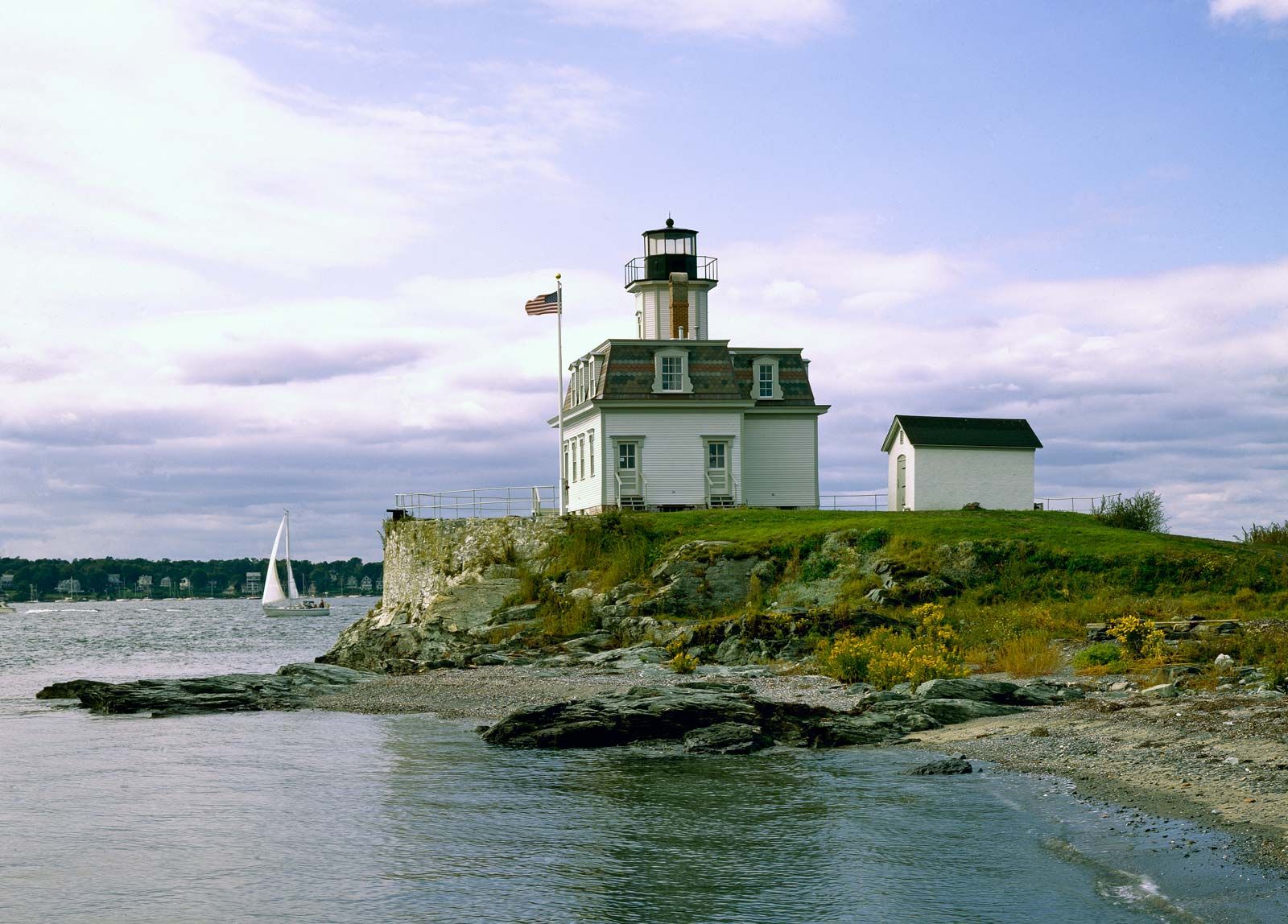
Narragansett Bay
Bay in Rhode IslandWikipedia
80
MENTIONS
30
EPISODES
28
PODCASTS
Search complete. 80 mentions across 30 episodes found for "Narragansett Bay".
Sep 24, 2026

speaker_0NARRATOR
For such variations of labor slaves are not well fitted.
speaker_0NARRATOR
Hence there were but two regions in the North where slaves were profitably employed as field hands: on Narragansett Bay and on the Hudson.
speaker_0NARRATOR
Elsewhere the negroes were housed or body servants, and slaves were rather an evidence of the master’s consequence than of their value in agriculture.
speaker_0NARRATOR
In the South, where land could be worked during a larger portion of the year and where the conditions of life were easier, slavery was profitable, and the large plantations could not be kept up without fresh importations.

Cliff BoroGUEST
So we'll see how it goes.
Bela MusitsHOST
So this is kind of neat because we have several, you're in Nantucket, I'm in Narragansett Bay.
Bela MusitsHOST
So basically we're sort of close to each other.
Bela MusitsHOST
Besides sailing, we have another sort of cross intersection here, entrepreneurship.
50 MINS LATER
Bela MusitsHOST
Let me first talk about where to keep the boat and then second, talk about the type of boat.
Bela MusitsHOST
So number one for me was close to my son and his family because sailing with family is really important to me.
Bela MusitsHOST
So I wasn't going to put the boat down in the Chesapeake Bay, which is better sailing than Narragansett Bay, at least in my opinion.
Bela MusitsHOST
But it's too long a drive for everyone.

Jacqueline RosaGUEST
I chose to specialize in chemical oceanography based off of the research that I was doing for my master's.
Jacqueline RosaGUEST
I investigated water chemistry at oyster farm sites in Narragansett Bay, which is Rhode Island's largest estuary.
Jacqueline RosaGUEST
There was also a physiological component to my work looking at some of the biology of oysters.
Jacqueline RosaGUEST
So I actually had a chemistry and biology component to my thesis work.
Jacqueline RosaGUEST
So when pH decreases, seawater becomes more acidic and shell dissolution can occur.
Jacqueline RosaGUEST
So this is concerning for calcifying organisms like lobsters, snails, scallops, to name a few, but especially for animals that we are trying to farm for food.
Jacqueline RosaGUEST
So my research monitored water quality at two oyster farms in Narragansett Bay, which has many oyster farms all throughout the estuary.
Jacqueline RosaGUEST
And we deployed sensors at the surface and bottom of the water column to collect measurements of salinity, pH, temperature, dissolved oxygen, carbon, and a few other important carbonate chemistry parameters.

speaker_20ADVERTISER
Pick up fees may apply.
Steven SeitelNARRATOR
the last of the rhode island settlements was at shawamet or warwick on the western mainland at the upper end of the bay there samuel gorton the mystic and transcendentalist one of the most individual of men in an era of striking individualities after many vicissitudes found an abiding place he was of london a clothier and professor of the mysteries of christ a believer in established authority as the surest guardian of liberty and an opponent of formalism in all its varieties arriving at boston in sixteen thirty seven at the height of the hutchinsonian controversy he had sought liberty of conscience first in boston then in plymouth and finally in portsmouth where he had become a leader after the withdrawal of coddington but in each place his instinct for justice and his too vociferous denial of the legality of verdicts rendered by self-constituted authorities led him to seek further for a home that would shelter him and his followers no sooner however was he settled at shawamet than the massachusetts authorities laid claim to the territory and it was only after arrest imprisonment and a narrow escape from the death penalty followed by a journey to england and the enlisting of the sympathies of the earl of warwick that he made good his claim gordon returned in sixteen forty eight with a letter from warwick as lord admiral and head of the parliamentary commission on plantation affairs ordering massachusetts to cease molesting him and his people and he named the plantation warwick after his patron samuel gordon played an influential and useful part in the later history of the colony and his career of peaceful service to rhode island belies the opinion based on winslow's partisan pamphlet hypocrisy unmasked and other contemporary writings that he was a blasphemer a crude and half-crazy thinker a proud and pestilent seducer and the most prodigious mentor of exorbitant novelties He preferred the university of human reason and reading of the volume of visible creation to sectarianism and convention.
Steven SeitelNARRATOR
No wonder the Massachusetts leaders could not comprehend him.
Steven SeitelNARRATOR
He questioned their infallibility, their ecclesiastical caste, and their theology, and for their own self-preservation they were bound to resist what they deemed his heresies.
Steven SeitelNARRATOR
thus rhode island at the beginning was formed of four separate and independent communities each an embryo a petty state no one of which possessed at first other than an indian title for its lands and a self-made plantation covenant as the warrant for its government to settle disputes over land titles and to dispose of town lands providence established in sixteen forty a court of arbitration consisting of five disposers who seem also to have served as a sort of executive board for the town in all outward relations she remained isolated from her neighbors pursuing a course of strictly local independence portsmouth and newport for the sake of greater strength united in march sixteen forty and a year later agreed on a form of government which they called a democratic or popular government in which none was to be accounted a delinquent for doctrine they set up a governor deputy governor and four assistants regularly elected and provided that all laws should be made by the freemen or the major part of them orderly assembled in the system thus established we can see the influence of the older colonies and the beginning of a stronger government but at best the experiment was half-hearted for each town reserved to itself complete control over its own affairs in sixteen forty seven portsmouth withdrew to be as free in their transactions as any other town in the colony and the spirit of separatism was still dominant but it soon became necessary for the four towns of what is now rhode island to have something more legal upon which to base their right to exist than a title derived from their plantation covenants and indian bargains massachusetts was extending her claim southward edward winslow was in england ready to show that the rhode island settlements were within the bounds of the plymouth patent and certain individuals traders and land seekers were locating in the narragansett country and taking possession of the soil to combat these claims roger williams who had so vehemently denied the validity of a royal patent a few years before but influenced now it may be by gorton's insistence that a legal title could be obtained only from england sailed overseas and secured from the parliamentary commissioners in march a charter uniting providence sportsmouth and newport under the name of providence plantations in the narragansett bay and granting them powers of government for the moment even this document had no certain value for in spite of the fact that the parliamentarians were at war with the king charles i was still sovereign of england and should he win in the civil war the title would be worthless however the patent was not put in force until sixteen forty seven after the victory of cromwell at naseby had given control into the hands of parliament and then a general meeting was held at portsmouth consisting of the freemen of warwick portsmouth and newport and ten representatives from providence the patent did not state how affairs were to be managed and the colonials meeting in subsequent assemblies worked out the problem in their own way they refused to have a governor and creating only a presiding officer with four assistants constituted a court of trials for the hearing of important criminal and civil causes no general court was created by law but a legislative body soon came into existence consisting of six deputies from each town before this portsmouth meeting of sixteen forty seven adjourned it adopted a code of laws in which witchcraft trials and imprisonment for debt were forbidden capital punishment was largely abolished and divorce was granted for adultery only in sixteen fifty two the assembly passed a noteworthy law against the holding of negroes in slavery but the new patent did not bring peace to the colony in sixteen forty nine roger williams wrote to governor winthrop our poor colony is in civil dissension their last meeting of the assembly at which i have not been have fallen into factions mr coddington and captain partridge etc are the heads of one and captain clark mr easton etc the heads of the other what had happened was this coddington representing the conservative and theocratic wing of the assembly and opposing those who were more liberally minded had evidently applied to massachusetts and plymouth for support in the effort to obtain an independent government for a quidneck this plan would have destroyed what unity the colony had obtained under the patent but coddington wished to be governor of a colony of his own both massachusetts and plymouth were favorable to this plan as they hoped to further their own claims to the territory of islands and mainland twice coddington made application to the newly formed confederation of new england for admission but was refused unless he would bring in a quidneck as part of massachusetts or plymouth the latter of which laid claim to it coddington himself was willing to do this but found the opposition to the plan so vehement that he gave up the attempt and went to england to secure a patent of his own after long negotiations he was successful in his quest and returned with a document which appointed him governor for life with almost viceregal powers but he had reckoned without the people whom he was to govern learning of the outcome of coddington's mission and hearing that he had had secret dealings also with the dutch at new amsterdam the inhabitants of the islands rose in revolt hanged captain partridge and compelled coddington to seek safety in flight williams again went to england in sixteen fifty one and procured the recall of coddington's commission and a confirmation of his own patent and coddington in sixteen fifty six gave in his submission and was forgiven the early history of rhode island thus furnishes a remarkable exhibition of intense individualism in things religious and a warring of disruptive forces in matters of civil organization connecticut was settled during the year sixteen thirty four to sixteen thirty six by people from massachusetts knowledge of the fertile connecticut valley had come early to the dutch who had planted a blockhouse the house of good hope at the southeast corner of the land upon which hartford now stands plymouth too in searching for advantageous trade openings had sent out one william holmes who sailed past the dutch fort and took possession of the site of windsor in the autumn of sixteen thirty four a certain john oldham trader and rover and frequent disturber of the puritan peace came with a few companions, and began to occupy and cultivate lands within the bounds of modern Wethersfield.
Steven SeitelNARRATOR
Settlers continued to arrive from Massachusetts either by land or by water, actuated by land hunger and stirred to movement westward by the same driving impulse that for years to come was to populate the frontier wherever it stretched.
Steven SeitelNARRATOR
the territory thus possessed was claimed at first by massachusetts on the theory that the southern line of the colony if extended westward would include this portion of the connecticut river it was also claimed by the group of english lords and gentlemen say and seal brooke and other puritans who as they supposed had obtained through the earl of warwick from the new england council a grant of land extending west and southwest from narragansett bay forty leagues these claims were of course irreconcilable but the english lords in order to assert their title sent over in sixteen thirty five twenty servants known as the styles party who reached connecticut in the summer of that year thus by autumn there were on the ground four sets of rival claimants the dutch the plymouth traders various emigrants from massachusetts chiefly from the town of dorchester and the styles party representing the english lords and gentlemen their relations were not harmonious for the dutch tried to drive out the plymouth traders and the latter resented in their turn the attempt of the dorchester men to occupy their lands the matter was to be settled not by force but by weight of numbers and soundness of title in sixteen thirty five a new and larger migration was under consideration in massachusetts prompted by various motives partly personal as shown in the rivalries of strong men in a colony already overstocked with leaders partly material as indicated by the desire for whiter fields for cultivation and especially good pasture and partly political as evidenced by the dislike on the part of many for the power of the elders and magistrates in massachusetts and by the strong inclination of masterful men toward a government of their own thomas hooker the pastor of the newtown church john haines the governor of massachusetts in sixteen thirty five and roger ludlow a former magistrate and deputy governor who had failed of election to the magistracy in the same year were the leaders of the movement and if we may judge from later events were believers in certain political ideas that were not finding application in the bay colony disappointed because of the rigidity of the massachusetts system they seemed to have waited for an opportunity to put into practice the principles which they believed essential to the true government of a people when the decision was finally reached and certain of the inhabitants of newtown watertown and roxbury were ready to enter on their removal the question naturally arose as to the title to the territory in june sixteen thirty five massachusetts had asserted her claim by exercising a sort of supervision over those who had already gone to connecticut but in october john winthrop jr the rev hugh peters and henry vane arrived from england with authority from the lords and gentlemen to push their claim and winthrop actually bore a commission as governor of the entire territory which included connecticut it is hardly possible that hooker and haynes would have ignored the demands of these agents and yet to acknowledge winthrop as their governor would have been to accept a head who was not of their own choosing in all probability some arrangement was made with winthrop according to which the englishman's title to the lands was recognized but at the same time the connecticut settlers were to have full powers of self-government and the question of a governor was left for the moment undecided winthrop confining his jurisdiction to saybrook the settlement which he was to promote at the mouth of the river this agreement was embodied in a commission which was drawn up by the massachusetts general court and issued in march sixteen thirty six on behalf of our said members and john winthrop jr and was to last for one year who actually wrote this commission we do not know but the connecticut men said afterwards that it arose from the desire of the people who removed because they did not want to go away without a frame of government agreed on beforehand and did not want to recognize any claims of the massachusetts jurisdiction over them by virtue of patent apparently the people going to connecticut wanted to get as far away from massachusetts as possible armed with their commission in the summer of sixteen thirty six members of the newtown church to the number of about one hundred persons led by thomas hooker their pastor and samuel stone his assistant made a famous pilgrimage under summer skies through the woods that lay between massachusetts and the connecticut river bearing mrs hooker in a litter and driving their cattle before them these courageous pioneers men women and children after a fortnight's journeying reached hartford the site of their future home already occupied by those who had foregathered there in number larger even than those who had newly arrived at about the same time william pinchin and others of roxbury acting from similar motives took the same course westward but instead of continuing down the connecticut river as the others had done stopped at its banks and made their settlement at agawam springfield where they built a warehouse and a wharf for use in trade with the indians the lower settlements hartford weathersfield and windsor became agricultural communities but springfield standing at the junction of indian trails and river communication was destined to become the center of the beaver trade of the region shipping furs and receiving commodities through boston either in shallops around the cape or on pack horses overland by the path the emigrants had trod pension settlement was one of the towns named in the commission and for the first year after it was founded joined with the others in maintaining order in the colony the commission government came to an end in march sixteen thirty seven and there is reason to think that during the last month an election of committees took place in hartford weathersfield and windsor which would show that the connecticut settlers were exercising The privilege of the franchise, more than a year before Hooker preached his famous sermon, declaring that the right of government lay in the people.
speaker_21VOICE_ACTOR
Step into the world of power, loyalty, and luck.

Larry WilsonNARRATOR
Edward Winslow was in England ready to show that the Rhode Island settlements were within the bounds of the Plymouth Patent.
Larry WilsonNARRATOR
and certain individuals traders and land seekers were locating in the narragansett country and taking possession of the soil to combat these claims roger williams who had so vehemently denied the validity of a royal patent a few years before but influenced now it may be by gorton's insistence that a legal title could be obtained only from england sailed overseas and secured from the parliamentary commissioners in march a charter uniting providence sportsmouth and newport under the name of providence plantations in the narragansett bay and granting them powers of government for the moment even this document had no certain value for in spite of the fact that the parliamentarians were at war with the king charles i was still sovereign of england and should he win in the civil war the title would be worthless however the patent was not put in force until sixteen forty seven after the victory of cromwell at naseby had given control into the hands of parliament and then a general meeting was held at portsmouth consisting of the freemen of warwick portsmouth and newport and ten representatives from providence the patent did not state how affairs were to be managed and the colonials meeting in subsequent assemblies worked out the problem in their own way they refused to have a governor and creating only a presiding officer with four assistants constituted a court of trials for the hearing of important criminal and civil causes no general court was created by law but a legislative body soon came into existence consisting of six deputies from each town before this portsmouth meeting of sixteen forty seven adjourned it adopted a code of laws in which witchcraft trials and imprisonment for debt were forbidden capital punishment was largely abolished and divorce was granted for adultery only in sixteen fifty two the assembly passed a noteworthy law against the holding of negroes in slavery but the new patent did not bring peace to the colony in sixteen forty nine roger williams wrote to governor winthrop our poor colony is in civil dissension their last meeting of the assembly at which i have not been have fallen into factions mr coddington and captain partridge etc are the heads of one and captain clark mr easton etc the heads of the other what had happened was this coddington representing the conservative and theocratic wing of the assembly and opposing those who were more liberally minded had evidently applied to massachusetts and plymouth for support in the effort to obtain an independent government for a quid this plan would have destroyed what unity the colony had obtained under the patent but coddington wished to be governor of a colony of his own both massachusetts and plymouth were favorable to this plan as they hoped to further their own claims to the territory of islands and mainland twice coddington made application to the newly formed confederation of new england for admission but was refused unless he would bring in a quidneck as part of massachusetts or plymouth the latter of which laid claim to it coddington himself was willing to do this but found the opposition to the plan so vehement that he gave up the attempt and went to england to secure a patent of his own after long negotiations he was successful in his quest and returned with a document which appointed him governor for life with almost viceregal powers but he had reckoned without the people whom he was to govern learning of the outcome of coddington's mission and hearing that he had had secret dealings also with the dutch at new amsterdam the inhabitants of the islands rose in revolt hanged captain partridge and compelled coddington to seek safety in flight williams again went to england in sixteen fifty one and procured the recall of coddington's commission and a confirmation of his own patent and coddington in sixteen fifty six gave in his submission and was forgiven the early history of rhode island thus furnishes a remarkable exhibition of intense individualism in things religious and a warring of disruptive forces in matters of civil organization connecticut was settled during the years sixteen thirty four to sixteen thirty six by people from massachusetts knowledge of the fertile connecticut valley had come early to the dutch who had planted a blockhouse a house of good hope at the southeast corner of the land upon which hartford now stands plymouth too in searching for advantageous trade openings had sent out one william holmes who sailed past the dutch fort and took possession of the site of windsor in the autumn of sixteen thirty four a certain john oldham trader and rover and frequent disturber of the puritan peace came with a few companions and began to occupy and cultivate lands within the bounds of modern Wethersfield.
Larry WilsonNARRATOR
Settlers continued to arrive from Massachusetts either by land or by water, actuated by land hunger and stirred to movement westward by the same driving impulse that for years to come was to populate the frontier wherever it stretched.
Larry WilsonNARRATOR
the territory thus possessed was claimed at first by massachusetts on the theory that the southern line of the colony if extended westward would include this portion of the connecticut river it was also claimed by the group of english lords and gentlemen say and seal brooke and other puritans who as they supposed had obtained through the earl of warwick from the new england council a grant of land extending west and southwest from narragansett bay forty leagues these claims were of course irreconcilable but the english lords in order to assert their title sent over in sixteen thirty five twenty servants known as the stiles party who reached connecticut in the summer of that year thus by autumn there were on the ground four sets of rival claimants the dutch the plymouth traders various emigrants from massachusetts chiefly from the town of dorchester and the stiles party representing the english lords and gentlemen their relations were not harmonious for the dutch tried to drive out the plymouth traders and the latter resented in their turn the attempt of the dorchester men to occupy their lands the matter was to be settled not by force but by weight of numbers and soundness of title in sixteen thirty five a new and larger migration was under consideration in massachusetts prompted by various motives partly personal as shown in the rivalries of strong men in a colony already overstocked with leaders partly material as indicated by the desire for whiter fields for cultivation and especially good pasture and partly political as evidenced by the dislike on the part of many for the power of the elders and magistrates in massachusetts and by the strong inclination of masterful men toward a government of their own thomas hooker the pastor of the newtown church john haines the governor of massachusetts in sixteen thirty five and roger ludlow a former magistrate and deputy governor who had failed of election to the magistracy in the same year were the leaders of the movement and if we may judge from later events were believers in certain political ideas that were not finding application in the bay colony disappointed because of the rigidity of the massachusetts system they seemed to have waited for an opportunity to put into practice the principles which they believed essential to the true government of a people when the decision was finally reached and certain of the inhabitants of newtown watertown and roxbury were ready to enter on their removal the question naturally arose as to the title to the territory in june sixteen thirty five massachusetts had asserted her claim by exercising a sort of supervision over those who had already gone to connecticut but in october john winthrop jr the rev hugh peters and henry vane arrived from england with authority from the lords and gentlemen to push their claim and winthrop actually bore a commission as governor of the entire territory which included connecticut it is hardly possible that hooker and haynes would have ignored the demands of these agents and yet to acknowledge winthrop as their governor would have been to accept a head who was not of their own choosing in all probability some arrangement was made with winthrop according to which the englishman's title to the lands was recognized but at the same time the connecticut settlers were to have full powers of self-government and the question of a governor was left for the moment undecided winthrop confining his jurisdiction to saybrook the settlement which he was to promote at the mouth of the river this agreement was embodied in a commission which was drawn up by the massachusetts general court and issued in march sixteen thirty six on behalf of our said members and john winthrop jr and was to last for one year who actually wrote this commission we do not know but the connecticut men said afterwards that it arose from the desire of the people who removed because they did not want to go away without a frame of government agreed on beforehand and did not want to recognize any claims of the massachusetts jurisdiction over them by virtue of patent apparently the people going to connecticut wanted to get as far away from massachusetts as possible armed with their commission in december of sixteen thirty six members of the newtown church to the number of about one hundred persons led by thomas hooker their pastor and samuel stone his assistant made a famous pilgrimage under summer skies through the woods that lay between massachusetts and the connecticut river bearing mrs hooker in a litter and driving their cattle before them these courageous pioneers men women and children after a fortnight's journeying reached hartford the site of their future home already occupied by those who had foregathered there in number larger even than those who had newly arrived at about the same time william pinchin and others of roxbury acting from similar motives took the same course westward but instead of continuing down the connecticut river as the others had done stopped at its banks and made their settlement at agawam springfield where they built a warehouse and a wharf for use in trade with the indians the lower settlements hartford weathersfield and windsor became agricultural communities but springfield standing at the junction of indian trails and river communication was destined to become the center of the beaver trade of the region shipping furs and receiving commodities through boston either in shallops around the cape or on pack horses overland by the path the emigrants had trod pension settlement was one of the towns named in the commission and for the first year after it was founded joined with the others in maintaining order in the colony the commission government came to an end in march sixteen thirty seven and there is reason to think that during the last month an election of committees took place in hartford wethersfield and windsor which would show that the connecticut settlers were exercising the privilege of the franchise more than a year before hooker preached his famous sermon declaring that the right of government lay in the people
speaker_1ADVERTISER
Looking for excitement? Chumba Casino is here.
speaker_1ADVERTISER
Play anytime, play anywhere.
1 HR 6 MINS LATER
Larry WilsonNARRATOR
Governor Leet of the younger generation was not in sympathy with Davenport's persistent refusal of all overtures from Hartford and would probably have favored union under the charter of 1662 if Connecticut had been less aggressive in her attitude as it was the controversy became pungent and was prolonged for more than two years though the outcome was never uncertain the new haven colony was poor unprotected and divided against itself its population was decreasing indian massacres threatened its frontiers the malcontents of guilford led by bray rossiter were demanding immediate and unconditional surrender to connecticut and finally in sixteen sixty four the successful capture of new netherland and the grant to the duke of york threatened the colony with annexation from that quarter rather than be joined to new york new haven surrendered one by one the towns broke away until in december of that year only branford guilford and new haven remained on december thirteenth sixteen sixty four the freemen of these towns with a few others voted to submit as from a necessity but with a salvo of our former right and claim as a people who have not yet been heard in point of plea the new haven federation was dissolved davenport withdrew to boston where he became a participant in the religious life of that colony and the strict puritans of branford guilford and milford led by abraham pearson went to new jersey and founded newark the towns left loose and at large joined connecticut voluntarily and separately and the new haven colony ceased to exist but the dual capital of connecticut and the alternate meetings of its legislature in hartford and new haven marked for more than two hundred years the twofold origin of the colony and the state In the meantime, Rhode Island had become a legally incorporated colony.
Larry WilsonNARRATOR
Even before Winthrop sailed for England, Dr. John Clark had received a favorable reply to his petition for a charter.

speaker_5ADVERTISER
Any door, the right support.
Ted LienhartNARRATOR
endicott in wrath defaced the royal ensign at salem and so intense was the excitement and so determined the attitude of the puritans that had the crown attempted to send over a governor-general or to seize the charter by force the colony would have resisted to the full extent of its power gorges believing that he could work better through the king and the archbishop than through the new england council brought about the dissolution of that body in sixteen thirty five thus making it possible for the king to deal directly with the new england situation before its dissolution the council had authorized morton acting as its lawyer to bring the case to the attention of the attorney-general of england who filed in the court of king's bench a complaint against massachusetts as a result of which a writ of quo warranto was issued against the company the outlook was ominous for puritanism not only in new england but in old england as well that year saw the flight of the greatest number of emigrants across the sea for the persecution in england was at its height the puritan aristocracy was suffering in its estates and puritan divines were everywhere silenced or dismissed even warwick was shorn of a part of his power young henry vane son of a baronet had already gone to america and such men as lord say and seal lord brooke and sir arthur haslerig were thinking of migrating and had prepared a refuge at saybrook where they might find peace but the turn of the tide soon came the royal government was bankrupt the resistance to the payment of ship-money was already making itself felt and disturbances in the central and eastern counties were absorbing the attention and energies of the government gorges left alone to execute the writ against the colony joined with mason in building a ship for the purpose of carrying the quo warranto to new england but the vessel broke in the launching and their resources were at an end mason died in sixteen thirty five and gorges an old man of seventy bankrupt and discouraged could do no more though morton continued the struggle and though in sixteen thirty eight the committee of the council for foreign plantations the laud commission again demanded the charter the danger was passed conditions in england had become so serious for the king that the complaints against massachusetts were lost to view at last in sixteen thirty nine gorgeous obtained his charter for a feudal propriety in maine but no further attempts were made to overthrow the massachusetts bay colony during the years from sixteen thirty to sixteen forty the growth of the colony was extraordinarily rapid in the first year alone seventeen ships with two thousand colonists came over and it is estimated that by sixteen forty one three hundred vessels bearing twenty thousand passengers had crossed the atlantic it was a great migration inevitably many went back but the great majority remained and settled in boston and its neighborhood roxbury charlestown dorchester cambridge and watertown where in sixteen forty three were situated according to winthrop near half of the commonwealth for number of people and substance from the first the colonists dispersed rapidly establishing in favorable places settlements which they generally call plantations but sometimes towns in these they lived as petty religious and civil communities each under its minister with civil officials chosen from among themselves in the decade following sixteen thirty the number of such settlements rose to twenty-two the the inhabitants were almost purely english in stock with here and there an irishman a few jews and an occasional negro from the west indies nearly all the settlers were of puritan sympathies and of middle-class origin tenants from english estates artisans from english towns and many indentured servants a few were of the aristocracy such as lady arabella johnson daughter of the earl of lincoln sir richard saltonstall lady deborah moody members of the harlacondon family young henry vane thomas gorges and a few others of misters and esquires there was a goodly number such as winthrop haynes emanuel downing and the like the first leaders were exceptional men possessed of ability and education and many were university graduates who brought with them the books and the habits of the reader and scholar of their day they were superior to those of the second and third generation in the breadth of their ideas and in the vigor and originality of their convictions Migration ceased in 1641, and a time of stress and suffering set in.
Ted LienhartNARRATOR
Commodities grew scarce, prices rose, many colonists returned to England, leaving debts behind, and as yet the colony produced no staples to exchange for merchandise from the mother country.
Ted LienhartNARRATOR
Some of the settlers discouraged went to the West Indies.
18 MINS LATER
speaker_5ADVERTISER
Safeguard Veterans.
speaker_5ADVERTISER
Any door, the right support.
Ted LienhartNARRATOR
the last of the rhode island settlements was at shawamet or warwick on the western mainland at the upper end of the bay there samuel gorton the mystic and transcendentalist one of the most individual of men in an era of striking individualities after many vicissitudes found an abiding place he was of london a clothier and professor of the mysteries of christ a believer in established authority as the surest guardian of liberty and an opponent of formalism in all its varieties arriving at boston in sixteen thirty seven at the height of the hutchinsonian controversy he had sought liberty of conscience first in boston then in plymouth and finally in portsmouth where he had become a leader after the withdrawal of coddington but in each place his instinct for justice and his too vociferous denial of the legality of verdicts rendered by self-constituted authorities led him to seek further for a home that would shelter him and his followers no sooner however was he settled at shawamet than the massachusetts authorities laid claim to the territory and it was only after arrest imprisonment and a narrow escape from the death penalty followed by a journey to england and the enlisting of the sympathies of the earl of warwick that he made good his claim gordon returned in sixteen forty eight with a letter from warwick as lord admiral and head of the parliamentary commission on plantation affairs ordering massachusetts to cease molesting him and his people and he named the plantation warwick after his patron samuel gordon played an influential and useful part in the later history of the colony and his career of peaceful service to rhode island belies the opinion based on winslow's partisan pamphlet hypocrisy unmasked and other contemporary writings that he was a blasphemer a crude and half-crazy thinker a proud and pestilent seducer and the most prodigious mentor of exorbitant novelties He preferred the university of human reason and reading of the volume of visible creation to sectarianism and convention.
Ted LienhartNARRATOR
No wonder the Massachusetts leaders could not comprehend him.

speaker_2NARRATOR
Mrs. Wellington nodded her thanks and turned to her daughter as though dismissing Armitage, who indeed had evinced no desire to remain, walking toward the upper end of the platform where his bag reposed upon a pile of trunks.
speaker_2NARRATOR
He did not see them again until they boarded the General at Wickford Landing for the trip down Narragansett Bay.
speaker_2NARRATOR
They were all in the upper cabin where Mrs. Wellington was evidently preparing to doze.
speaker_2NARRATOR
Armitage walked forward and stood on the deck under the pilot house watching the awakening of the picturesque village across the narrow harbor until the steamboat began to back out into the bay.

Kevin O'DonnellGUEST
Newport is beautiful.
Kevin O'DonnellGUEST
It's an island right in the middle of Narragansett Bay, at the mouth of the bay.
Kevin O'DonnellGUEST
I grew up loving coming to Newport.
Kevin O'DonnellGUEST
My father was born and raised in Newport, so there's some nostalgia there.

Solomon SmithHOST
while vast interior sections would remain deserted.
Solomon SmithHOST
The area where the pilgrims would arrive, from the Piscataqua River to the eastern shore of Narragansett Bay, had only a thin remnant of the earlier populations.
Solomon SmithHOST
The population was relatively small, even before the plague, and well dispersed.
Solomon SmithHOST
The largest tribes in the area, the Abenaki, the Massachusetts, the Narragansett, the Wampanoag, that's who they were.

Ben TuckerNARRATOR
From them certain investigators have drawn conclusions differing greatly from the materialistic official verdict, but such speculations have little chance for belief among the conservative.
Ben TuckerNARRATOR
The case of these imaginative theorists has not been helped by the action of superstitious Dr. Dexter, who threw the curious box and angled stone, an object certainly self-luminous as seen in the black windowless steeple where it was found, into the deepest channel of Narragansett Bay.
Ben TuckerNARRATOR
Excessive imagination and neurotic unbalance on Blake's part, aggravated by knowledge of the evil bygone cult whose startling traces he had uncovered, formed the dominant interpretation given those final frenzied jottings.
Ben TuckerNARRATOR
These are the entries, or all that can be made of them.
20 more episodes mention Narragansett Bay.
Create an account to see the whole feed, search across every transcript, and follow the entities you care about.