Nara
City in JapanWikipedia
75
MENTIONS
20
EPISODES
19
PODCASTS
Search complete. 75 mentions across 20 episodes found for "Nara".
Oct 13, 2026

speaker_3HOST
He collected antiques, studied calligraphy, and deeply involved himself in the world of Kabuki theater.
speaker_3HOST
He learned to see the hidden beauties of Japan, the quiet temples around Nara, the specific atmosphere of old wooden theaters.
speaker_4HOST
He really lived it.
speaker_3HOST
But from that vantage point, he became a frontline witness to the rapid erosion of those very things.

Herman PoppleberryHOST
Please verify facts.
CornHOST
The Shosoin in Nara has a wooden floor raised two point seven meters off the ground, and that gap of air is the only reason ten thousand documents from the eighth century still exist.
Herman PoppleberryHOST
And it's never burned, not once in twelve hundred years.
CornHOST
Daniel's asking about the difference between a record we dug up and a record somebody never stopped keeping.
Herman PoppleberryHOST
Those three things in that order.
CornHOST
What's actually in there?
Herman PoppleberryHOST
Over ten thousand handwritten documents, all from the Nara period, seven hundred ten to seven hundred eighty-four, plus around nine thousand objects.
Herman PoppleberryHOST
It started as a dedication.

speaker_0NARRATOR
But now her government must confront a familiar challenge, how to respond to Okinawa's concerns about crimes involving US personnel while maintaining a military presence it views as central to regional security.
speaker_0NARRATOR
First wooden tablet listing details of a slave sale found in Nara.
speaker_0NARRATOR
Nara, a wooden tablet describing the sale of a slave in the Nara period, 710 to 784, that includes the price has been unearthed in the ancient capital of Heijokyo here, the first discovery of such a detailed item.
speaker_0NARRATOR
The Center for Archaeological Operations at Nara National Research Institute for Cultural Properties announced the find on October 7th.
speaker_0NARRATOR
The center said the wooden tablet, mokkan, is a precious historical source that vividly conveys the reality of human trafficking and records details such as the price of a slave, nui, and the method of payment.
speaker_0NARRATOR
Although the buying and selling of slaves had previously been known from the Shosoin documents, this marks the first transaction with such specifics coming to light.
speaker_0NARRATOR
According to the center, the tablet was discovered in May in the remnants of an ancient well during excavations at the southeastern section of Heijokyo in present-day Kuramamacho in Nara City.
speaker_0NARRATOR
Based on pottery and other artifacts found with it, the tablet is believed to date from the latter half of the Nara period in the late 8th century.

speaker_0HOST
Some scholars place it in Northern Kyushu.
speaker_0HOST
Another influential tradition places it in the Yamato region in what is now Nara Prefecture.
speaker_0HOST
It's easy to picture the birth of the spiritual nation of Japan in Nara and to see Himiko there talking to the sun.
speaker_0HOST
Nara is a place where Japan's sacred geography gathers itself, mountains and thunder, deer and mirrors, spirits and emperors, forests and gods.
speaker_0HOST
Centuries after Himiko, in 768, according to the weaving of spirit stories, mythology, and history that we sometimes call legend, the thunder deity arrived at the sacred mountain of Mikasa riding a mythical white deer to protect the new capital.
speaker_0HOST
The deer of Nara became sacred messengers, Shinraku, and remained protected for centuries.
speaker_0HOST
To kill one was punishable by death at times.
speaker_0HOST
They lost this protection during the furious modernization of the 19th century when the old sacred order of things was dismantled and remade.

Mitch ChuriHOST
We're doing Osaka, Kyoto, Hiroshima, um, and then we're going down south.
Marc FennellGUEST
Near Jama.
Mitch ChuriHOST
Yes, yes.
Grace GardeHOST
Are you doing Tokyo?

KenGUEST
I don't know.
speaker_1HOST
It's near Nara.
KenGUEST
It's-
speaker_1HOST
It's by Nara
KenGUEST
... yeah.
speaker_1HOST
And by the ninja, like close to the waterfalls that the ninjas like-
KenGUEST
Oh, okay.
KenGUEST
[laughs] Well, anyway-

Tony R. VegaHOST
That's pretty crazy.
Tony R. VegaHOST
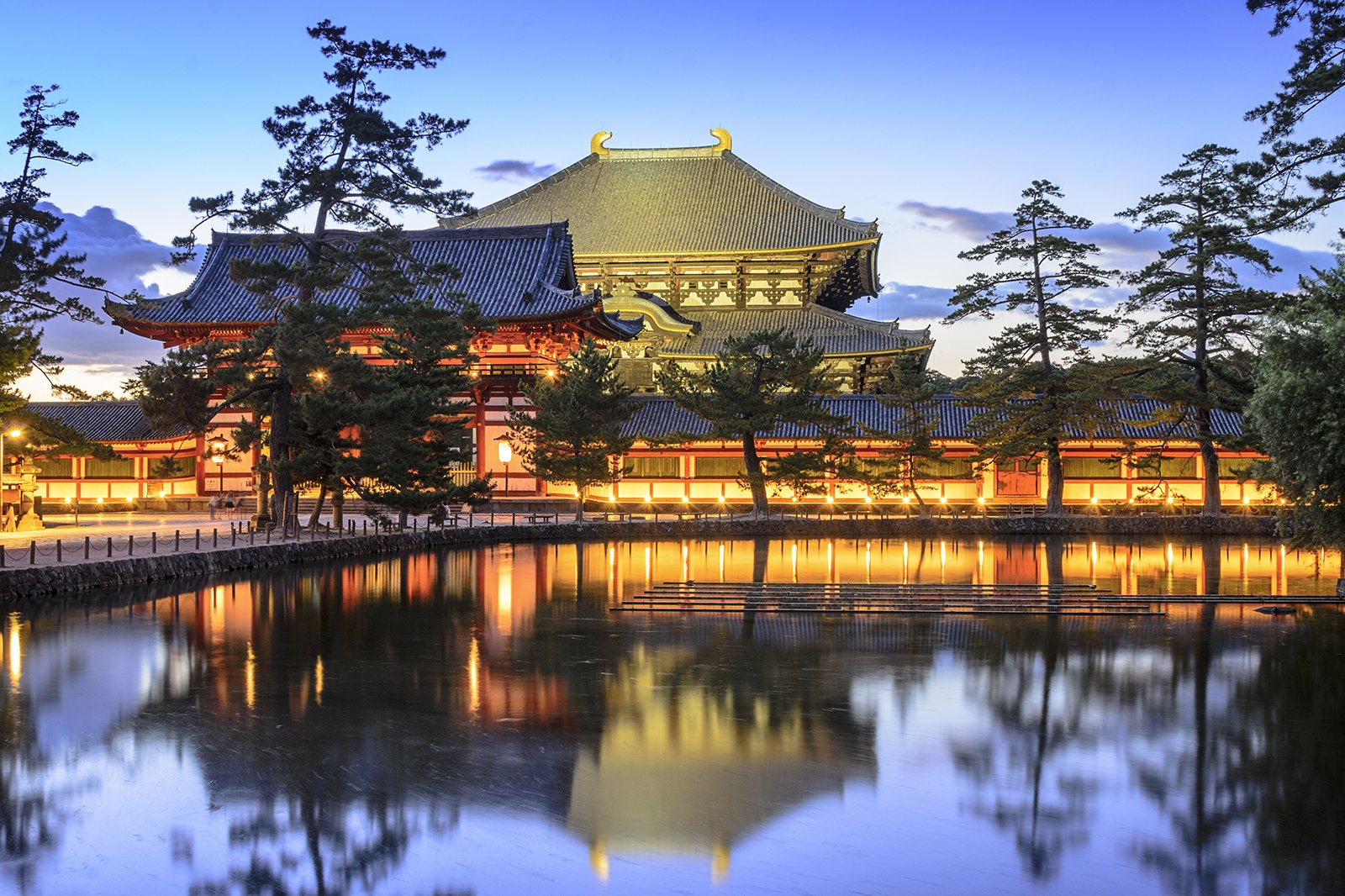
And, and there are records that say like it was the tallest, uh, structure in Japan, the tallest building in Japan, taller than, uh, the Todaiji temple in Nara.
Tony R. VegaHOST
That's famous for the giant Buddha.
Tony R. VegaHOST
That one I think was 47 meters.
Tony R. VegaHOST
That's why it's so magnificent.
Tony R. VegaHOST
And that's why Okuninushi is, you know, housed there.
Tony R. VegaHOST
That's the story, right? But Okay, where does this come from, right? Like, is there some historical basis to this? Well, the speculation is that, well, first of all, history is written by the victors, right? The people that win the battles and all, they write the history, right? The people that lose, they get forgotten, right? So the speculation is that the Yamato Ooke, the Yamato court, okay, that was based in the Nara area, Basically, the story isn't about Amaterasu and Okunushi.
Tony R. VegaHOST
The story is about the Izumo country and the Yamato country.

Lyla June JohnstonHOST
There's this really cool Japanese tradition called the Yamayaki tradition, and it's an ancient practice that literally means mountain burning, and it's referring to a controlled grassland fire in Japan.
Lyla June JohnstonHOST
And it serves as both an ecological management practice to prevent forests from taking over grasslands, hmm, sounds familiar to everything else we've seen around the world, and also as, serves as a cultural festival, most famously celebrated at Mount Wakakusa in Nara province on the fourth Saturday of January.
Lyla June JohnstonHOST
So the ecological purpose, as you can imagine, is to support nat- semi-natural, I like that, semi-natural, right? 'Cause it's not really natural or wild.
Lyla June JohnstonHOST
It's cultivated by humans, but it's also not caged and domesticated either.
10 more episodes mention Nara.
Create an account to see the whole feed, search across every transcript, and follow the entities you care about.