Nakota
7
MENTIONS
4
EPISODES
4
PODCASTS
Search complete. 7 mentions across 4 episodes found for "Nakota".
Oct 1, 2026

RyanHOST
So in honor of that, as always, we do want to acknowledge that the Canadian Football Countdown is brought to you from Treaty 1 territory, traditional territory of the Anishinaabeg.
RyanHOST
land of the Métis Nation, as well as from Treaty 4 territory, traditional territory of the Cree, Soto, Dakota, Lakota, Nakota, and Métis Nation.
RyanHOST
If you want to catch up on old episodes of the show, visit our website at canadianfootballcountdown.com. You can find all our old episodes there.
RyanHOST
You can also find a link to join our Discord community, and you can find that link in the episode description as well.

Matika WilburHOST
It's a good question, Adrian.
Matika WilburHOST
[laughs] You know, all my relations is a pretty popular topic throughout Indian country, popularized by, uh, Lakota, Nakota, Dakota relatives.
Matika WilburHOST
Uh, but all throughout In- Indian country, our primary identity is inextricably connected to our relationships, whether it be our relationships to land, if we're defining ourselves as the people of the blue-green water, or the people of the tall pine trees, or the people that live within the four sacred mountains, or, for us here, the people of the clear saltwater, the people of the tide.
Matika WilburHOST
That relationship to land and water is our primary way of identifying ourselves.

Joseph ParkinsonHOST
The Lakota were a distinct group of peoples sharing similar customs and language that migrated northwest from the central Mississippi Valley.
Joseph ParkinsonHOST
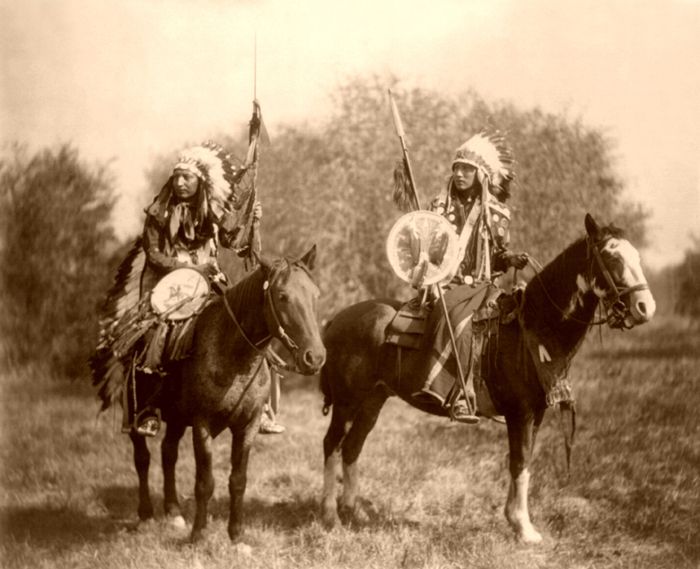
The Lakota were part of a broader confederation of peoples called the Aseti Sakowin, or Seven Council Fires, a group of seven peoples who spoke one of three dialects of the Siouan language family, Lakota, Dakota, and Nakota.
Joseph ParkinsonHOST
This loose confederation conferred strength as opposed to weakness, as it allowed each part of the confederation to call upon the support of the other peoples whilst avoiding civil strife.
Joseph ParkinsonHOST
As the Osseti Sakowin, also known as Sioux, migrated and expanded their sphere of influence, they swept other peoples aside, sometimes taking them as slaves.
13 MINS LATER
Joseph ParkinsonHOST
The Sioux were not a single people, but a large family of nations, and the Lakota but one tribe.
Joseph ParkinsonHOST
They spread out across a huge area, but as they did, so the ties of kinship and common interest loosened.
Joseph ParkinsonHOST
The interest of Western Expanding Sioux, people like the Lakota, and those more firmly anchored in the East, such as the Dakota and Nakota, began to diverge.
Joseph ParkinsonHOST
The tension was worsened for the Western Expanding Lakota by their inability to secure a ready supply of firearms, which depended upon their often strained relationship with the French.

Wizipan Little Elk GarriotGUEST
Kinship is really the foundation of Lakota thought philosophy, the core of our identity.
Wizipan Little Elk GarriotGUEST
The word Lakota or Dakota or Nakota, it roughly translates as ally.
Wizipan Little Elk GarriotGUEST
We see ourselves as an ally.
Wizipan Little Elk GarriotGUEST
The foundational philosophy for how we approach our existence, you know, one of the words is we say wo lakota, talk about being an ally, lakota, and then when you put the prefix wo in front of it, in our language, it then makes it a verb.
Wizipan Little Elk GarriotGUEST
And one thing that is
speaker_1HOST
true
Wizipan Little Elk GarriotGUEST
for all Lakota, Dakota, Nakota people is we know that we all have at least one shared purpose for existence, and that's to be a good relative.
Wizipan Little Elk GarriotGUEST
So that's a universal truth for us.