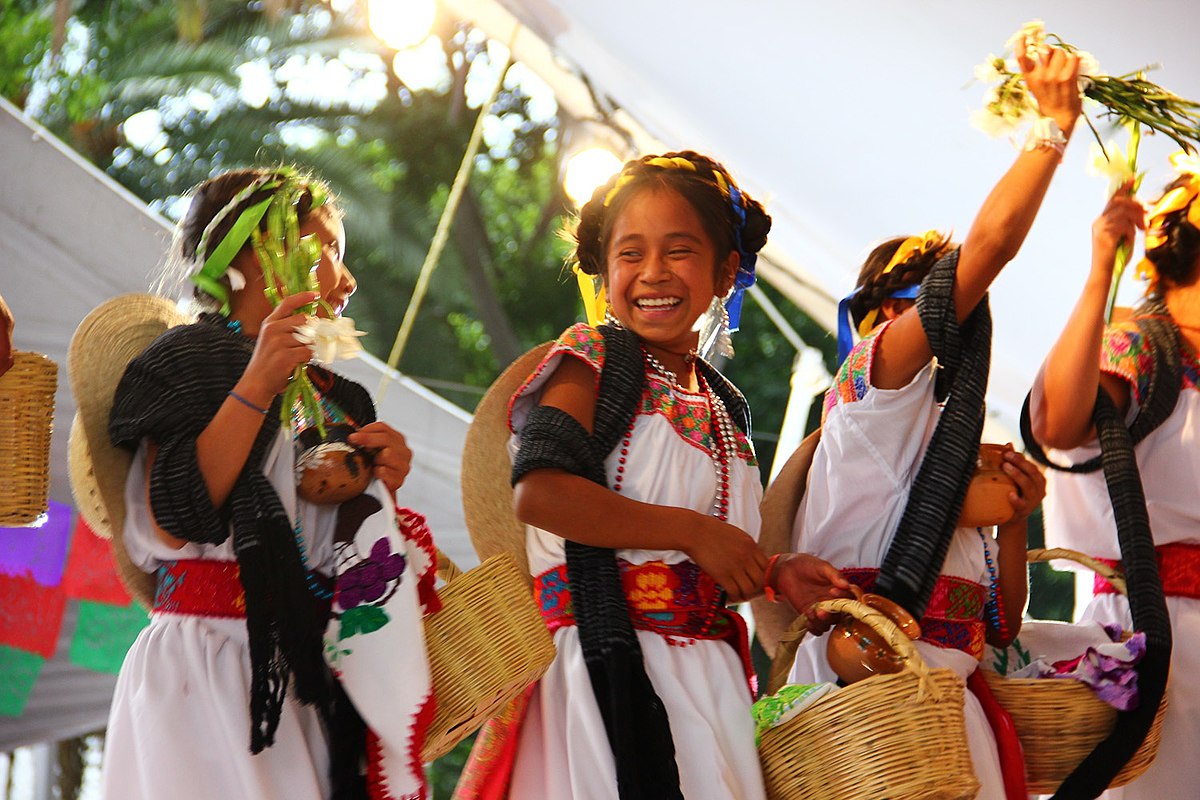
Nahuas
Ethnic groupWikipedia
190
MENTIONS
28
EPISODES
26
PODCASTS
Search complete. 190 mentions across 28 episodes found for "Nahuas".
Nov 2, 2026

Michael WinkelmanGUEST
One year we're basically looking at the mushroom traditions of central Mexico by Gonzales Mariscal, Guzola, Martinez, Osiris, and Maria de Carmen Marcil.
Michael WinkelmanGUEST
And so these are basically common traditions that we know a lot about Maria Sabina, not as much about the Nahua traditions.
Michael WinkelmanGUEST
Basically, they have these practices.
Michael WinkelmanGUEST
You have purification beforehand, steam baths, abstaining from sex sometime for up to weeks, and fasting.

Aurea ToxquiGUEST
That was the measurement, up to four cups for those who were on duty, priests, warriors, elders.
Aurea ToxquiGUEST
Why 52? Why elders have to be 52? Because for the Aztecs in Nahua, a century had 52 years.
Aurea ToxquiGUEST
So anyone who had passed a full era was, by default, allowed to drink alcohol.
Aurea ToxquiGUEST
to keep warm, to make them feel well, to remember if they get drunk, they could remember their early years.

speaker_0NARRATOR
And low over the distant peaks, a single star is already showing.
speaker_0NARRATOR
This was an hour the Nahua peoples of ancient Mexico, among them the Mexica, whom we usually call the Aztecs, knew well.
speaker_0NARRATOR
The threshold between the world of light and the world of darkness The moment when the sun went down into the underworld, to travel through it during the night and rise again at dawn.
speaker_0NARRATOR
They had a map of where the sun went.
7 MINS LATER
speaker_0NARRATOR
The most important is the great work of the Franciscan friar Bernardino de Sahagún.
speaker_0NARRATOR
The General History of the Things of New Spain, known as the Florentine Codex.
speaker_0NARRATOR
Sahagún spent decades, with the help of Aztec elders and of young Nahuatl scholars trained in his school, gathering and writing down in Nahuatl everything he could learn about Aztec religion and life.
speaker_0NARRATOR
And in the third book of his history, there is an appendix on where the dead went and on the funeral customs of the Aztecs, which is the fullest account we have of the journey to Mixtlan.

Jayson PorterGUEST
Between those almost 200 years, there was no official demarcation of Blackness in Mexico.
Jayson PorterGUEST
So in archives, unless someone spoke an indigenous language, let's say a Musco or Tlaponec or Nahua, that might show up as a distinction.
Jayson PorterGUEST
Like this is a Nahua-speaking Mexican.
Jayson PorterGUEST
And they might call them the Nahua.
Jayson PorterGUEST
But a lot of people of African descent that didn't necessarily speak an indigenous language, they weren't necessarily marked as mulatto after 1829.
Jayson PorterGUEST
They were just marked as mestizo.

JamesHOST
As the ages progress, the condition of humanity declines rather than advances.
JamesHOST
And then the Nahua tradition gives us one of the most dramatic versions of all because the earlier worlds actually end in different catastrophes.
JamesHOST
The Leyenda de los Soles, the Legend of the Suns, belongs to the manuscript complex generally known as the Codex Chimalpopoca.
JamesHOST
The Nahuatl manuscript began to be written in the 16th century, and later scholars and translators, including Primo Feliciano Velazquez, Walter Lehman, and Miguel Leon Portilla, worked with the text.
JamesHOST
The National Autonomous University of Mexico now provides the Anales de Cualtitlan and Leyenda de los Soles together with Velázquez's Spanish translation and facsimiles, so the manuscript history and actual Nahuatl material can be examined directly, rather than known only through modern retellings.
JamesHOST
The earlier suns end through different forms of destruction, and the inhabitants change with them.
JamesHOST
Jaguars, wind, fire, and water appear in the catastrophe sequence, while some former humans become animals after the destruction of their world.
JamesHOST
And there it is again, the same strange, biological-looking operation we saw in Mesopotamia, but expressed through completely different gods and a completely different culture.

Stephanie GeorgieffHOST
In sacred Incan and Aztec tradition, human blood was integral to their rituals.
Stephanie GeorgieffHOST
In both Aztec or Nahua and Incan traditions, blood was not viewed merely as a bodily fluid or a medium of death.
Stephanie GeorgieffHOST
It was understood as a sacred living substance, a concentrated form of vital energy.
Stephanie GeorgieffHOST
This quality is called tonai in Nahuatl, which translates to essential life force.
Stephanie GeorgieffHOST
and it was a fundamental currency of cosmic exchange.
Stephanie GeorgieffHOST
It was recognized that the gods sacrificed themselves to create the fifth sun, the current evolutionary period, the earth and humanity.

Tristan JohnsonHOST
Um, and so, and, and so like, that's a, that's a little bit there, but yeah, it was propaganda, but also, uh, it was an act of indigenous agency and later myth-making because also not only was it used to justify the conquest and the colonial ruling, but it also played into European literary tropes of heroic conquerors, defeating monsters, idolaters, and, and almost set the pace for European colonization of the Americas as a whole, because it likes, it set up the depiction of, of native American spirituality as idolatry and demonic and all that kind of stuff.
Tristan JohnsonHOST
And the other thing too is, and this is the part where things get kind of interesting, is that it wasn't necessarily one-sided because there's some post-conquest pictorial or alphabetic sources in Nahua that were produced under colonial supervision that actually echoed or magnified sacrifice stories, either as like conversion narratives or something else, like trying to like show like trying to shape the power and fear of this period in different ways.
Tristan JohnsonHOST
So it seems like even some Now what people at the time tried to amplify the stories to for other ends.
Tristan JohnsonHOST
So it's like it's even more complicated than just like a straight up colonial thing as like, you know, there were still native just like, yeah, we did this because I mean, even after the conquest, like there were still like there were still as tech nobility that had to that they needed to work with.

Anna MuddeHOST
I'm Anna Muta.
Anna MuddeHOST
I'm on the lands of the Michifmeeti Nation, on the lands of the Nahuatl, Anishinaabeg, Dakota, Lakota, and Nakota peoples, which is also called Pile of Bones.
Kristin RodierHOST
And I'm Kristin Rodier, recording today from Amiskwahiskikan, the homelands of the Plains Cree, the Woodland Cree, the Beaver Cree, the Ojibwe, and the Métis, also called Beaver Hills House.
Michael DoanGUEST
And I'm Mike Doan, coming to you live from Wawiatanang, where the water goes around, on the homelands of the Anishinaabe, the Odawa, Ojibwe, and Potawatomi.

Sarah Jaquette RayHOST
Mycelium Youth Network integrates traditional ecological knowledge, ancestral inheritance, climate solutions, and social-emotional learning to empower youth to imagine and then build a future that they would desire, not just one that they fear.
Sarah Jaquette RayHOST
Lil Milagro is a movement leader and activist of Nahuatl people descent with 20 plus years of experience decolonizing education, bringing about environmental justice and food sovereignty and union democracy, and organizing labor.
Sarah Jaquette RayHOST
If you are wondering how to meet young people where they are, if you want to understand how games can save the world, if you avoid climate action because you feel like you don't have skills or expertise, or if you're wondering how to make social-emotional learning more applicable to a wider variety of students who worry about climate change, then this is a great episode for you.
Sarah Jaquette RayHOST
Let's dive in.

Carlos RodriguezGUEST
And, and, and, and one of the two, one of the things that I wanted to say was we're afraid to tap into it because dark organizations have already done that and use our symbolism and our, a- and our, and our meaning for their entities.
Carlos RodriguezGUEST
So the Nuestra Familia or the Mexican Mafia has used Nahua and Nahuatl symbols and Nahua culture-
AvivHOST
Mm
Carlos RodriguezGUEST
...
18 more episodes mention Nahuas.
Create an account to see the whole feed, search across every transcript, and follow the entities you care about.