MyPlate
41
MENTIONS
28
EPISODES
16
PODCASTS
Search complete. 41 mentions across 28 episodes found for "MyPlate".
Nov 27, 2026

Ken BerryHOST
And I was just on the website for the American college of obstetrics and gynecology, and they are the preeminent governing body over people who are going to be caring for pregnant women and delivering babies.
Ken BerryHOST
And they literally have a link off to the MyPlate guidelines, which is kind of the revamp of the food pyramid of old days.
Ken BerryHOST
And so basically, half your plate should be grains and starchy vegetables.
Ken BerryHOST
And then a quarter of your plate should be fruit.
36 MINS LATER
Ken BerryHOST
Totally agree.
Ken BerryHOST
Now you've talked about sugar a couple of times and we've talked about grains a couple of times.
Ken BerryHOST
Let's go back to that MyPlate.
Ken BerryHOST
If a young lady who's pregnant is really trying to follow that MyPlate and she eats, what is it now? Five to seven servings of whole grain foods a day and she eats two or three servings of starchy vegetables a day and then two or three servings of fruit a day.
Ken BerryHOST
This is what happens from a plant-based, wheat-based, grain-based diet.
Ken BerryHOST
And then finally, If you look at the Egyptian diet and the proportions, it's almost exactly what the USDA MyPlate guidelines tell us is the healthiest diet for us to eat.
Ken BerryHOST
It is literally the Egyptian diet.
Michael EadesGUEST
Right, exactly.

Alan BarclayGUEST
the January 2026 publication of the US Department of Agriculture and Department of Health's Dietary Guidelines for Americans, 2025 to 2030, that was the major prompt for us in the development of this new international food guide pyramid.
Alan BarclayGUEST
This is because the USA moved from using its own plate model, the MyPlate model, which has been around since 2011, back to a food guide pyramid, a move that surprised many food and nutritionists nutrition experts around the world, of course, including ourselves.
Alan BarclayGUEST
So we thought, well, this is a retrograde step.
Alan BarclayGUEST
What's going on here? So not only did it go to an older style food guide model, it also flipped their old pyramid upside down.

Simon WhistlerNARRATOR
So everything worked out for the best.
Simon WhistlerNARRATOR
In June of 2011, after 19 long years, the USA finally retired the food pyramid and replaced it with MyPlate.
Simon WhistlerNARRATOR
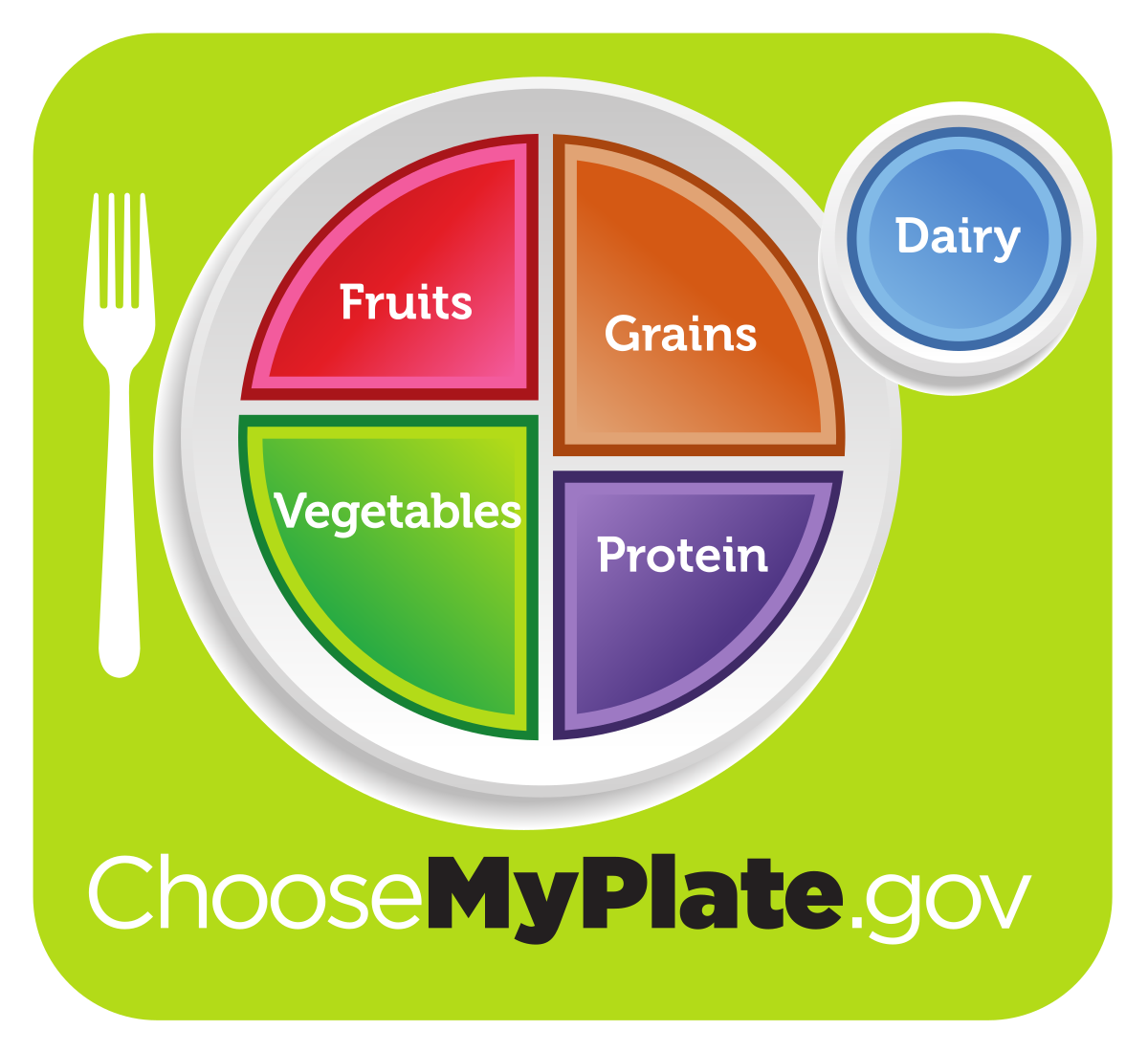
The new image simply shows a plate divided into four sections, vegetables, fruit, grains, and protein, as well as a glass labeled dairy off to the side.
Simon WhistlerNARRATOR
This was considered a large improvement, especially because the recommendation was for fruits and vegetables to make up 50% of a person's plate.
Simon WhistlerNARRATOR
Unlike in the food pyramid, there are no example foods for each group, nor is it clear exactly how big a person's plate is supposed to be.
Simon WhistlerNARRATOR
There are also criticisms that dairy is still portrayed as a mandatory food group.
Simon WhistlerNARRATOR
Of course, the MyPlate image is just the most surface-level explanation of the USDA's guidelines.
Simon WhistlerNARRATOR
If you want to see the complete dietary guidelines for Americans for 2020 to 2025, you can download the full 164-page PDF file off their website.

Kathleen MerriganGUEST
that helps inform SNAP program benefits, meals ready to eat, a lot of different things, school meals.
Kathleen MerriganGUEST
And in 2010, the public-facing icon for the public to understand the dietary guidelines was MyPlate.
Kathleen MerriganGUEST
We went from the Food Guide pyramid to MyPlate, with the message being half of plate foods and vegetables.
Kathleen MerriganGUEST
The next iteration is due in 2015, and the Advisory Committee for the Secretaries of Agriculture and HHS has been talking very much about sustainability.
Kathleen MerriganGUEST
There's a subcommittee on sustainability.

BethanyGUEST
I said, well, what does that entail? So she tells me the...
BethanyGUEST
you know, the MyPlate, everyone has their dairy, their fruit, their grain, you know, only three ounces to four ounces of protein, must be lean.
BethanyGUEST
And then a dessert, you have to choose your dessert.
BethanyGUEST
Cake, cookie, cupcake.

Ken BerryHOST
This is what happens from a plant-based, wheat-based, grain-based diet.
Ken BerryHOST
And then finally, If you look at the Egyptian diet and the proportions, it's almost exactly what the USDA MyPlate guidelines tell us is the healthiest diet for us to eat.
Ken BerryHOST
It is literally the Egyptian diet.
Michael EadesGUEST
Right, exactly.
Ken BerryHOST
straight.
Ken BerryHOST
Although the USDA now MyPlate guidelines, it says at the very beginning of the document that this is the recommended pattern of eating for healthy individuals.
Ken BerryHOST
You're saying that all the research that went into forming these guidelines was not performed on healthy young people.
Ken BerryHOST
It was performed on elderly male people who had already had a heart attack.

Ken BerryHOST
You remember the criteria, the seven criteria? One of them was, one of those was nutritional completeness.
Ken BerryHOST
And basically, every one of these diets follows the food pyramid, or the MyPlate, from the federal government.
Ken BerryHOST
That's what it follows.
Ken BerryHOST
so in order for a diet to be complete and have nutritional completeness it must include whole grains lots of whole grains and lots of low-fat dairy it has to include that otherwise how it all the farmers who grow wheat and all the farmers who have dairy cattle how would they well it's really not even about the farmers I love the farmers what it's about is the huge corporations that farm the farmers that's what this is all about how would ADM and all these other huge corporations how would they keep their board of directors happy if we started saying hey stop eating whole wheat it's really not that great for you stop drinking skim milk it's really not that great for you i mean that could affect the national economy and regardless of whether it helped helped obesity and type 2 diabetes or not that's not the point the point is we want these huge corporations to be successful so we can be successful as a country if our life expectancy is going down and our rates of obesity and type 2 diabetes are skyrocketing so what that's irrelevant that's the price you pay for prosperity people so you need to listen to these experts and stop listening to people to doctors like Jason Fung and board certified nephrologist don't listen to him and don't listen to william davis a board certified cardiologist and don't listen to me a board certified family physician because we are not telling you what the expert panel said therefore what we're saying is dumb and you shouldn't listen to us okay now if you enjoyed this video please i beg you don't share this on facebook or twitter or instagram because you're just gonna turn other people on to the ketogenic diet and it's obviously the worst diet in the world so why would you want to do that and then if you really enjoyed this and you want to support me more personally and give me a buck or something definitely don't support me on patreon because if you do i'll just keep making lots of videos about the ketogenic diet and intermittent fasting and all the positive effects it has on human beings and why would anybody want that because that's not what this expert panel said This is Dr. Berry.
Ken BerryHOST
and use it to guide the food choices that they feed to patients and young children.
Ken BerryHOST
And what's to stop the federal government from scrapping the MyPlate guidelines, which were crap from day one, and adopting the food compass.
Ken BerryHOST
Indeed, it looks like that's the ultimate goal of this, even though that hasn't happened yet.
Ken BerryHOST
Now, the Tufts School of Nutrition, and indeed Dr. Mozaffarian himself, are funded in large part by huge big food corporations.
18 more episodes mention MyPlate.
Create an account to see the whole feed, search across every transcript, and follow the entities you care about.