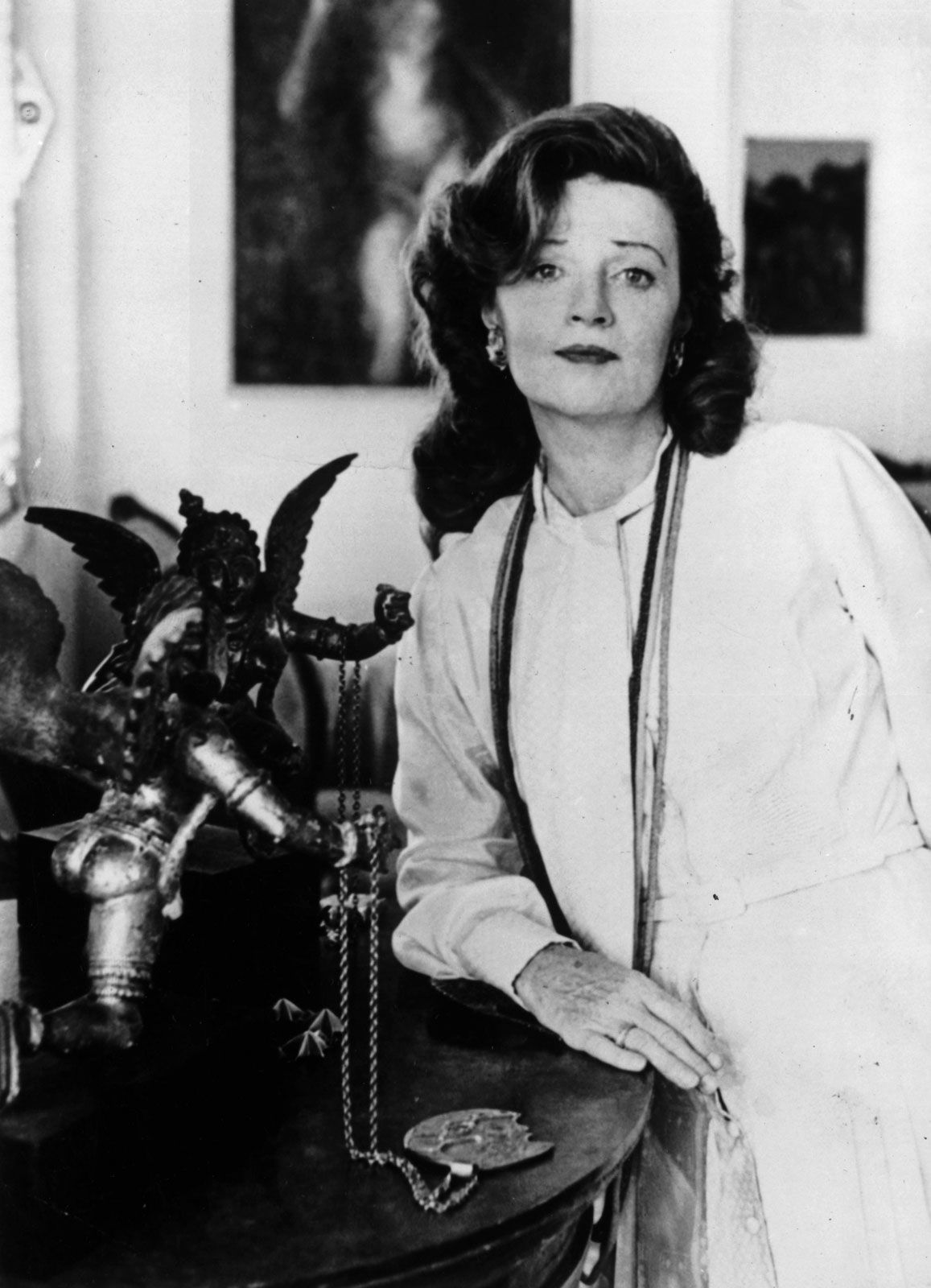
Muriel Spark
Scottish novelist and short story writerWikipedia
23
MENTIONS
15
EPISODES
15
PODCASTS
Search complete. 23 mentions across 15 episodes found for "Muriel Spark".
Oct 2, 2026

Gilbert CruzHOST
Our guest today is none other than Stephen King, best-selling horror author and owner of the adorable 10-year-old corgi that you just heard, named Molly.
Gilbert CruzHOST
To quote the main character of Muriel Spark's novel, The Prime of Miss Jean Brodie, "Give me a girl at an impressionable age, and she is mine for life." Well, Stephen King got me, and I think many of us, at an impressionable age.
Gilbert CruzHOST
I was around 10 or 11 when I read his sprawling novel, It, and it kicked off a lifelong love of horror as a genre and of King as a writer.
Gilbert CruzHOST
I've since read many of his 70 some odd books more than once.

Kemper DonovanHOST
Like, there are very, uh, there are a few books that really stay with you.
Kemper DonovanHOST
Um, you know, y- Muriel Spark, uh, The Driver's Seat has always stayed with me-
Gray Robert BrownGUEST
Mm
Kemper DonovanHOST
... which you introduced me to, Gray.

Bonnie Lander JohnsonGUEST
We were students together, and we both felt there must be some novels by women too.
Bonnie Lander JohnsonGUEST
We found Antonia White, um, who Virago, uh, published, and, uh, yeah, she's pop- Muriel Spark is another one.
Bonnie Lander JohnsonGUEST
They were kind of known.
Bonnie Lander JohnsonGUEST
So then, and once w- we established our careers and we were busy having kids and stuff, and then we, we kept this project going in the back of our minds.
8 MINS LATER
Bonnie Lander JohnsonGUEST
Um, yes, then we had two wars, then we had all the liberation movements of the '60s and '70s.
Bonnie Lander JohnsonGUEST
Now, the Catholic women's novels actually go all the way through that period, so you can chart the, the shift from the modern to the postmodern novel.
Bonnie Lander JohnsonGUEST
There are some iconic women Catholic postmodern novelists, Alice Thomas Ellis, Muriel Spark, for instance.
Bonnie Lander JohnsonGUEST
They show us that transition, so we can walk with them through that change.

Trevor BerrettHOST
... talk about it over on the Discord.
Trevor BerrettHOST
Um, I guess in another, you know, upcoming read for me, I know you're not doing this project necessarily, but, um, the, the next book in my Muriel Spark read-a-thon is going to be, uh, one of my favorites of the past.
Trevor BerrettHOST
It's a reread of "The Driver's Seat."
Paul WilsonHOST
Oh, cool.
Trevor BerrettHOST
We'll be entering the 1970s with Muriel Spark.
Trevor BerrettHOST
This is gonna be book 10 for October.
Trevor BerrettHOST
We, you know, one book every month, um, until we're done at 22 books.

William BoydGUEST
That's what I try to reproduce in my own, this idea of a really complex, baffling story that beguiles you, but that also engages your brain as you try to figure out, almost as if you were a character in the novel, who can I trust? Who should I not trust? should I accept this mission or not? All these sort of questions should pop up in in the reader's head in the same way as it pops up in in Gabriel's head.
William BoydGUEST
So it's so finding the spy on that Glenn Dayton's novels as well, Alan Furse, you know the great spy novels that we have in our literature which many of them have been written by literary novelists not People who just practice in the genre, you know, John Banville, Sebastian Foltz, Graham Greene, et cetera, Muriel Spark, Elizabeth Bowen.
William BoydGUEST
It's a rich, rich tradition of literary novelists who have been drawn to this genre.
William BoydGUEST
And I'm no exception.

speaker_0ADVERTISER
Acast.com slash advertise.
John TusaHOST
Muriel Spark once said to me that when she was younger, she carried three novels in her head that were queuing, waiting to be written.
John TusaHOST
Then as she got older, maybe there'd be one waiting to be written.
John TusaHOST
Was there anything like that with you? As I say, you had novels queuing up in your mind.

Herman PoppleberryHOST
And then there's the literary layer.
Herman PoppleberryHOST
Muriel Spark's novel from 1965, and Mil Habibi's short story from 1954, both circling the strangeness of the place.
Herman PoppleberryHOST
The strangeness being what, exactly? That you could be a diplomat or a journalist and cross, and your neighbor couldn't.
Herman PoppleberryHOST
that you'd hand your passport to a policeman who lived four streets from you and was standing on the other side of a barrier with a legionnaire next to him and a Belgian officer watching, and that this happened every day for 19 years with the same faces.

Francine ProseGUEST
Have you read, um...
Francine ProseGUEST
Muriel Spark's Loitering With Intent?
David PerellHOST
I have not.
Francine ProseGUEST
It's really great, but it's the only thing I know about the phenomenon that I, most of my close friends who are writers have had, which is you invent a character, and two weeks later you meet that person.

James WoodHOST
Welcome to Who's Afraid of Realism, a close reading series from the London Review of Books.
James WoodHOST
I'm James Wood, and this month we're discussing Muriel Spark's brilliant, beautiful, compact novella, The Prime of Miss Jean Brodie, published in 1961.
James WoodHOST
In all sorts of ways, it's a perfect book for our series.
James WoodHOST
It's also very personal.
James WoodHOST
Fabulous, um, details wh- which we're gonna get into in an, a minute.
James WoodHOST
And in the most basic sense, in the most basic realist sense, it offers a recognizable and veridical account of the world.
James WoodHOST
This is, as everyone acknowledges, Muriel Spark's autobiographical novel, um, about her own schooling in 1930s Edinburgh, and about an, a teacher who was, who was very important to her and her friends.
James WoodHOST
But it's weirdly close to the novel that I was just discussing a month ago with Patricia Lockwood, uh, Nabokov's Pnin, and not just because the whole of The Prime of Miss Jean Brodie was published in The New Yorker, as were several chapters of Pnin.

James WoodHOST
Welcome to Who's Afraid of Realism?, a close reading series from the London Review of Books.
James WoodHOST
I'm James Wood, and this month we're discussing Muriel Spark's brilliant, beautiful, compact novella, The Prime of Miss Jean Brodie, published in 1961.
James WoodHOST
In all sorts of ways, it's a perfect book for our series.
James WoodHOST
It's also very personal.
James WoodHOST
Fabulous, um, details wh-which we're gonna get into in an, a minute.
James WoodHOST
And in the most basic sense, in the most basic realist sense, it offers a recognizable and veridical account of the world.
James WoodHOST
This is, as everyone acknowledges, Muriel Spark's autobiographical novel, um, about her own schooling in 1930s Edinburgh, and about an, a teacher who was, who was very important to her and her friends.
James WoodHOST
But it's weirdly close to the novel that I was just discussing a month ago with Patricia Lockwood, uh, Nabokov's Pnin, and not just because the whole of The Prime of Miss Jean Brodie was published in The New Yorker, as were several chapters of Pnin.
5 more episodes mention Muriel Spark.
Create an account to see the whole feed, search across every transcript, and follow the entities you care about.