Multiprotocol Label Switching
74
MENTIONS
22
EPISODES
17
PODCASTS
Search complete. 74 mentions across 22 episodes found for "Multiprotocol Label Switching".
Oct 20, 2026

JoséeHOST
For decades, distributed companies have relied on incredibly expensive hub and spoke network models.
JoséeHOST
You pay a premium for MPLS lines, multi-protocol label switching or heavy dedicated site to site VPN tunnels simply because the laptops in the branch office have to constantly talk back to a central domain controller to authenticate, change passwords, and update group policies.
Ernie PrescottHOST
But if the laptop is underjoined, it just needs the internet.
JoséeHOST
Precisely.
JoséeHOST
By eliminating the branch domain controller, you sever the requirement for the corporate backbone.
JoséeHOST
You can completely restructure the network budget by converting those expensive MPLS and VPN contracts into commodity, direct-to-internet broadband paired with SD-WAN for routing optimization.
Ernie PrescottHOST
But what about the few legacy apps that haven't been phased out yet? If an employee at a branch office needs to access an internal inventory system hosted back at headquarters, and we've killed the VPN, how do they connect?
JoséeHOST
You utilize Entra Private Access.

Scott ShenkerGUEST
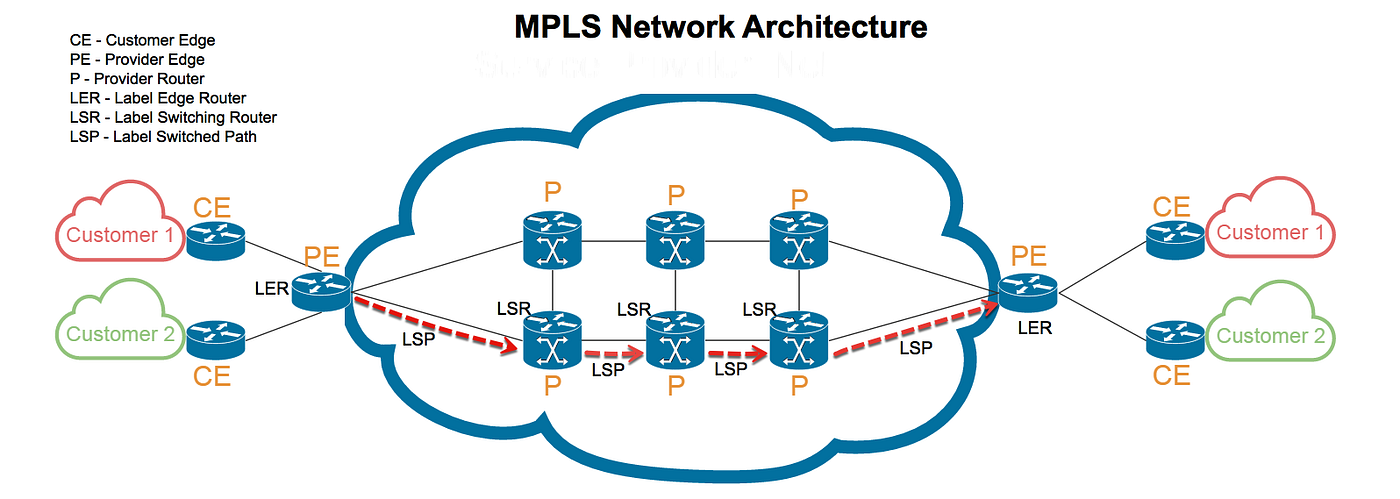
That is, you still use the packet header, and you look at it at every router or switch along the way.
Scott ShenkerGUEST
Now, MPLS is a technology that, that non-networking people don't, uh, you know, probably don't know.
Scott ShenkerGUEST
The only thing you need to know about it, A, it's used widely in, in large networks, and it makes a distinction between the edge and the core of the networks.
Scott ShenkerGUEST
The edge uses the header as the host network interface.
Scott ShenkerGUEST
Think of a label just as a bag of bits that's only meaningful within the network.
Scott ShenkerGUEST
It means nothing to the host.
Scott ShenkerGUEST
So it inserts an MPLS label, and then the core, the interior of the network, doesn't look at the packet header at all.
Scott ShenkerGUEST
It just looks at that label and says, "Somebody already interpreted what this host was trying to do.

Nick BaraglioHOST
Some people are going to hate this and some people are going to be like, that kind of makes sense.
Nick BaraglioHOST
I consider it the layer 2.5 of dual stack, right? It's the MPLS layer of dual stack because it's not quite IPv6 only, but it's further than just dual stack on every host.
Nick BaraglioHOST
It's the ARP.
Nick BaraglioHOST
Yeah, I mean, it's the right in the middle, right? Because you have...
Ethan BanksHOST
Depends on, uh, you know, a lot of stuff that's going on.
Ethan BanksHOST
Is this, is this MPLS? Are there tunnels involved? Is there...
Ethan BanksHOST
So there could be longer lists of things that are going on here, and depending on your experience and background, you might have some well, actually comments for us on that.
Ethan BanksHOST
Again, feel free, packetpushers.net/followup if, uh, if you didn't...

Nick BaraglioHOST
Some people are going to hate this and some people are going to be like, that kind of makes sense.
Nick BaraglioHOST
I consider it the layer 2.5 of dual stack, right? It's the MPLS layer of dual stack because it's not quite IPv6 only, but it's further than just dual stack on every host.
Nick BaraglioHOST
It's the ARP.
Nick BaraglioHOST
Yeah, I mean, it's the right in the middle, right? Because you have...

Nick BaraglioHOST
Some people are going to hate this and some people are going to be like, that kind of makes sense.
Nick BaraglioHOST
I consider it the layer 2.5 of dual stack, right? It's the MPLS layer of dual stack because it's not quite IPv6 only, but it's further than just dual stack on every host.
Nick BaraglioHOST
It's the ARP.
Nick BaraglioHOST
Yeah, I mean, it's the right in the middle, right? Because you have...
Ethan BanksHOST
Depends on, uh, you know, a lot of stuff that's going on.
Ethan BanksHOST
Is this, is this MPLS? Are there tunnels involved? Is there...
Ethan BanksHOST
So there could be longer lists of things that are going on here, and depending on your experience and background, you might have some well, actually comments for us on that.
Ethan BanksHOST
Again, feel free, packetpushers.net/followup if, uh, if you didn't, if you have feelings about the, uh, the packet forwarding process that we described there.

Nick LippisHOST
All right.
Nick LippisHOST
So I think kind of maybe continuing on that, is that So we talked about that transition really from T1 into fiber, then we went into MPLS.
Nick LippisHOST
Actually, we were in frame relay, and then we went into MPLS, and then MPLS into the SD-WAN marketplace.
Nick LippisHOST
And we know the SD-WAN marketplace really well because I think many in the ONU community credit themselves as really starting that marketplace because that's really where we were the first ones to really...
Nick LippisHOST
Give market permission.
Nick LippisHOST
But Mike gave a presentation, closed door presentation about what they were doing around SD-WAN back in 2013 or something like that.
Nick LippisHOST
And that really just lit the room on fire and everyone just started to really just dive into it.
Nick LippisHOST
But anyway, and what we were really looking at at the time was that It was getting control of the control plane because MPLS, you really don't.

Robin JohnsGUEST
But we are helping organizations adopt secure networks s- with networks that are connected, secured, and protected.
Robin JohnsGUEST
So we're moving away from MPLS, and we're helping people move to SD-WAN.
Robin JohnsGUEST
We're moving people away from traditional VPNs and moving them to zero trust network access.
Robin JohnsGUEST
But today, those conversations are still happening around the world.

Pascal MenezesHOST
We've done all the DIA, broadband, carry ethernet broadband, DIA.
Pascal MenezesHOST
We have MPLS, IP VPNs, SD-WAN.
Pascal MenezesHOST
All of this was designed for inference, for sensors, agents, and all kinds of things that will emerge in the inference world.
Pascal MenezesHOST
And that's just starting.
12 more episodes mention Multiprotocol Label Switching.
Create an account to see the whole feed, search across every transcript, and follow the entities you care about.