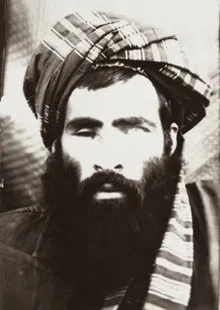
Mullah Omar
Cleric and former Supreme Leader of AfghanistanWikipedia
66
MENTIONS
30
EPISODES
28
PODCASTS
Search complete. 66 mentions across 30 episodes found for "Mullah Omar".
Sep 13, 2026

Scott HortonGUEST
Yeah.
Scott HortonGUEST
uh illegal enemy combatants if you want to call them that but then the the writ the declaration of war is to kill these guys um more to the point they could have negotiated and they could have negotiated in the lead-up to this the taliban were sick and tired mullah omar um there's a great book about this called an enemy we created about there are all these rumors that weren't true that bin laden had married mullah omar's daughter and vice versa and all this stuff that wasn't true and Mullah Omar, when bin Laden went there, he was meant to be the guest of a guy named Rabbani, but he was killed.
Scott HortonGUEST
And so the Taliban ended up just stuck with this guy.
Scott HortonGUEST
And they had ordered him to stop messing with the Americans, stop putting out statements, and stop committing acts of terrorism.
Scott HortonGUEST
And he had supposedly promised them that he wouldn't, but he just kept breaking the promises anyway.
Scott HortonGUEST
And after the Africa embassy attacks of 1998, he was And Mullah Omar's government was in negotiations with the United States to give him up.
Scott HortonGUEST
And there's no less authority on this, Kyle, than Milton Bearden, who ran the CIA operation in the 1980s, was the absolute most authoritative source from CIA who could possibly tell the story to the Washington Post.
Scott HortonGUEST
They were trying to give him up, he said, but we just wouldn't listen to the way that they would speak.

Carter MalkasianGUEST
And so life is a little bit strict, but there's order.
Carter MalkasianGUEST
Mullah Omar, their leader, he allowed al-Qaeda and Osama bin Laden to come in and operate inside of Afghanistan.
Carter MalkasianGUEST
He didn't really like Osama bin Laden very well, but he felt that he didn't have much of a choice.
Carter MalkasianGUEST
They were of the same religion.

John RuggHOST
As, as a guest we-
Dan TorresHOST
But Pakistan was also used as a way to kind of bring, uh, [lip smacks] use intelligence of Pakistan to send a message to Mullah Mohammed Omar, who was the head of the Taliban at the time, to turn over bin Laden, and they had a two-day conference apparently, uh, uh-
John RuggHOST
Discussing it
Dan TorresHOST
... to, to discussing what would it would take for them, um, and so-

Thom HartmannHOST
The Taliban said, no problem.
Thom HartmannHOST
You know, one eyed Mullah Omar, right, who ran the Taliban.
Thom HartmannHOST
He said, we will arrest bin Laden and we will turn him over to a third country where you can prosecute him.
Thom HartmannHOST
And George W. Bush said, nope, we want to have a war because Dick Cheney needs the money for Halliburton and I need the votes.

David DeSolaHOST
Hamza's last known public statement, which was released by al-Qaeda's media arm in March of 2018, threatened the Kingdom of Saudi Arabia and called on the people of the Arabian Peninsula to revolt.
David DeSolaHOST
Taliban leader Mullah Omar disappeared after 9-11 and was thought to be in hiding in Pakistan.
David DeSolaHOST
Despite a $10 million bounty on his head offered by the U.S. government, he was never found or captured.
David DeSolaHOST
It wasn't until several years later that journalist Bet Dam was able to piece together his life as a fugitive.

Jim WebbHOST
a
Scott HortonGUEST
lesson
Jim WebbHOST
from
Scott HortonGUEST
it
14 MINS LATER
Jim WebbHOST
and
Scott HortonGUEST
everything.
Scott HortonGUEST
Um, the whole propaganda just washed away any actual lesson that could have been learned, such as just, hey, can't Tom Cruise bomb them from an aircraft carrier in the Gulf? Why do we have to have bases adjacent to Mecca? Really? Is there a, we absolutely must? Or what is this, right? And instead, there was no controversy.
Scott HortonGUEST
You know what the only controversy was? Was because there was no security.

Lara LoganHOST
4, 9, 11, right? Because that's what the Pashtuns of the Taliban, that was the gift that they got from Al-Qaeda, that their greatest foe on the battlefield, this statesman and leader who united much of Afghanistan and who was their strongest opponent, that he was murdered.
Lara LoganHOST
And in exchange, Mullah Omar, who was leading the Taliban, would offer Al-Qaeda refuge through the American campaign.
Gary BerntsenGUEST
Right.
Gary BerntsenGUEST
Well, that was two days.

John ManleyGUEST
And, you know, of course 9/11 wasn't their first exercise at that.
John ManleyGUEST
And I, I know for a fact US State Department officials had met with Mullah Omar, the leader of the Taliban, in, uh, in Kandahar well before 9/11, uh, after the USS Maine had been attacked off the coast of Africa, and said, "The next time you will pay if anything else happens." Because that was also after the first attack on the World Trade Center, uh, a number of years before, which had, had, you know, people died, but not very many.
John ManleyGUEST
It was an, an underground explosion in the parking garage.
John ManleyGUEST
So the response in Afghanistan was predictable, but its motivation...

Peter BergenGUEST
There was a lot of opposition to bin Laden in certain quarters of the Taliban.
Peter BergenGUEST
Of course, the Taliban was run by Mullah Omar.
Peter BergenGUEST
It's a theocracy.
Peter BergenGUEST
It's basically one person's view, you know.
Peter BergenGUEST
One of the big what-ifs is, what if we had done a peace deal with the Taliban in January of 2002? We would have saved ourselves a lot of blood and treasure.
Peter BergenGUEST
And I think that that peace deal was an offer.
Peter BergenGUEST
Maybe Mullah Omar, the leader of the Taliban, wouldn't have signed on to the deal.
Peter BergenGUEST
But other leaders of the Taliban were willing to make a deal with the United States, with the elected Afghan government.

Scott HortonGUEST
The Taliban were sick and tired.
Scott HortonGUEST
Mullah Omar, um, there's a great book a- about this called An Enemy We Created, about there are all these rumors that weren't true, that bin Laden had married Mullah Omar's daughter and vice versa and all this stuff.
Scott HortonGUEST
That wasn't true.
Scott HortonGUEST
B- M- Mullah Omar, when bin Laden went there, he was meant to be the guest of a guy named Rabbani, but he was killed.
Scott HortonGUEST
And so the Taliban ended up just stuck with this guy, and they had ordered him to stop messing with the Americans, stop putting out statements, and stop committing act of, acts of terrorism.
Scott HortonGUEST
And he had supposedly promised them that he wouldn't, but he just kept breaking the promises anyway.
Scott HortonGUEST
And after the Africa Embassy attacks of 1998, he was, N- Mullah Omar's government was in negotiations with the United States to give him up.
Scott HortonGUEST
And there's no less authority on this, Kyle, than Milton Bearden, who ran the CIA operation in the 1980s, was the absolute, like, m- most authoritative source from CIA who could possibly tell the story to The Washington Post.
20 more episodes mention Mullah Omar.
Create an account to see the whole feed, search across every transcript, and follow the entities you care about.