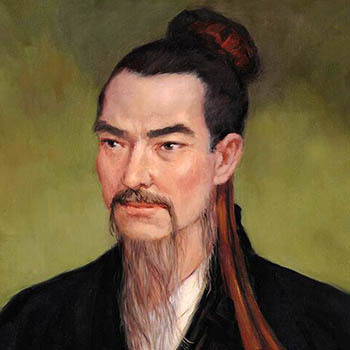
Mozi
Chinese philosopherWikipedia
15
MENTIONS
2
EPISODES
2
PODCASTS
Search complete. 15 mentions across 2 episodes found for "Mozi".
Nov 21, 2026

speaker_4NARRATOR
But here we must pass on to consider some of the speculations on God, life, death, and immortality indulged in by Taoist philosophers and others who were not fettered, as the Confucianists were, by traditional reticence on the subject of spirits and an unseen universe.
speaker_4NARRATOR
Mo Tzu, a philosopher of the 4th and 5th centuries B.C., was arguing one day for the existence of spirits with a disbelieving opponent.
speaker_4NARRATOR
All you have to do, he said, is to go into any village and make inquiries.
speaker_4NARRATOR
From of old until now the people have constantly seen and heard spiritual beings.

Doug CampbellHOST
And in today's episode, we're looking at an important chapter in ancient Chinese philosophy, namely the The Important Moist Doctrine of Inclusive Care.
Doug CampbellHOST
This idea comes out of a text called the Mozi or the Moza.
Doug CampbellHOST
In this episode, we're not going to concern ourselves with correct Chinese pronunciation.
Doug CampbellHOST
But this text, the Mozi, is traditionally attributed to a guy, Mozi, Master Mo, who And it's from his name that we get the term Moism, and Moism forms this important ancient Chinese school of philosophy that, as we'll see, rivals Confucianism.
Doug CampbellHOST
It rivals others too, like Taoism.
Doug CampbellHOST
But we're going to, in this episode, talk about a bit of a disagreement between the Moists and the Confucians when it comes to whom we should care about and how much should we care about them.
Doug CampbellHOST
And so just to give you a sense of the timeline here, Master Mo, Mozi or Moza, lived in the 5th century BC, probably from about 470 BC to 390 BC.
Doug CampbellHOST
So interestingly, he's a contemporary of Socrates.