Mount Auburn Cemetery
Cemetery in Watertown, MassachusettsWikipedia
10
MENTIONS
7
EPISODES
7
PODCASTS
Search complete. 10 mentions across 7 episodes found for "Mount Auburn Cemetery".
Nov 2, 2026

Christopher KleinCORRESPONDENT
Four years later, he sold the home and returned to New York City, where he died on June 7, 1893.
Christopher KleinCORRESPONDENT
But Edwin, like Junius, chose not to rest in peace in Baltimore, but in Mount Auburn Cemetery outside Boston next to his first wife and infant son.
Christopher KleinCORRESPONDENT
In one of history's eeriest coincidences, just as the organist struck the opening chords of Chopin's haunting funeral march at Edwin's funeral service, three floors of Ford's Theater, which had been purchased by the federal government in 1866 and converted into War Department offices, collapsed into the basement.
Christopher KleinCORRESPONDENT
22 federal employees died.

Kristin LopesHOST
Just three years earlier, something new had taken root outside of Boston.
Kristin LopesHOST
In 1831, Mount Auburn Cemetery opened in Cambridge, Massachusetts, and it changed how Americans thought about death.
Kristin LopesHOST
Gone were the cramped churchyards crowded against city streets.
Kristin LopesHOST
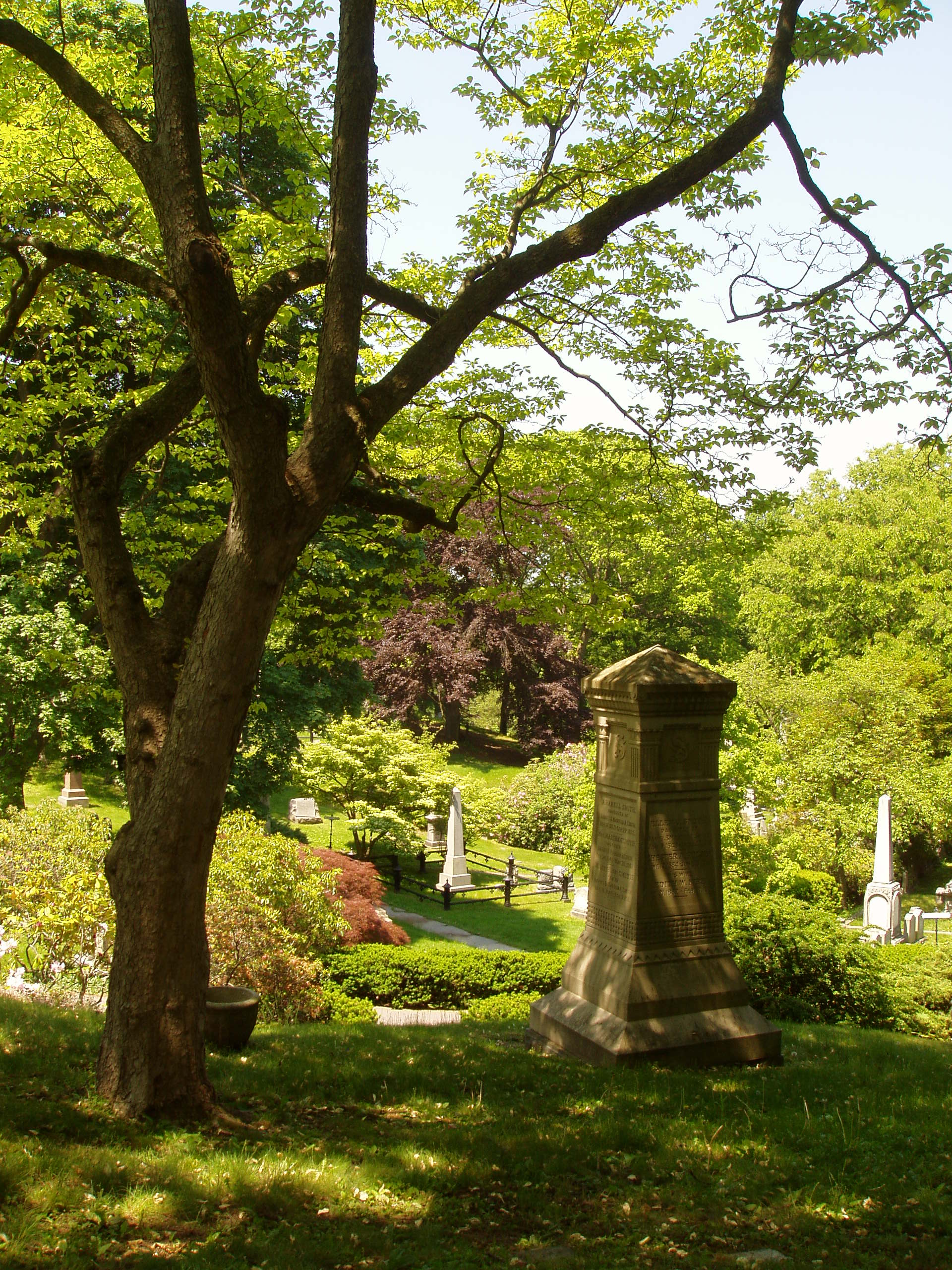
In their place came the rural or garden cemetery, a landscape of rolling hills, winding paths, and sheltering trees, where the living could walk among the dead in peace.

Roxie ZwickerHOST
All right, so there is a story of a spooky house that is located in Cambridge, Massachusetts, actually right on Mount Auburn Street.
Roxie ZwickerHOST
So if you know Cambridge, you know Mount Auburn Street is where the beautiful, historic Mount Auburn Cemetery is.
Roxie ZwickerHOST
It is one of the most amazing cemeteries I have ever visited.
Roxie ZwickerHOST
In fact, as you walk the grounds, Some of the statues which are carved after the people that are buried beneath them almost seem like they're just walking around with you.
Roxie ZwickerHOST
There is just something really magical about Mount Auburn Cemetery.
Roxie ZwickerHOST
So this story took place not too far from the gates of Mount Auburn.
Roxie ZwickerHOST
So we're going to go back to the late 1800s for this story.
Roxie ZwickerHOST
Some of the windows were actually boarded up from inside the house which made it really kind of an odd thing.

Doris ColeGUEST
The last couple years, she was not well.
Doris ColeGUEST
She's buried at Mount Auburn Cemetery.
Jessica RaymondGUEST
My mother designed her headstone.
Jessica RaymondGUEST
There's a granite marker there.

TrevorHOST
Uh, I get, I get, uh, images sent from my sister all the time.
TrevorHOST
She manages, um, Mount Auburn Cemetery, and she's always sending me, like, the, the very first bees to emerge in spring, and then the caterpillars that are, you know, that are... that she's finding and, uh, it's just, it's just great, great stuff.
TrevorHOST
But let me just move on here because you were, you were talking about just kind of the, the, the, the USDA and the, and the farming systems, and I'd love to know about your connection with NRCS and really just with all the beginning farmers, because I, I come across a lot of people who are just trying to get back to the earth.
TrevorHOST
So with beginning farmers or just your beginning farmers, like, what is the importance of the relationship with NRCS? Um, and, you know, how does, how does that all fit in with what, with what you're doing?

Kurt SandvigHOST
And the not-so-fun fact, on May 31st, 1884, founder Harvey Parker died at the age of 79 in his room 1012, or 1012.
Kurt SandvigHOST
He was buried in Mount Auburn Cemetery.
Kurt SandvigHOST
Well, Kurt, why did you do that last fun fact? Well, let's focus on that one because it's the spooky one.
Kurt SandvigHOST
We go to room 1012 on the 10th floor...

Lauren WilligGUEST
Think the Transcendentalists, Emerson and all that.
Lauren WilligGUEST
And so some bright soul came up with the idea of, what if we move our cemeteries outside the city and make them a beautiful place, a place where people can walk and contemplate life and death and nature in the midst of God's creation? And so Mount Auburn Cemetery in Boston, Greenwood Cemetery in New York, these were all early examples of the rural cemetery movement, where you took the cemetery, instead of having just a narrow, crowded little churchyard, you suddenly had this vast, beautiful rolling expanse that was as much a park as it was a burying ground.
Lauren WilligGUEST
And in fact, I think this is something people don't realize, Greenwood Cemetery was one of the inspirations for Central Park.
Lauren WilligGUEST
Um, it predated Central Park.