Mothers of Plaza de Mayo
10
MENTIONS
6
EPISODES
6
PODCASTS
Search complete. 10 mentions across 6 episodes found for "Mothers of Plaza de Mayo".
Sep 18, 2026

Maria del Carmen VerdúGUEST
And, uh, history is very difficult to predict, but I insist on this.
Maria del Carmen VerdúGUEST
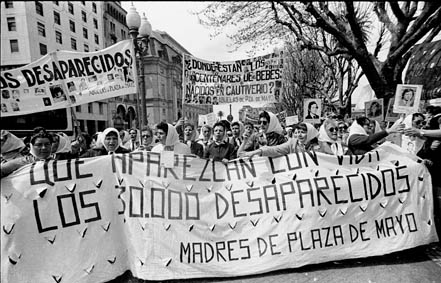
Uh, here we were able to survive the most brutal dictatorship in Latin America with, with 30,000 desaparecidos y desaparecidas, and the word desaparecido is said in Spanish throughout the world because, uh, it, it was a, a, a, a concept that, that we were able to, to, to impose internationally with the hard work of the human rights organizations, uh, especially, uh, mothers and grandmothers, uh, Madres de Plaza de Mayo.
Maria del Carmen VerdúGUEST
And here we have a, a presently a very sad issue because most of, uh, mothers and grandmothers are dying.
Maria del Carmen VerdúGUEST
They are 94, 96, 97 years old.

Cynthia FarrellNARRATOR
In April nineteen seventy-seven, a group of fourteen women gathered on the Plaza de Mayo before the Casa Rosada, the squat rose-colored presidential palace, demanding information on their missing children.
Cynthia FarrellNARRATOR
Within weeks, the ranks of what became known as the Mothers of the Plaza de Mayo had swelled to more than one hundred.
Cynthia FarrellNARRATOR
Six months later, a few, soon to be called the Grandmothers of the Plaza de Mayo, asked another question: Where were the children of their missing pregnant daughters? Rumors churned that pregnant women who had been captured were kept alive long enough to deliver their children, only to have them taken away and handed off for adoption, often to regime sympathizers.
Cynthia FarrellNARRATOR
After she was arrested in March nineteen seventy-seven, Gori was held prisoner in the ESMA.
Cynthia FarrellNARRATOR
She gave birth on a wooden table in a small room in the attic sometime between July and September nineteen seventy-seven.
Cynthia FarrellNARRATOR
Fifteen days after giving birth, the baby was taken from her, and according to testimony from survivors of the ESMA, Gori was “transferred.” “Transfer” was the euphemism the military used to refer to the death flight.
Cynthia FarrellNARRATOR
Her brother-in-law, Adolfo, was part of the detention center’s leadership that decided on each week’s “transfers.” The circumstances around Jose's disappearance are unclear [somber music] Lidia Vieira, Gorri's former cellmate, survived.
Cynthia FarrellNARRATOR
After she got out in July 1978, she sought out the Grandmothers of the Plaza de Mayo to tell them about Gorri's missing baby.

Valeria Vázquez GuevaraGUEST
But at the same time, I think it's fundamental to consider to what extent are the victims and the relatives central to the account of the truth produced by a truth commission.
Valeria Vázquez GuevaraGUEST
So just to give a brief example, so when I was doing field work in Argentina, I went to where the Madres de Plaza de Mayo still gather every Wednesday.
Valeria Vázquez GuevaraGUEST
And I couldn't help to think how the courage they had to demonstrate every Wednesday, still now against different governments, but especially during the dictatorship to demand answers for their children, for their grandchildren who were just missing.
Valeria Vázquez GuevaraGUEST
And so I think that, you know, recognizing that Trust Commission's do all this social, cultural, historical work, but at the same time, they work with international in long ways that can be problematic.

Valeria Vázquez GuevaraGUEST
So just... to give a brief example.
Valeria Vázquez GuevaraGUEST
So when I was, um, doing field work in Argentina, I went to, um, where the Madres de Plaza de Mayo, um, still gather every Wednesday.
Valeria Vázquez GuevaraGUEST
And I couldn't help to think, um, how the courage they had to demonstrate every Wednesday, still now against different governments, but especially during the dictatorship to demand answers for their children, for their grandchildren who were just missing.
Valeria Vázquez GuevaraGUEST
And so I think that, you know, recognizing that trust commissions do all this social, cultural, historical work, but at the same time, they work with international in long ways that can be problematic.

Valeria Vázquez GuevaraGUEST
But at the same time, I think it's fundamental to consider to what extent are the victims and the relatives central to the account of the truth produced by a truth commission.
Valeria Vázquez GuevaraGUEST
So just to give a brief example, so when I was doing field work in Argentina, I went to where the Madres de Plaza de Mayo still gather every Wednesday.
Valeria Vázquez GuevaraGUEST
And I couldn't help to think how the courage they had to demonstrate every Wednesday, still now against different governments, but especially during the dictatorship to demand answers for their children, for their grandchildren who were just missing.
Valeria Vázquez GuevaraGUEST
And so I think that, you know, recognizing that trust commissions do all this social, cultural, historical work, but at the same time, they work with international in ways that can be problematic.

Valeria Vázquez GuevaraGUEST
But at the same time, I think it's fundamental to consider to what extent are the victims and the relatives central to the account of the truth produced by a truth commission.
Valeria Vázquez GuevaraGUEST
So just to give a brief example, so when I was doing field work in Argentina, I went to where the Madres de Plaza de Mayo still gather every Wednesday.
Valeria Vázquez GuevaraGUEST
And I couldn't help to think how the courage they had to demonstrate every Wednesday, still now against different governments, but especially during the dictatorship to demand answers for their children, for their grandchildren who were just missing.
Valeria Vázquez GuevaraGUEST
And so I think that, you know, recognizing that trust commissions do all this social, cultural, historical work, but at the same time, they work with international in ways that can be problematic.