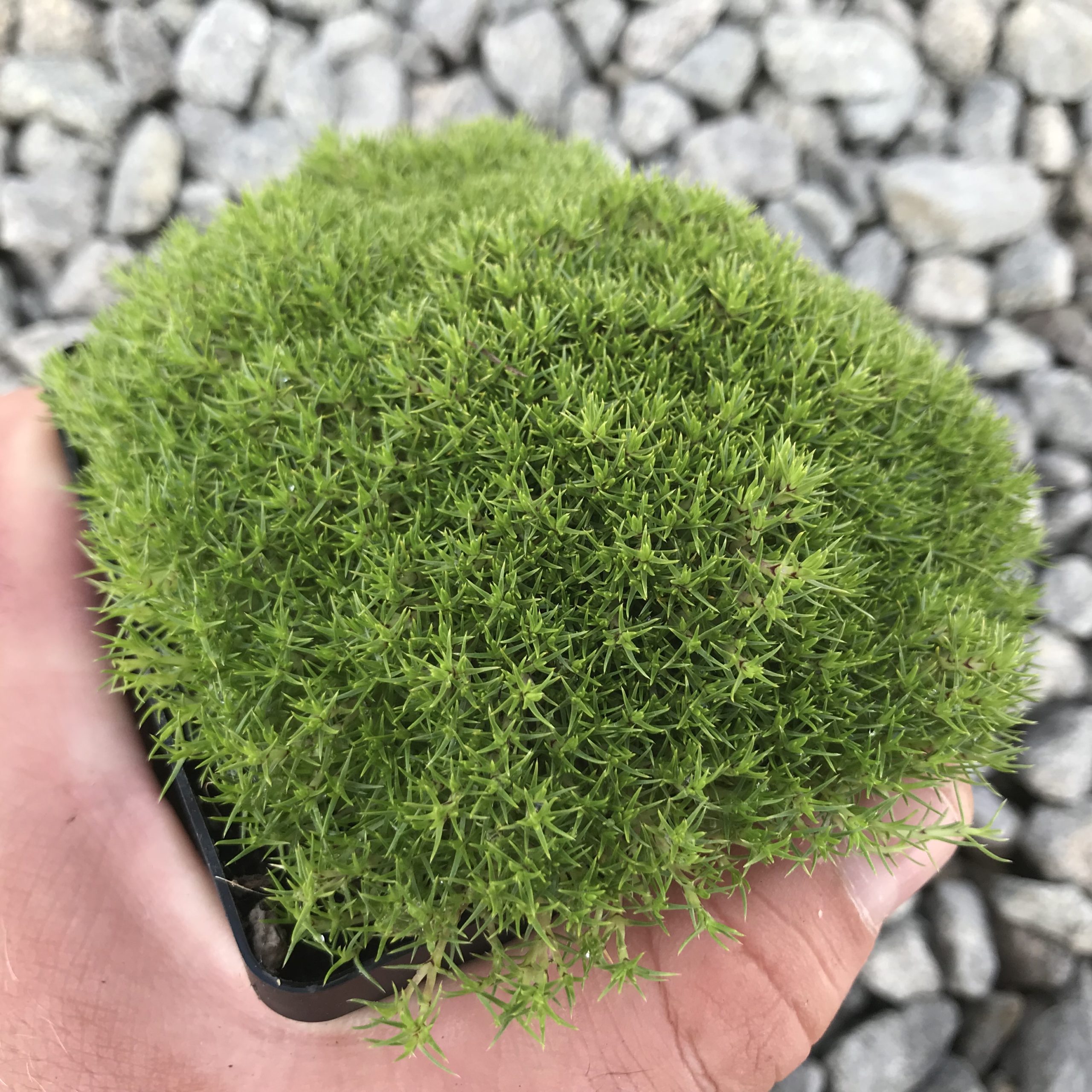
Moss
PlantWikipedia
16
MENTIONS
7
EPISODES
7
PODCASTS
Search complete. 16 mentions across 7 episodes found for "Moss".
Sep 24, 2026

speaker_5NARRATOR
Our feet were for the first time on Alaskan soil, but we saw none of the soil.
speaker_5NARRATOR
Moss everywhere, and flowers, and wild strawberries.
speaker_5NARRATOR
It was a queer sensation to set one's feet down on what looked like substantial ground and sink a few inches to solid ice, crushing the flowers beneath.
speaker_5NARRATOR
I was all eyes and ears for what new birds might cross my path.

James HutchisonNARRATOR
He was so modest and delicate a genius that we may fancy him appealing from the lonely honor of a representative attitude, perceiving a painful incongruity between his imponderable literary baggage and the large conditions of American life.
James HutchisonNARRATOR
Hawthorne, on the one side, is so subtle and slender and unpretending, and the American world, on the other, is so vast and various and substantial that it might seem to the author of The Scarlet Letter and The Mosses from an Old Manse that we render him a poor service in contrasting his proportions with those of a great civilization.
James HutchisonNARRATOR
But our author must accept the awkward as well as the graceful side of his fame, for he has the advantage of pointing a valuable moral.
James HutchisonNARRATOR
This moral is that the flower of art blooms only where the soil is deep, that it takes a great deal of history to produce a little literature, that it needs a complex social machinery to set a writer in motion.
1 HR 48 MINS LATER
James HutchisonNARRATOR
This LibriVox recording is in the public domain.
James HutchisonNARRATOR
Early writings, part one.
James HutchisonNARRATOR
The second volume of the Twice Told Tales was published in 1845 in Boston, and at this time a good many of the stories which were afterwards collected into the Mosses from an Old Manse had already appeared, chiefly in the Democratic Review, a sufficiently flourishing periodical of that period.
James HutchisonNARRATOR
In mentioning these things I anticipate, but I touch upon the year 1845 in order to speak of the two collections of Twice Told Tales at once.

Leah Laine-DunesHOST
It's too hard when it's everything is serious, and everything is a burden, and everything is cumbersome and responsibility-laden.
Leah Laine-DunesHOST
And so even though that sounds like [laughs] you know, having an adult den for a bed, um, is not necessarily the massive answer that people are looking for, it's part of it, you know? Yeah, so this is the Womb, and we've got the Mushroom, the Moon, the Dawn, Forest Spirits, The Wanderer, and the Mystic, and the Mosses.
Leah Laine-DunesHOST
I wanted to just bring in beauty for the people who are coming here to come and feel precious, to feel worthy.
Leah Laine-DunesHOST
But to be honest, when people get here, the majority of the time we're outside anyway.

Taylor CaronGUEST
the entertaining kind of accessible stuff.
Taylor CaronGUEST
And that's what his stories are.
Taylor CaronGUEST
And so, I don't think I said the year, 1846, he publishes Mosses from an Old Man's.
Taylor CaronGUEST
which later gets republished as Twice Old Tales.
Taylor CaronGUEST
I think he's one of the great short story writers ever.

Hank GreenHOST
And the descendants of those plants still live among us today.
Hank GreenHOST
They're the non-vascular plants, the liverworts, the hornworts, and everybody's best friend, the mosses.
Hank GreenHOST
Mmm, fuzzy.
Hank GreenHOST
Now, yeah, it's clear that these guys are less complicated than an orchid or an oak tree, and if you said that they were, you know, less beautiful, you probably wouldn't get that much argument from me.
Hank GreenHOST
They're multicellular, they have cell walls made of cellulose, and they use photosynthesis to make their food.
Hank GreenHOST
All the non-vascular plants are collectively referred to as bryophytes, and who knows how many different sorts there used to be back in the olden days, but we can currently meet three phyla of bryophytes in person.
Hank GreenHOST
The mosses in phylum Bryophyta, the liverworts in phylum Hepatophyta, and the hornworts in phylum Anthocerophyta.
Hank GreenHOST
Taken together, there are over 24,000 species of Bryophytes out there.