Morrill Land-Grant Acts
26
MENTIONS
20
EPISODES
19
PODCASTS
Search complete. 26 mentions across 20 episodes found for "Morrill Land-Grant Acts".
Oct 20, 2026

Alan BoomerHOST
Because most of the HBCUs were founded between 1865 and 1900.
Alan BoomerHOST
And this Morrill Act, the second Morrill Act, basically said this.
Alan BoomerHOST
It's like, look, we know that There's a lot of, you know, there's Jim Crow.
Alan BoomerHOST
There's all of this going on.

Damian MasonHOST
The boomers were the first generation that went... went to college, right? The whole GI Bill, we made it affordable.
Damian MasonHOST
I mean, if the land-grant school system, the Morrill Act, democratized higher education in the 1800s, what made it for the masses was the GI Bill and then the whole post-World War II time frame.
Damian MasonHOST
And all of a sudden, by the 60s, you got all these kids going to college.
Damian MasonHOST
And by the way, that's where the boomers all burned their draft cards and took their bras off and decided they'd change the world, which is one of the reasons, if you want to get on generational hate, I can hate the boomers probably as much as anybody.

Chuck TerharkHOST
[laughs]
Sean McPhersonHOST
Was that the Morrill Act?
Chuck TerharkHOST
[laughs]
Mike McPhersonGUEST
It was-
Mike McPhersonGUEST
...
Mike McPhersonGUEST
the second...
Mike McPhersonGUEST
Yeah, the 1890 was the second Morrill Act.
Sean McPhersonHOST
Yeah.

Miriam PawelGUEST
and struggles for money.
Miriam PawelGUEST
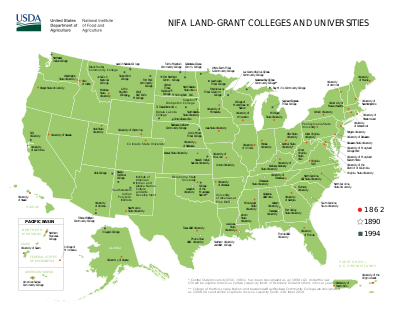
And in 1862, in the middle of the Civil War, Abraham Lincoln signed the Morrill Act, which was really the first time the federal government provided financial subsidies for higher education.
Miriam PawelGUEST
And in order to qualify, California had to have a university that would be a school of mining and agriculture, which were the two industries that were being supported by the Morrill Act.
Miriam PawelGUEST
So they end up taking over the College of California, which has just bought land in this hinterland north of Oakland where there was nothing, which became, and in fact, they named it Berkeley.
Miriam PawelGUEST
And so it was the sort of early founders who saw it as, you know, part of that effort to develop a society in San Francisco and in Northern California for, as all of these people pour in, not just for the gold rush, but to take advantage of the gold rush.

Allen MendenhallGUEST
Business, business-wise, it was a failure.
Allen MendenhallGUEST
And after the, uh, Morrill Act was passed, the Alabama Legislature was tasked with putting a new land grant institution in the State of Alabama, and the legislature chose Tuscaloosa for the location of this land grant.
Allen MendenhallGUEST
And instead of putting it there, a bunch of legislators stayed after the session was over and pulled a bunch of shenanigans, and essentially acquired East Alabama Male College, which was a failure, again, and created Alabama Agricultural and Mechanical College, which became Alabama Polytechnic Institute, which became Auburn University.
Allen MendenhallGUEST
So I had Auburn in my family history just in the genealogy from its inception, and felt that I needed to get something from Auburn just to be part of the family.

Deborah SantiagoGUEST
Well, um, I believe so.
Deborah SantiagoGUEST
I think the origin of our institutions of higher education is built on the value of a public good, especially our public institutions, right? I mean, think of the, the, you know, the, um, uh, Morrill Act, which created land grant universities and institutions.
Deborah SantiagoGUEST
It was to serve a community, so a lot of focus on, on mining and, and agriculture, the very things that sustain society.
Jodi BlincoHOST
Mm-hmm.

Ben WildavskyGUEST
I do think that we'd be incomplete if we didn't just briefly mention in the U.S. context, of course, the land grant acts of the second half of the 19th century are, I think, highly relevant both to what REACH is doing, but also to the the sort of compromise that we've reached after sort of some back and forth.
Ben WildavskyGUEST
You know, in 1862, the Morrill Act was passed, and this idea is that the search for knowledge and the demands of practical life belong under one roof in one kind of institution.
Ben WildavskyGUEST
But just as the sort of Humboldtian research university tried to put research and teaching under one roof and was imitated by the American places like Chicago and Johns Hopkins and arguably perfected here in the sense that we then... came to have, after World War II, this huge constellation of world-class research universities.
Ben WildavskyGUEST
But just to quickly be specific, you have a place like UC Berkeley, from my hometown, founded as California's land-grant college.

Richard RomanHOST
The institutions at the center were public land-grant universities.
Richard RomanHOST
The schools created under the Morrill Act of 1862 with a specific public bargain.
Richard RomanHOST
The federal government granted land to the states, and the universities owed practical education, research, and service to ordinary people, not only to elites.
Richard RomanHOST
That bargain still underpins their claim to public money.

Johann NeemGUEST
The Office of Education emerges much later, and the Department of Education not until the 20th century.
Johann NeemGUEST
The Morrill Act of 1862 is another high point in the history of higher education, where the federal government again sets aside, uh, land and allows states to use the revenue from that land to fund higher education.
Johann NeemGUEST
And the Morrill Acts created what are now called the land grant universities, which still, you know, which are still vibrant institutions today.
Steve HermanHOST
And, and that was Morrill, M-O-R-R-I-L-L, not, um-
Johann NeemGUEST
Not like the mushrooms.

Silvia SecchiGUEST
You just push from the inside, right? And you say, "This is not good." Like, in Iowa, we don't have any native reservations.
Silvia SecchiGUEST
[lip smack] What we have is the Meskwaki settlement, and the Meskwaki had to buy back their land after being pushed out, right? So rethinking about this history and its problems and acknowledging them and, you know, respecting the, uh, w- what has been lost and, and, and the voices of those who have lost in, in, in this long-term process are created after, uh, you know, after the Morrill Act of 1862, in the eastern part of the United States actually received what is called scrip, uh, which basically means they were go- they were given land elsewhere in the West.
Silvia SecchiGUEST
So like Rutgers got land in Iowa, for example, because, you know, New Jersey was settled, right? [chuckles] And so, um, so, so acknowledging this history and the benefits the universities have received from these systems and thinking about how to address these inequities, uh, to me is how we move forward.
Faith KearnsHOST
If I could just say something real fast.
Faith KearnsHOST
It's really interesting time right now because I feel like I'm seeing a lot of calls for kind of reinvestment in public education, public universities as kind of the response to the crisis or whatever [chuckles] we wanna call it that u- that universities are in right now.
Faith KearnsHOST
And one of the things that comes up a lot is actually like reinvestment in specifically the land-grant system.
Faith KearnsHOST
And so I think it's, like it feels like a really important conversation to have right now because actually just even on Blue Sky this morning, there was a specific thing about the Morrill Act, you know, and, and the land grants.
Faith KearnsHOST
And so it feels like, you know, if, if there is an opportunity for reinvestment in that system to actually really try to figure out what the way forward is based on this, you know, sort of th- this painful history.
10 more episodes mention Morrill Land-Grant Acts.
Create an account to see the whole feed, search across every transcript, and follow the entities you care about.