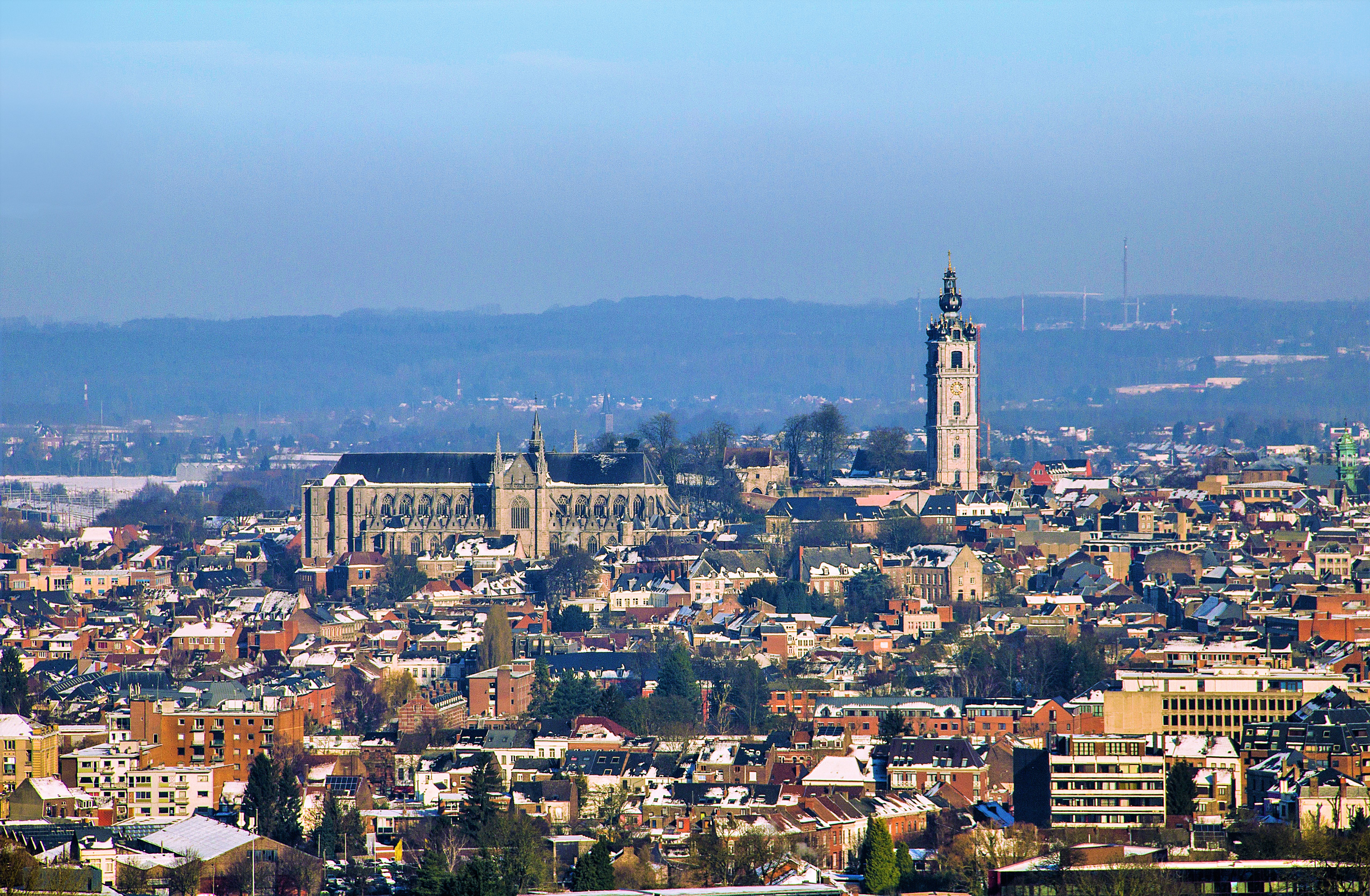
Mons
City in BelgiumWikipedia
65
MENTIONS
6
EPISODES
6
PODCASTS
Search complete. 65 mentions across 6 episodes found for "Mons".
Sep 14, 2026

David LawrenceNARRATOR
Part 1.
David LawrenceNARRATOR
Preface and Chapter 1 of Canada's 100 Days with the Canadian Corps from Amiens to Mons.
David LawrenceNARRATOR
August 8 to November 11, 1918.
David LawrenceNARRATOR
This is a LibriVox recording.
10 MINS LATER
David LawrenceNARRATOR
as a consequence we entered early in june on more ambitious local offensive operations in which the australians had a considerable share by the end of july he goes on the reconstruction of the british armies had been completed and the success of their various local operations had had a good effect i had once more at my command an effective striking force capable of taking the offensive with every hope of success when the proper moment should arrive that moment now approached at a conference held on july twenty three field marshal haig writes when the success of the attack of july eighteenth was well assured the methods by which the advantage already gained could be extended were discussed in detail the allied commander-in-chief asked that the british french and american armies should each prepare plans for local offensives to be taken in hand as soon as possible with certain definite objectives of a limited nature these objectives on the british front were the disengagement of amiens and the freeing of the paris amiens railway by an attack on the albert mondidier front the role of the french and american armies was to free other strategic railways by operations farther south and east it would depend upon the nature of the success which might be obtained in these different allied operations whether they could be more fully exploited before winter set in it was subsequently arranged that attacks would be pressed in a converging direction toward mezières by the french and american armies while at the same time the british armies attacking toward the line of st canquin cambrai would strike directly at the vital lateral communications running through mouberge to herson and mezières by which alone the german forces on the campaign front could be supplied and maintained such a movement would also threaten the group of german armies in flanders and therefore it was obvious of vital importance to the enemy to maintain intact his front opposite st quentin and cambrai and for this purpose he depended upon the great fortified zone known as the hindenburg line it is necessary to keep this in mind as it is the key to the extraordinary fierce resistance the enemy maintained throughout the critical days of the battle of cambrai summing up the general scheme of british operations field marshal haig says the brilliant success of the amiens attack was the prelude to a great series of battles in which throughout three months of continuous fighting the british armies advanced without a check from one victory to another this period was divided into two well-defined phases the first being the breaking through of the hindenburg line and the second the pushing of the enemy before us from his hastily prepared defenses the second phase had already reached its legitimate conclusion when the signing of the armistice put an end to the operations Finally defeated in the great battles of November 1 and 4 and utterly without reserves, the enemy at that date was falling back without coherent plan and in widespread disorder and confusion.
David LawrenceNARRATOR
End of Part 1 Preface and Chapter 1 Recording by David Lawrence in Brampton, Ontario September 2009
Ian MeyerNARRATOR
Part 1, Chapter 2, of Canada's Hundred Days with the Canadian Corps, from Amiens to Mons, August 8th to November 11th, 1918.
Ian MeyerNARRATOR
This is a LibriVox recording.

James O'ConnorNARRATOR
In these days magnificent work was done by Core Signals, who pushed their telegraph lines ahead abreast of the advance, thus keeping all units in touch, a remarkable feat, for in the textbooks it had never been contemplated that in open warfare of the nature now developing, wire communications could thus be maintained.
James O'ConnorNARRATOR
But the work was carried forward right up to Mons, and after the Armistice through Belgium to the Rhine.
James O'ConnorNARRATOR
Once the north bank of the Sensi had been cleared, our advance went forward practically unchecked for several days.
James O'ConnorNARRATOR
Canadian railway troops had been brought up to repair communications, but our progress quite outpaced their utmost efforts, and the troops pressed on, often with but meagre rations, yet stimulated by the prospect of liberating civilians in the next village ahead, and there again encouraged to fresh exertions.
1 HR 20 MINS LATER
James O'ConnorNARRATOR
On the morning of October 2, the civil authorities transmitted the following message through Canadian Corps signals to the French government, quote, After 50 months of hard captivity, but always resolute and inspired by the memory of her sons heroically fallen on the field of honor, the city of Valenciennes, cruelly separated from her brave mayor, Dr. Truchon, and with a great number of her inhabitants in exile, addresses to the French government the expression of her admiration for the victorious armies of the Entente and her patriotic cry of joy on the day of her deliverance.
James O'ConnorNARRATOR
Dr. Truchon had persistently opposed the exactions of the German military governor until finally he was exiled.
James O'ConnorNARRATOR
Acting in his place remained Messieurs Billier and Damien, who together with Monsieur René Delamme, representative of the American Relief Committee, administered faithfully to the wants of their people, and were not to be deterred by threats and commands from doing what was possible to mitigate their unhappy condition, for their lot was very miserable.
James O'ConnorNARRATOR
Except for a little meal, these depended entirely on American and Spanish relief for their food, and the one bright spot in a story of oppression and violence is the figure of a German, Britmeister Vinnerborg, associated with Monsieur Delam in the relief, who did his best to see that it was honestly distributed.

Maeve McMahonHOST
That was the EU climate boss there speaking to our Maria Taddeo.
Maeve McMahonHOST
And now moving on to this next story that takes us to the NATO headquarters in Mons here in Belgium, where a Canadian national of Chinese origin is accused of spying while interning there.
Maeve McMahonHOST
Now, details of the case remain tightly guarded, but serious questions are being raised over how an alleged spy gained access to one of the world's most important military alliances and who she was allegedly working for.
Maeve McMahonHOST
For more, we can head straight over to Mons, where our EU correspondent Angela Scudens is standing by as this case is set to move forward today.
Maeve McMahonHOST
Good morning, Angela.
Maeve McMahonHOST
Just tell us, what is the latest on this case?
Angela SchutinsCORRESPONDENT
Good morning, Maeve.
Angela SchutinsCORRESPONDENT
So, yes, I'm out the front of the Belgian indictments chamber in the city of Mons.

Yvette FieldingHOST
So, let's begin where so many of these stories begin, in the autumn of 1914, on a retreat that should have ended in disaster, with the case that started it all.
Yvette FieldingHOST
This is the haunting of the Angel of Mons.
Yvette FieldingHOST
It's August 1914.
Yvette FieldingHOST
The First World War is only weeks old, and already it's not going the way anyone promised.
Yvette FieldingHOST
They said, didn't they, that it would be over by Christmas.
Yvette FieldingHOST
They were wrong by four years and 17 million lives.
Yvette FieldingHOST
The British Expeditionary Force, a small professional army, has crossed into Belgium to stand alongside the French, and at a town called Mons, they meet the German army for the very first time.
Yvette FieldingHOST
The British soldiers are outnumbered roughly two to one, but they are superbly trained.

PinpinHOST
Or you could grow moss once again.
PinpinHOST
This is all to be installed by the individual but some city actually do help people install them to make the city look better and to help people lower their bill like Mons in Wallonia.
PinpinHOST
If you live in the center of Mons you just need to choose which plant you want to grow and the city will give it to you for free and help you install it on your facade.
PinpinHOST
All of this after the city successfully voted and elected a majority.
PinpinHOST
Greens, Socialists and Marxists together.

Tyler ReddickADVERTISER
Sponsored by Chumba Casino.
Clive CatterallNARRATOR
Introduction to The Angels of Mons.
Clive CatterallNARRATOR
This is a LibriVox recording.
Clive CatterallNARRATOR
All LibriVox recordings are in the public domain.
Clive CatterallNARRATOR
For more information or to volunteer, please visit LibriVox.org.
Clive CatterallNARRATOR
The Angels of Mons: The Bowmen and Other Legends of the War by Arthur Machen, nineteen fifteen.
Clive CatterallNARRATOR
Introduction.
Clive CatterallNARRATOR
I have been asked to write an introduction to the story of The Bowmen on its publication in book form together with three other tales of similar fashion, and I hesitate.