Mohs surgery
72
MENTIONS
20
EPISODES
19
PODCASTS
Search complete. 72 mentions across 20 episodes found for "Mohs surgery".
Oct 30, 2026

James Del RossoHOST
Cochlear implants, spinal cord stimulators, sacral nerve stimulators, cardioverted defibrillators, which we've had for some time, deep brain stimulators, phrenic nerve stimulators, and vagal nerve stimulators.
James Del RossoHOST
How are these devices affected? So if you're doing any type of surgical procedure, it doesn't have to be Mohs surgery necessarily.
James Del RossoHOST
This is a good article to review and think about how you're approaching these particular situations.
James Del RossoHOST
They do have a table which summarizes device-specific perioperative recommendations for dermatologic surgery, broken down into preoperative, intraoperative, and postoperative.

Katherine HicksGUEST
was at a university center and it was, that was probably half and half like cosmetic and functional.
Katherine HicksGUEST
Kind of a typical early career facial plastics, like some Mohs Recon, some functional rhinos, some cosmetic rhinos, some bluffs.
Katherine HicksGUEST
Not a lot of like advanced aging face stuff, but kind of your standard academic facial plastic stuff.
Katherine HicksGUEST
But
Katherine HicksGUEST
And you look at the reimbursements and the logistics that go into it.
Katherine HicksGUEST
And I was like, the two things that I do the most of, did the most of insurance wise, like previously were functional rhinos.
Katherine HicksGUEST
and Mohs closures and functional rhinos.
Katherine HicksGUEST
A lot of those patients are on a high deductible plan.
Stan TolkachjovGUEST
My name is Stan Tolkachjov.
Stan TolkachjovGUEST
I am a Mohs surgeon and a dermatologist at Epiphany Dermatology.
Stan TolkachjovGUEST
I'm also a professor at Texas A&M College of Medicine, as well as Baylor University Medical Center in Dallas, Texas.
Stan TolkachjovGUEST
I teach at the Department of Dermatology as an assistant professor at UT Southwestern.

KayHOST
And you're building a platform.
Samuel LynchGUEST
We are building a platform and that's one of the other things, not only are we, you know, in aesthetic medicine, but you know, now we have a lot of studies going on in plastic surgery and dermatologic surgery, post Mohs surgery, um, and, and other aspects of medicine.
KayHOST
I mean, that's what we need to do.
KayHOST
I feel that what applies at the health care level is super important.
Samuel LynchGUEST
And the data is extremely clear on that.
Samuel LynchGUEST
But one of the things that we did in that regard was, again, wrote a clinical trial protocol, took it to the FDA, took it to the IRBs.
Samuel LynchGUEST
for a study using PDGF, same PDGF that's in Ariessence, for treatment of wounds following Mohs surgery, which is, of course, as you know, right, done to excise to remove a skin cancer.
Samuel LynchGUEST
So the trial was really looking at putting this growth factor, putting PDGF directly onto a site where a cancer had just been surgically removed.

Diego Ruiz de SilvaHOST
Great.
Diego Ruiz de SilvaHOST
If it doesn't, our Mohs surgeon is excellent, knows exactly what to do and cut these out.
Diego Ruiz de SilvaHOST
So it might make Mohs surgery wait times more palatable, fewer stages, more efficient days for everyone.
Diego Ruiz de SilvaHOST
So again, it's not to get rid of surgery.
Diego Ruiz de SilvaHOST
I think it's more to use our surgical skills judiciously and be able to do new adjuvant work would be really interesting.
Graham LitchmanHOST
Yeah, I like that a lot, Diego.
Graham LitchmanHOST
And I also have to add that sometimes when you have someone who just has had really, really significant sun exposure and then other comorbidities that are kind of adding to their risk factors, you know, maybe they were a surfer, maybe they grew up on a farm, maybe they had chemical exposures, but they are starting to have so many skin cancers that are requiring Mohs surgery.
Graham LitchmanHOST
Some of them do become fatigued.

Erika TvedtenGUEST
Hi everyone, and welcome to the October 2026 spotlight episode of Derm Surgery Digest podcast.
Erika TvedtenGUEST
I'm Dr. Erica Tweeden, the current Mohs Fellow at Lehigh Valley Hospital in Allentown, Pennsylvania, and I'll be serving as the junior reviewer for this October month's surgical oncology and reconstruction issue of dermatologic surgery.
Erika TvedtenGUEST
I'm joined by Dr. David Ozog, a Mohs surgeon and the chairman at Henry Ford Hospital in Detroit, Michigan.
Erika TvedtenGUEST
Thank you for joining me, Dr. Ozog.
Erika TvedtenGUEST
Do you want to provide a brief introduction?
David OzogGUEST
And it's just such a pleasure to be here.
David OzogGUEST
I'm David Ozog.
David OzogGUEST
I'm a proud Mohs surgeon.

AngusGUEST
That little amount.
AngusGUEST
So they ended up sending me to a Mohs doctor.
AngusGUEST
So this just
Bubba the Love Sponge ClemHOST
happened.
Bubba the Love Sponge ClemHOST
So at that point, he sent you to Moffitt?
AngusGUEST
Well, no.
AngusGUEST
He ended up sending me to a Mohs doctor.
AngusGUEST
So they do skin for the skin cancer and everything.

Matt KettmanHOST
We might just cut it out.
Matt KettmanHOST
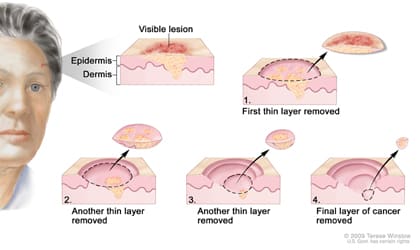
We might do a Mohs surgery, which is a fancy surgery that the dermatologist uses and tries to take as little tissue as necessary by looking microscopic.
Matt KettmanHOST
Did I get it all? Let's take some more.
Matt KettmanHOST
Kind of doing the pathology and the surgery at the same time.
Matt KettmanHOST
Sometimes we even treat these with radiation.
Matt KettmanHOST
I know Ascent here in town has a spot radiation for people that don't want to scar or it's in a sensitive area.
Matt KettmanHOST
And then there's actually some cancers, basal cells that we can treat with topical creams.
Matt KettmanHOST
Let's go back to this Mohs surgery, M-O-H-S. That's what a dermatologist will do.

Dustin PortelaHOST
And today we're thrilled to welcome to the podcast, Dr. Maren Locke, also known online as the Budget Dermatologist.
Mimi BanksHOST
In addition to being a board-certified dermatologist and Mohs surgeon and the creator behind The Budget Dermatologist, Dr. Locke brings to us a platform dedicated to making evidence-based skincare education simple, accessible, and affordable.
Mimi BanksHOST
With a community of more than 1 million followers across social media, she has built her platform by cutting through skincare misinformation and helping people understand what actually works without making skin feel like it has to come with a luxury price tag.
Mimi BanksHOST
Her goal on social media is to make expert dermatology education accessible to everyone.

Kayla NicoleHOST
And when it comes to skin health and longevity, she is that girl.
Kayla NicoleHOST
She's a double board-certified dermatologist, cosmetic surgeon, and Mohs skin cancer surgeon, and also the founder of Avant Dermatology and Aesthetics with practices in Tustin and right here in Beverly Hills.
Kayla NicoleHOST
But what I love about Dr. Sheila's approach is that she looks beyond what we're putting on our skin.
Kayla NicoleHOST
She's one of the few dermatologists certified in integrative dermatology, meaning we're talking about the whole picture, your skincare, your gut, your stress, your lifestyle, and how all of it can show up on your face.
10 more episodes mention Mohs surgery.
Create an account to see the whole feed, search across every transcript, and follow the entities you care about.