Modern English
Spoken languageWikipedia
125
MENTIONS
16
EPISODES
16
PODCASTS
Search complete. 125 mentions across 16 episodes found for "Modern English".
Sep 14, 2026

Sean Philip CooperHOST
So it's a scribal copy in all likelihood.
Sean Philip CooperHOST
And we're going to go back to this and you're going to find that if you try to read this text, which is available in this very attractive edition translated by Seamus Heaney that we're going to be using for our modern English translation.
Sean Philip CooperHOST
you will find that it has two versions of the text.
Sean Philip CooperHOST
And here they are.
Sean Philip CooperHOST
And a facing page translation means you get the original text on one side of the book, usually the left as in this case, and then you have the translation on the right.
Sean Philip CooperHOST
And the theory is...
Sean Philip CooperHOST
That you can look back and forth and you can see the text on the left and see what it equates to in modern English on the right.
Sean Philip CooperHOST
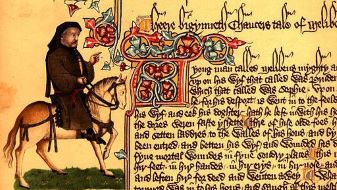
And you will find, I think, that when you look at the text on the left, it is not like looking at, say, Chaucer, right? Who, although he might be somewhat confusing to you, you can probably pick out quite a few words and sound them out loud and you'll say, oh, okay, I see what that is meant to be.

Amy ArthurNARRATOR
In English etymology, my main focus here, the cast of characters is diverse.
Amy ArthurNARRATOR
Legions of Romans, longships of Vikings, schools of Muslim scientists, academies of Greeks, and one fateful army of Normans in 1066 have all influenced the words of what linguists call Modern English, circa 1500 CE to the present day.
Amy ArthurNARRATOR
Of course, all those people didn't exist in a vacuum.
Amy ArthurNARRATOR
The whistling arrows at the Battle of Hastings and the scratching quills of William Shakespeare formed part of real historical events and sociopolitical circumstances that are still reflected in our vocabulary.
15 MINS LATER
Amy ArthurNARRATOR
You can also spot another sound change, namely that in Latin B became P before T.
Amy ArthurNARRATOR
Some words may have more than one root, strange as that sounds.
Amy ArthurNARRATOR
Modern English is a fan of fusing independent words together, as in blackboard, toothpaste, or gentleman.
Amy ArthurNARRATOR
We call these compounds.

JRHOST
And with that, time for our final bottom-of-the-hour break.
JRHOST
Music from Modern English, back after this on DAM Radio.
Modern EnglishSOUNDBITE_SPEAKER
Making love to you was never second best.
Modern EnglishSOUNDBITE_SPEAKER
I saw the world crashing all around your face.
Modern EnglishSOUNDBITE_SPEAKER
I've seen some changes, but it's getting better Stop the world and mess with you
JRHOST
1982.
JRHOST
Modern English.
JRHOST
On damn radio.

Gary StevensHOST
So Tyndale had a huge influence.
Gary StevensHOST
The King James Bible has become one of the foundational documents of modern English along with Shakespeare.
Gary StevensHOST
That's amazing.
Gary StevensHOST
People will be quoting the King James Bible and Shakespeare all the time without even knowing it.

Tom AscolHOST
And we highly commend it.
Graham GundinHOST
We were talking a little bit before the episode and just reflecting on how the Lord has enabled founders to really kind of stock the armory of 1689 literature, whether it's the— years ago coming out with 1689 in Modern English, recently coming out with this great new ghost skin leather edition with the catechism and the creeds in it, the Baptist standards with the First London Baptist, Second London Baptist, and all those different Baptist documents.
Graham GundinHOST
We've got Jim Scott Orrick's commentary on the Baptist catechism.
Graham GundinHOST
As you mentioned, Dr. Renahan's exposition of the – And now you've added to all of that with this devotional meditation upon the confession, which I think is, again, so helpful.

Mark HallHOST
Your ass shall be violently taken away from before your face, and shall not be restored unto you.
Mark HallHOST
And yeah, you can read that in the Old English or the Modern English, and both are probably apropos.
Mark HallHOST
Your sheep shall be given unto your enemies, and you shall have no one to save you.
Mark HallHOST
Your sons and your daughters shall be given to another people, and your eyes shall look and fail with longing for them all the day, and there will be nothing in

speaker_0HOST
It is a modernised version of their word for grey coat or grey mantle.
speaker_0HOST
Rohanese as to Westeron as Old English as to our Modern English.
speaker_0HOST
And this is a reference to Gandalf's appearance.
speaker_0HOST
This brings me to the name Incanus.

Mark PenfoldNARRATOR
The end of chapters 1 through 4.
Mark PenfoldNARRATOR
Chapters 5 through 8 of the Gospel according to Luke, from the New Testament in Modern English, translated by Farrar Fenton.
Mark PenfoldNARRATOR
This LibriVox recording is in the public domain.
Mark PenfoldNARRATOR
Recording by Mark Penfold.
30 MINS LATER
Mark PenfoldNARRATOR
He, however, enjoined them to tell no one what had occurred.
Mark PenfoldNARRATOR
The end of chapters 5 through 8.
Mark PenfoldNARRATOR
Chapters 9 through 12 of the Gospel according to Luke from the New Testament in Modern English, translated by Ferrar Fenton.
Mark PenfoldNARRATOR
This LibriVox recording is in the public domain.

Anne CurzanGUEST
We've got traditionally four periods in the history of English.
Anne CurzanGUEST
Old English, Middle English, Early Modern English, and Modern English.
Anne CurzanGUEST
We'll start with Old English, which raises the question of when did English start? And you'll often hear the date 449, which is when the Germanic tribes came over from the European continent to the British Isles.
Anne CurzanGUEST
Now, of course, Rebecca, in 449, when they landed, they were speaking the same Germanic dialect that the people they left behind were speaking.
Anne CurzanGUEST
Now, what's interesting about Middle English, Rebecca, is that it gets earlier and earlier in the history of English because as English continues, the middle keeps moving.
Anne CurzanGUEST
The middle keeps moving.
Anne CurzanGUEST
Then you have Early Modern English.
Anne CurzanGUEST
This is Shakespearean English.

Al GattulloHOST
It was Howard Jones was the headliner.
Al GattulloHOST
Wang Chung, the English beat, and Modern English.
Kurt SchlichterHOST
Modern English rocks, too.
Kurt SchlichterHOST
I saw them last year.
Kurt SchlichterHOST
I
6 more episodes mention Modern English.
Create an account to see the whole feed, search across every transcript, and follow the entities you care about.