Model–view–controller
39
MENTIONS
13
EPISODES
11
PODCASTS
Search complete. 39 mentions across 13 episodes found for "Model–view–controller".
Nov 19, 2026

Anders AbelGUEST
The broken access control, for example, if we look at the two major things, the authorization framework, there is a great authorization framework in ASP.NET Core that you can use to express your authorization rules, a policy-based system that is extensible and works really well.
Anders AbelGUEST
Cross-site request forgery, if you do server-side rendered stuff like Razor Pages or classical MVC, it's built in.
Anders AbelGUEST
You get this anti-forgery token for free in your forms.
Anders AbelGUEST
And for MVC, you have to opt in to enable the check.
Anders AbelGUEST
For Razor Pages, it's enabled out of the box.
Anders AbelGUEST
You don't have to think about it.

Anders AbelGUEST
framework in ASP.NET Core that you can use to express your authorization rules, a policy-based system that is extensible and works really well.
Anders AbelGUEST
Cross-site request forgery, if you do server-side rendered stuff like razor pages or classical MVC, it's built in.
Anders AbelGUEST
You get this anti-forgery token for free in your forms.
Anders AbelGUEST
And for MVC, you have to opt in to enable the check for razor pages.
Anders AbelGUEST
It's enabled out of the box.
Anders AbelGUEST
You don't have to think about it.

Ben CallahanHOST
That's a really helpful framing, Josh.
Ben CallahanHOST
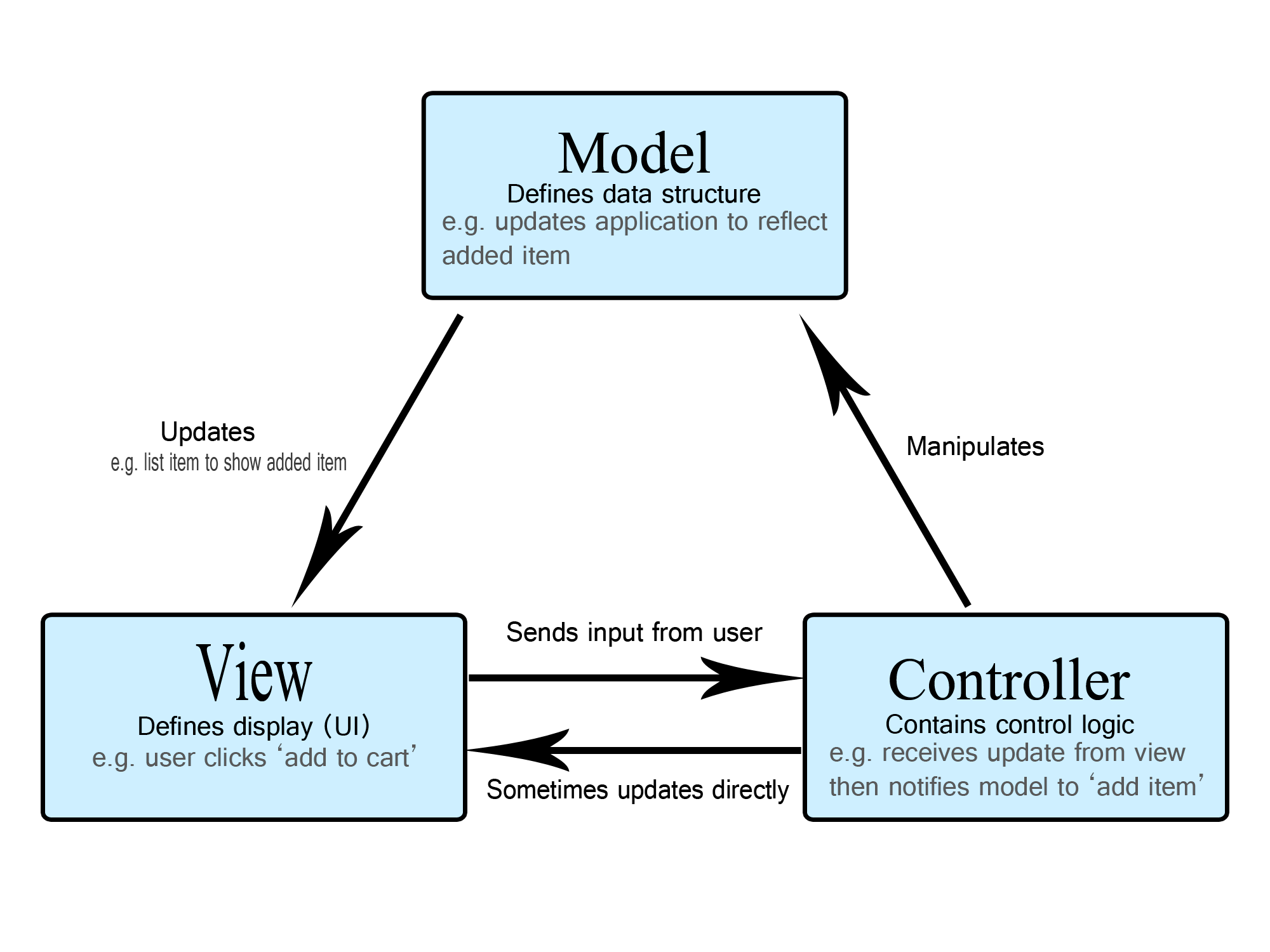
I'll just take us over here again, because when we were talking a little bit about this diagram earlier, you pointed something out, Josh, that was really interesting to me, which was the connection of this diagram to a more traditional software development approach called MVC.
Ben CallahanHOST
It's like a model for how software is built.
Ben CallahanHOST
And you said, I'll let you explain this.
Ben CallahanHOST
Like, what was the connection you saw there?
Josh ClarkGUEST
Yeah.
Josh ClarkGUEST
So if you're not familiar, MVC is sort of like one, it's sort of like a classic way that for decades has been described sort of the specific domains of software.
Josh ClarkGUEST
And typically, it's been treated as good practice to treat them as separate, where we have the model, which is so the MVC model view controller, the model is like, the context or the data in many cases like this is where the database is is what the information is and how it's structured how it's accessed the view is the stuff that has been pretty much exclusively where design has been involved and front-end development typically too it doesn't really have very we haven't plugged into the other two areas and controller is the behavior the model which is the the logic of the system which has typically been almost entirely part of the kind of the developer community sometimes on the front end but more profoundly on the back end the opportunity now as we think about If design is about the creation of intelligent interfaces that make decisions on the fly, the really important design role and how do we support that experience layer as design system folks is getting into that controller area.

Anders AbelGUEST
The broken access control, for example, if we look at the two major things, the authorization framework, there is a great authorization framework in ASP.NET Core that you can use to express your authorization rules, a policy-based system that is extensible and works really well.
Anders AbelGUEST
Cross-site request forgery, if you do server-side rendered stuff like razor pages or classical MVC, it's built in.
Anders AbelGUEST
You get this anti-forgery token for free in your forms.
Anders AbelGUEST
And for MVC, you have to opt in to enable the check for razor pages.
Anders AbelGUEST
It's enabled out of the box.
Anders AbelGUEST
You don't have to think about it.

Rod JohnsonGUEST
So this is a form of documentation which actually enables you at runtime to pick that out using an AspectJ point card.
Rod JohnsonGUEST
So for example, think about you could write a Java doc that says something like, this is a Spring MVC controller.
Rod JohnsonGUEST
Or this is a class that runs inside the something or other engine.
Rod JohnsonGUEST
And that would all be fine, but it's not useful to you at runtime.
Rod JohnsonGUEST
There's a lot of religious preferences in programming.
Rod JohnsonGUEST
At aspect, which is, of course, not an annotation that we introduced, but an annotation that Aspect J5 introduced and we adopted.
Rod JohnsonGUEST
And at controller, which is a Spring MVC controller.
Rod JohnsonGUEST
So all of those ship out of the box.
Alex MartelliGUEST
But basically, you can deal with any user behavior and happenings as events in this way.
Alex MartelliGUEST
Another classic which has possibly been the first way to, after the model view controller framework, the observer observable has been a generalization that still lets you build MVC on top of it, but is more general.
Alex MartelliGUEST
Because, basically, an observer is a target object.
Alex MartelliGUEST
Sorry, an observable is a target object that lets you add observers, which in the general case could be callables, although often, because it's expressed in an object-oriented way, they rather need to be objects.

Mike RispoliHOST
And I was pleased to see that some of the things that I thought about doing were kind of already in there about the components of a CQRS system.
Mike RispoliHOST
But One of the things that is difficult, though, is we're so, you know, I find that agents write MVC very, very well.
Mike RispoliHOST
They write Ruby on Rails very well.
Mike RispoliHOST
And I could have picked Laravel or Phoenix or any of these frameworks.

Will ArcherPANELIST
Like, they're not... always or even often wrong about it, but like, do they do idiomatically or are they making up their own idioms? You know, cause like so much of like, I think so much of like software, so software engineering at its core is all about eliminating complexity.
Will ArcherPANELIST
However you can, when one of the unsung tools of eliminating complexity is a very Ruby on rails centric philosophy in that, like you sort of build the stuff on, in a very similar way, right? You know, your MVC frameworks, your MVVM frameworks, like just sort of like, it's like, this is where these things go.
Will ArcherPANELIST
This is how you organize the tools in your garage so that when you can find something, you could just pull it off the shelf and it's ready to go.
Will ArcherPANELIST
And AI frequently, one of the biggest problems that I run into over and over with like sort of AI generated code is like, A, they're very happy to reinvent the wheel with no compunctions.

Cameron BarréGUEST
And if you threw all that state away, then that makes it hard to debug.
Cameron BarréGUEST
And then in addition to that, semantically, the whole sort of like, you know, MVC like controller, REST API type of dynamic, in addition to like a rescue and like trying to, this app needs to sync to Salesforce and like an LMS system and having to specify like, I'm going to do this now, or I'm going to do it later.
Cameron BarréGUEST
And later just means things get shot off to a job queue and like, There's a lot of incidental complexity in that system.
Cameron BarréGUEST
And moving it over to grain essentially looks like...
3 more episodes mention Model–view–controller.
Create an account to see the whole feed, search across every transcript, and follow the entities you care about.