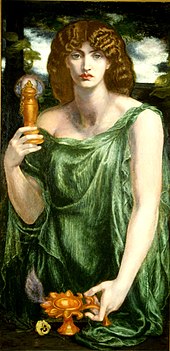
Mnemosyne
GoddessWikipedia
4
MENTIONS
4
EPISODES
4
PODCASTS
Search complete. 4 mentions across 4 episodes found for "Mnemosyne".
Nov 11, 2026

Lissa LaylandGUEST
But there will be a lot of readers who kind of think, oh, I've not heard of this character before.
Lissa LaylandGUEST
Who are they? And so two of the goddesses that appear in Sunstruck are Femi, who's the goddess of gossip and fame and renown, and Mnemosyne, who's the goddess of memory.
Lissa LaylandGUEST
Iris, who appears briefly in Thunderstruck, the goddess of rainbows.
Lissa LaylandGUEST
You know, they're these women from Greek mythology who most readers aren't going to have a really clear idea of.

John PriceHOST
So please share.
Sarah JanesGUEST
Well, the goddess Mnemosyne is my muse.
Sarah JanesGUEST
And I think she's a forgotten muse, which is ironic because she's the goddess of divine remembrance.
Sarah JanesGUEST
And she, if you think about it, is the, she's a Titaness, first of all.

David RonaldNARRATOR
The following is the view of Celsus and the Epicureans.
David RonaldNARRATOR
quote moses having he says learned the doctrine which is to be found existing among wise nations and eloquent men obtained the reputation of divinity now in answering to this we have to say that it may be allowed him that moses did indeed hear a somewhat ancient doctrine and transmitted the same to the hebrews that if the doctrine which he heard was false and neither pious nor venerable and if notwithstanding he received it and handed it down to those under his authority he is liable to censure but if as you assert he gave his adherents to opinions that were wise and true and educated his people by means of them what pray has he done deserving of condemnation would indeed that not only epicurus but aristotle whose sentiments regarding providence are not so impious as those of the former and the stoics who assert that god is a body had heard such a doctrine then the world would not have been filled with opinions which either disallow or enfeeble the action of providence or introduce a corrupt corporal principle according to which the god of the stoics is a body with respect to whom they are not afraid to say that he is capable of change and may be altered and transformed in all his parts and generally that he is capable of corruption if there be any one to corrupt him but that he has the good fortune to escape corruption because there is none to corrupt whereas the doctrine of the jews and christians which preserves the immutability and unalterableness of the divine nature is stigmatized as impious because it does not partake of the profanity of those whose notions of god are marked with impiety but because it says in the supplication addressed to the divinity thou art the same it being moreover an article of faith that god has said i change not after this celsus without condemning circumcision as practised by the jews asserts that this usage was derived from the egyptians thus believing the egyptians rather than moses who says that abraham was the first among men who practised the rite and it is not moses alone who mentions the name of abraham assigning to him great intimacy with god but many also of those who give themselves to the practice of conjuration of evil spirits employ in their spells the expression god of abraham pointing out by the very name the friendship that existed between that just man and god and yet while making use of the phrase god of abraham they do not know who abraham is and the same remark applies to isaac and jacob and israel which names although confessedly hebrew are frequently introduced by those egyptians who profess to produce some wonderful result by means of their knowledge the rite of circumcision however which began with abraham and was discontinued by jesus who desired that his disciples should not practise it is not before us for explanation for the present occasion does not lead us to speak of such things but to make an effort to refute the charges brought against the doctrines of the jews by celsus who thinks that he will be able the more easily to establish the falsity of christianity by assailing its origins in judaism he can show that the latter also is untrue after this celsus next asserts that those herdsmen and shepherds who followed moses as their leader had their minds deluded by vulgar deceits and so supposed that there was one god let him show then how after this irrational departure as he regards it of the herdsmen and shepherds from the worship of many gods he himself is able to establish the multiplicity of deities that are found amongst the greeks or among those other nations that are called barbarian let him establish therefore the existence of mnemosyne the mother of the muses by zeus or of themis the parent of the hours or let him prove that the ever naked graces can have a real substantial existence but he will not be able to show from any actions of theirs that these fictitious representations of the greeks which have the appearance of being invested with bodies are really gods and why should the fables of the greeks regarding the gods be true any more than those of the egyptians for example who in their language know nothing of Mnemosyne, mother of the nine muses, nor of a Themis, parent of the hours, nor of a Euphrosyne, one of the graces, nor of any other of these names.
David RonaldNARRATOR
How much more manifest, and how much better than all these inventions, is it that, convinced by what we see in the admirable order of the world, we should worship the maker of it as the one author of one effect and which as being wholly in harmony with itself cannot on that account have been the work of many makers and that we should believe that the whole heaven is not held together by the movements of many souls for one is enough which bears the whole of the non wandering sphere from east to west and embraces within it all things which the world requires and which are not self-existing for all are parts of the world while god is no part of the world but god cannot be imperfect as a part is imperfect and perhaps profounder consideration will show that as god is not a part so neither is he properly the whole since the whole is composed of parts and reason will not allow us to believe that the god who is over all is composed of parts each one of which cannot do what all the other parts can after this he continues these herdsmen and shepherds concluded that there was but one god named either the highest or adonai or the heavenly or sabaoth or called by some other of those names which they delight to give this world and they knew nothing beyond that and in a subsequent part of his work he says that it makes no difference whether the god who is over all things be called by the name of zeus which is current among the greeks or by that which is in use among the indians or egyptians now in answer to this we have to remark that this involves a deep and mysterious subject that respecting the nature of names it being a question whether as aristotle thinks names were bestowed by arrangement or as the stoics hold by nature the first words being imitations of things agreeably to which the names were formed and in conformity with which they introduced certain principles of etymology or whether as epicurus teaches differing in this form from the stoics names were given by nature the first men having uttered certain words varying from the circumstances in which they found themselves if then we shall be able to establish in reference to the preceding statement the nature of powerful names some of which are used by the learned amongst the egyptians or by the magi among the persians and by the indian philosophers called brahmins or by the samanians and others in different countries and shall be able to make out that this so-called magic is not as the followers of epicurus and aristotle suppose an altogether uncertain thing but is as though skilled in it to prove a consistent system having words which are known to exceedingly few Then we say that the names Sabaoth and Adonai and the other names treated with so much reverence among the Hebrews are not applicable to any ordinary created things, but belongs to a secret theology which refers to the framer of all things.
David RonaldNARRATOR
names accordingly when pronounced with that attendant train of circumstances which is appropriate to their nature are possessed of great power and other names again current in the egyptian tongue are efficacious against certain demons who can only do certain things and other names in the persian language have corresponding power over other spirits and so on in every individual nation for different purposes and thus it will be found that of the various demons upon the earth to whom different localities have been assigned each one bears a name appropriate to the several dialects of place and country he therefore who has a nobler idea however small of these matters will be careful not to apply differing names to different things lest he should resemble those who mistakenly apply the name of god to lifeless matter or who drag down the title of the good from the first cause or from virtue and excellence and apply it to blind plutus and to a healthy and well-proportioned mixture of flesh and blood and bones or to what is considered to be noble birth and perhaps there is a danger as great as that which degrades the name of god or of the good to improper objects in changing the name of god according to his secret system and applying these which belong to inferior beings to greater and vice versa and i do not dwell on this that when the name of zeus is uttered there is heard at the same time that the son of cronos and rhea and the husband of hera and the brother of poseidon the father of athene and artemis who is guilty of incest with his own daughter persiphon or that apollo immediately suggests the son of leto and zeus and the brother of artemis and half-brother of hermes and so with all the other names invented by these wise men of celsus who are the parents of these opinions and the ancient theologians of the greeks for what are the grounds for deciding that he should on the one hand be properly called zeus and yet on the other should not have kronos for his father and rhea for his mother and the same argument applies to all the others that are called gods but this charge does not at all apply to those who for some mysterious reason refer the words boeth or adonai or any of the other names to the true god and when one is able to philosophize about the mystery of names he will find much to say respecting the titles of the angels of god of whom one is called michael and another gabriel and another raphael appropriately to the duties which they discharge in the world according to the will of the god of all things and a similar philosophy of names applies also to our jesus whose name has already been seen in an unmistakable manner to have expelled myriads of evil spirits from the souls and bodies of men so great was the power which it exerted upon those from whom the spirits were driven out and while still upon the subject of names we have to mention that those who are skilled in the use of incantations relate that the utterance of the same incantation in its proper language can accomplish what the spell professes to do but when translated into any other tongue it is observed to become inefficacious and feeble and thus it is not the thing signified but the qualities and peculiarities of words which possess a certain power for this or that purpose and so on such grounds as these we defend the conduct of christians when they struggle even to death to avoid calling god by the name of zeus or to give him a name from any other language for they either use the common name god indefinitely or with some such addition as that of maker of all things the creator of heaven and earth he who sent down to the human race those good men to whose names that of god being added certain mighty works are wrought among men and much more besides might be said on the subject of names against those who think that we ought to be indifferent as to our use of them and if the remark of plato in the philebus should surprise us when he says my fear o protagoras about the names of the gods is no small one seeing philebus in his discussion with socrates had called pleasure a god how shall we not rather approve the piety of the christians who apply none of the names used in the mythologies to the creator of the world and now enough on this subject for the present but let us see the manner in which the celsus who professes to know everything brings a false accusation against the jews when he alleges that they worship angels and are addicted to sorcery in which moses was their instructor now in what part of the writings of moses he found the lawgiver laying down the worship of angels let him tell who professes to know all about christianity and judaism and let him show also how sorcery can exist among those who have accepted the mosaic law and read the injunction neither seek after wizards to be defiled by them moreover he promises to show afterwards how it was through ignorance that the jews were deceived and led into error now if he had discovered that the ignorance of the jews regarding christ was the effect of their not having heard the prophecies about him he would show with truth how the jews fell into error but without any wish whatever that this should appear he views as jewish errors what are no errors at all And Celsus, having promised to make us acquainted in a subsequent part of his work with the doctrines of Judaism, proceeds in the first place to speak of our Savior as having been the leader of our generation insofar as we are Christians, and say that, "...a few years ago he began to teach this doctrine, being regarded by Christians as the Son of God." Now, with respect to this point, his prior existence a few years ago, we have to remark as follows.