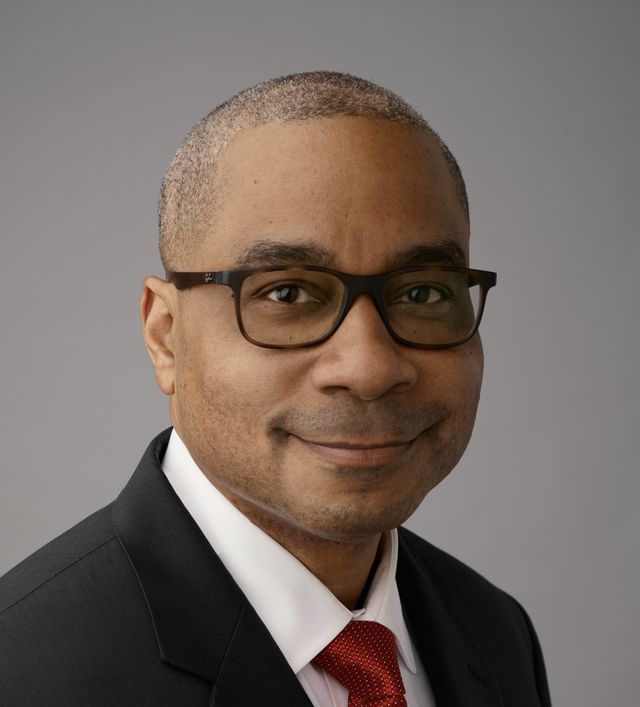
Mk Palmore
Executive
8
APPEARANCES
8
PODCASTS
Sep 25, 2026

M.K. PalmoreGUEST
... change the nature of the engagement cycle and, and really give, uh, practitioners a way to, at the very least, be on par with adversaries.
M.K. PalmoreGUEST
But it's not just about technology, and I think the longer, um, I spend in the industry, the more and more that point is driven home with me, that oftentimes you need to be thinking about the leadership components of this as well, which is part of the reason why my advisory firm operates in that nexus of not just digital transformation.
M.K. PalmoreGUEST
Yeah, we can help you identify solutions from a technology standpoint, but technology's probably not the only problem that you're dealing with.
M.K. PalmoreGUEST
There's probably, um, you know, a need to evaluate the leadership team that you have in place, whether or not you've got the right leaders in place.
M.K. PalmoreGUEST
Like, my, my experience in enterprise taught me that I've seen very, very smart people stumble their way through leadership experiences because they're not reflective enough, probably haven't been given an opportunity to think Enough about the responsibility of leading and what that entails, and they tend to, to lean in, especially in the technology realm.
M.K. PalmoreGUEST
They tend to lean in on their technology skills, hoping that that will get them, get them, get them over the hump, and it doesn't.

Leah BallantyneHOST
And have you found some major differences between working in the public sector versus private sector that you are doing now and have done most recently?

MK PalmoreGUEST
Yeah, I mean, there are huge differences between public sector service and serving in the enterprise or commercial space.
MK PalmoreGUEST
But at the end of the day, the thing that I think I get the biggest bang out of is meeting and working with new people with new skill sets, new capabilities, different backgrounds, different experiences.
MK PalmoreGUEST
And all of those people, I think, at least from my vantage point, I like to kind of extract a and include those into my own toolkit and my own way of approaching problem solving and so yeah massive differences you know the focus in public service quite frankly is around just the idea of service to others and while the focus quite frankly in the enterprise and commercial space is about revenue generation Those are two not necessarily opposed concepts, but two concepts that are radically different when you get down to what the motivations are that drive activities and drive interest from what would be in the enterprise space quarter to quarter.
MK PalmoreGUEST
You know, I went immediately to an organization that was a bit of a rocket ship ride in Palo Alto Networks.
MK PalmoreGUEST
And every quarter there was, you know, new information that guided how you were going to act in the follow on quarter.
28 MINS LATER
Leah BallantyneHOST
And so I'm sure every day there are people, there are teams that are trying to figure out where is that balance of trying to provide the most secure software, secure products, while also making it very easy for players to just come and enjoy the game, right?


Brady WilsonHOST
So tell me a little bit about if you have changed your approach or if you have not.
M.K. PalmoreGUEST
Yeah, no, AI has had very little impact on my approach to the subject of leadership.
M.K. PalmoreGUEST
In fact, I believe leadership and have evolved into this belief that it's a totally tactile experience to be engaged one person to another, one person to a group.
M.K. PalmoreGUEST
You have to understand the viewpoints of the folks that you're working with and partnering with in order to be a truly effective leader.
M.K. PalmoreGUEST
Where that I think gets to be difficult for folks, especially in the corporate space, is that when corporations begin to grow and scale and they are so massive that you bring in leaders and you expect them to have the kind of impact on an organization that reaches down to the very core of the organization, it can be extremely difficult.
M.K. PalmoreGUEST
because the bigger an organization is, the more that happens, the more difficult it becomes for leaders to actually get down and understand what's happening at the core of the organization.
23 MINS LATER


M.K. PalmoreGUEST
Well, I mean, you know, at some point, depending on the growth and size, the C-suite, especially the CEO, gets so far away from the practical day to day execution of the organization that it's really hard to keep your finger on the pulse.
M.K. PalmoreGUEST
And then if you have folks in executive management who frankly aren't listening or not inclined to listen to the things that are brought to their attention, the CEO messaging or the messaging that's given to that person can tend to be a little off.
M.K. PalmoreGUEST
There's all kinds of cultural norms that we've become accustomed to, like not wanting to be the bearer of bad news.
M.K. PalmoreGUEST
There's people in organizations who don't really have an interest in bringing news to the boss that might be controversial or things that require action.

1:29

And I'm wondering, MK, What do you see? What is the biggest communication shift a leader has to make when they're moving from that kind of traditional command and control mindset to one of influence and collaboration?
MK PalmoreGUEST
I appreciate the opportunity to speak with you and your audience about this topic.
MK PalmoreGUEST
And it's the thing that I feel as though as a discipline, I'm most interested in seeing people excel and change their mindsets around leadership.
4:57
And I'm wondering, MK, what is one discipline execution habit for communication that civilian leaders often overlook, they're not even mindful of?

M.K. PalmoreGUEST
... is that many technology leaders are thinking very tacticallyFrom week to week, month to month, year to year, and so they're thinking about adopting what new piece of technology do I need to help me solve a problem that we've identified in the business? And so they identify a piece of technology.
M.K. PalmoreGUEST
It may even be a best-in-breed or best-in-market technology from a high-value cybersecurity vendor on the market, and oftentimes they think just by saying the names CrowdStrike, Palo Alto Networks, or others who happen to be occupying what I would call the tier one status in the space, that that would be enough for the decision-maker to say, "Okay, well, he asked for this endpoint-
15 MINS LATER
M.K. PalmoreGUEST
If, if you throw out a question like that, they'll immediately be like, "Yes, it's gonna take everyone's jobs.
M.K. PalmoreGUEST
We need to be afraid of it, and I think that we need to slow down on AI adoption." Like, you wanna identify who those folks are 'cause that, those are the people that ultimately you are going to have to convince that, yeah, there are some things to take into consideration.
M.K. PalmoreGUEST
Yes, we do need to be more diligent about how it is that we're gonna adopt this new and emerging technology.


Charles SchwartzHOST
... what are these assessments and, and what are these insurances that they're running into? What does that entail? How long does it take?
M.K. PalmoreGUEST
Risk management is, um, is a discipline that essentially came to fruition because businesses realized that not everyone has unlimited resources.
M.K. PalmoreGUEST
It requires you to prioritize how it is that you devote those resources to business operations, sustainability, and resilience.
M.K. PalmoreGUEST
Um, cyber has grown to be part of the risk management profile, and I would proffer to anyone that's listening that your, your cybersecurity is, in all likelihood, a critical, uh, component.
24 MINS LATER


M.K. PalmoreGUEST
So we have to understand the cybersecurity industry, which I've had the benefit of being a part of now for the better part of a decade plus.
M.K. PalmoreGUEST
I ventured into the industry as part of my time as a special agent with the FBI.
M.K. PalmoreGUEST
I was lucky towards the end of my career to lead one of the largest cybersecurity investigative teams based out here in the Bay Area, so FBI.