Mixtec
PeopleWikipedia
23
MENTIONS
11
EPISODES
11
PODCASTS
Search complete. 23 mentions across 11 episodes found for "Mixtec".
Sep 21, 2026

Verónica Pérez RodríguezGUEST
And then once you get to live in a city, what makes you stay there and what are the trade-offs? And what's the environmental bargains, I guess, that city you live in? And I work these issues in a place.
Verónica Pérez RodríguezGUEST
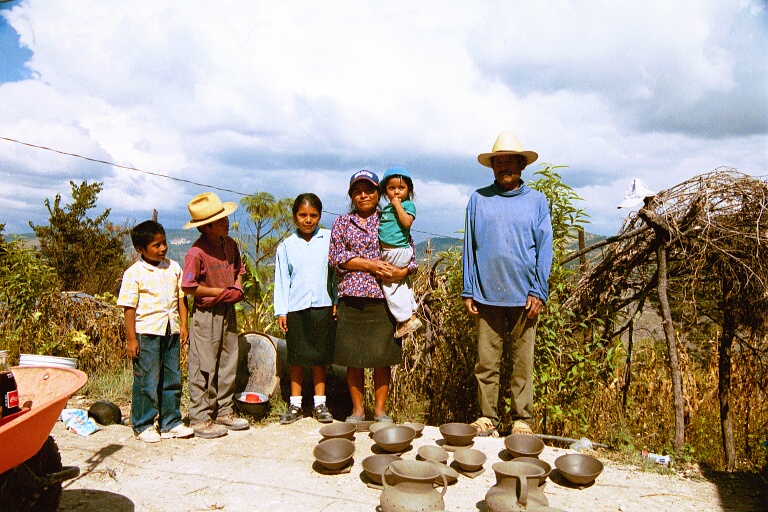
It's the highlands of Oaxaca in this Mixtec region, which if you go there today, it's a very rural community.
Verónica Pérez RodríguezGUEST
And they say the biggest expert of the Mixteca right now, it's its people.
Verónica Pérez RodríguezGUEST
A lot of people are not finding economic opportunities and they move into Mexico City or the U.S. And yet this was a place that was one of those cradles of urbanism and complex societies for thousands of years.
Verónica Pérez RodríguezGUEST
So I'm interested to learn how the same region that today sends its people out to find other opportunities.

Tracy PearsonHOST
It means that there are a lot of people in Fresno for whom English is not their first language.
Tracy PearsonHOST
They might speak Spanish, or they might speak Mixtec, Triqui, indigenous languages of Mexico with many variations.
Tracy PearsonHOST
It also means that standard English-speaking American-owned media like radio and TV can't reach or engage these communities effectively.
Tracy PearsonHOST
And when your voice isn't part of a conversation, your community is not a part of the story.
20 MINS LATER
Jamie BennettHOST
And I'm wondering, over the last however many years you've been at this, is there someone who offered you a piece of advice that you sort of still carry with you in, in your heart, in the front of your mind?
Hugo MoralesGUEST
Well, you know, it's been hard.
Hugo MoralesGUEST
And, and, and, you know, I grew up in, in a Mixtec village in, [laughs] in, in Oaxaca until the age of nine.
Hugo MoralesGUEST
You know, no running water, no electricity, no radio, no TV, uh, you know.

Josh WatersHOST
Sure.
Josh WatersHOST
The museum does note that although the stylization of the features of the skull is in general accord with other examples accepted as genuine Aztec or Mixtec carvings, the overall appearance does not present an obvious example of Aztec or any other Mesoamerican art style.
Josh WatersHOST
And it's also different than the rest of the skulls.
Josh WatersHOST
None of the skulls are identical, but this one's a lot different.

ElijahHOST
They are famous today for carving enormous stone heads.
ElijahHOST
Later civilizations included the Maya, Zapotec, and Mixtec, and many others.
PhoenixHOST
The Maya built pyramids.
SawyerHOST
They did.
15 MINS LATER
SawyerHOST
Mexico isn't one single culture.
SawyerHOST
There are dozens of indigenous people, regional identities, languages, foods, dances, and traditions.
ElijahHOST
Spanish is spoken by most people, but Mexico recognizes 68 indigenous language groups, including Nahuatl, Maya, Mixtec, and Zapote.
PhoenixHOST
How do you say goodbye in Spanish? You already

Ruben Arellano TlakatekatlHOST
Okay.
Curly TlapoyawaHOST
Plus, you know, honestly, the imagery in the Tonalamar album is, When you think of like classic Mesoamerican codices, most people are thinking of the Mixtec codices, like the Borja, or they're thinking of the Laud or the Meir.
Curly TlapoyawaHOST
And the Laud and the Meir are spectacular works of art.
Curly TlapoyawaHOST
Like, holy shit, like painted by an absolute master.
Curly TlapoyawaHOST
Yeah.
Curly TlapoyawaHOST
But there was
Ruben Arellano TlakatekatlHOST
a lot of shared information across Mesoamerica, right? I mean, because it's my understanding, and I don't know if this is true or not, but something that I remember from previous readings was that the Mixtec were the first group to develop what we would consider writing.
Ruben Arellano TlakatekatlHOST
That wasn't just pictorial, but they had like...

Zac LindseyGUEST
But I study Mesoamerica in general, which is the whole area of pretty much northern Mexico, the deserts of northern Mexico, down into northern Central America.
Zac LindseyGUEST
And so, you know, that area also includes cultures like the Mexica, who are more commonly known as the Aztecs, Zapotecs, Mixtecs, these people.
Zac LindseyGUEST
And one of the most famous ones are what are called the Colima dogs.
Zac LindseyGUEST
You might have even seen pictures of these, and I can definitely share some to show your...

Baruch StermanGUEST
And these snails are very interesting because they're part of the Murex family, and they give a dye, they give a purple dye.
Baruch StermanGUEST
The Mixtec are this tribe that, from recorded history, they've been using these snails to make purple dyes.
Baruch StermanGUEST
And I wanted to know if maybe we could be able to use these snails one day to make treles.
Baruch StermanGUEST
Why? Because you don't have to kill them.

speaker_8UNKNOWN
Gentrification is the next operation point Iniquity system we suffer
speaker_0UNKNOWN
Congo, Angola, Ashanti, Matamba, Puerto Rico, Panama, and Sahara, Jamaica, Haiti, Nicaragua, Toltecas, Mayas, Chichas, Mixtecas, Incas, Chipe, Guaragua, Palestina, Cheyenne, Cherokee, Babongo, Zambu, Gentrification is the next operation, boy.
speaker_0UNKNOWN
In a good season we suffer.
speaker_0UNKNOWN
Pinche gringo no

Ed BarnhartHOST
Today, the latest census counted 650,000 people identifying as Zapotec.
Ed BarnhartHOST
Their neighbors, the Mixtecs, number about 800,000.
Ed BarnhartHOST
Both of those numbers are probably low.
Ed BarnhartHOST
As I often say, Mexico's indigenous people are suspicious of government census questions.
Ed BarnhartHOST
The histories of the Zapotecs and the Mixtecs are very intertwined.
Ed BarnhartHOST
But for this episode, we'll focus on the Zapotecs.
Ed BarnhartHOST
I'll do the Mixtecs in a future one.
Ed BarnhartHOST
How long have the Zapotecs been in Oaxaca? At least 3,000 years.

Robert BittoHOST
20th century highland Maya tradition retains a demon called Cipac, a hill near Rabinal, Guatemala, elongated and compared locally to a crocodile, is named Sepak and is sometimes identified with the buried figure.
Robert BittoHOST
Mixtec screenfolds, including the Codex Vindabonensis, link the crocodile day to dynastic origins.
Robert BittoHOST
A separate Aztec tradition uses Teosapacli, divine crocodile, for a flood survivor who escapes in a canoe and takes part in repopulating the earth.
Robert BittoHOST
Among the Huastec, one underworld lair is called Cipactlan, Place of Cipactli, where the monster helps support the earthly plane.
Robert BittoHOST
Its hybrid form and art combines crocodile, fish, serpent, and sawfish traits.
Robert BittoHOST
Its narrative function is to supply matter for earth and sky at the cost of an ongoing ritual debt.
Robert BittoHOST
Its range as an idea runs from Olmec settlements through the Aztec capital to Mixtec dynastic books and Maya epics.
Robert BittoHOST
Its modern afterlife is cultural, carvings still in place, dances, films, games, local hill names, and fringe UFO theories.
1 more episode mentions Mixtec.
Create an account to see the whole feed, search across every transcript, and follow the entities you care about.