Mitochondrial DNA
66
MENTIONS
24
EPISODES
21
PODCASTS
Search complete. 66 mentions across 24 episodes found for "Mitochondrial DNA".
Nov 2, 2026

RyanHOST
Okay.
RyanHOST
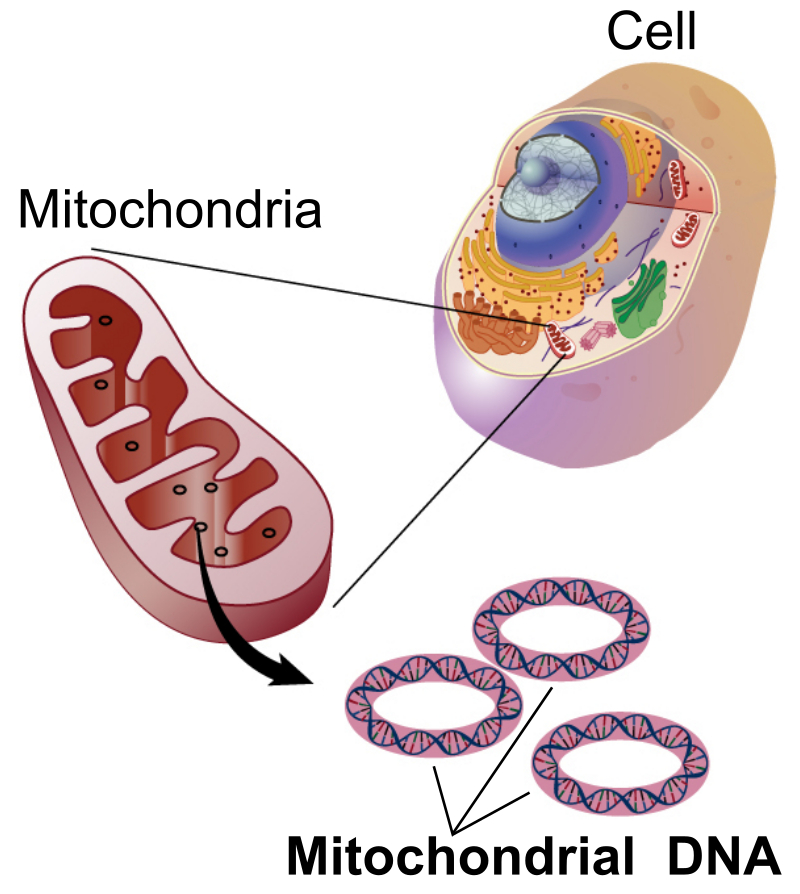
So this mitochondrial DNA being separate from our other DNA, and yet it's in the cell nucleus kind of alongside What is it within our biology that connects these two?
Richard FryeGUEST
So the mitochondrial DNA has kind of different properties than the chromosomal DNA.
Richard FryeGUEST
Most of the genes that control the nucleus are actually on the chromosomes, but some of it is in the nucleus.
Richard FryeGUEST
And the DNA is in the mitochondria.
RyanHOST
So there's like a back and forth communication there.
RyanHOST
Interesting.
RyanHOST
So with the, with that mitochondrial DNA, and it having significantly less amount of genes creating it.

Beth MurraySOUNDBITE_SPEAKER
With sterile techniques, the middle section of that core that I took out had never touched anything but that sterile drill.
Robert StackNARRATOR
The skull bone fragments were sent for mitochondrial DNA testing, which is used in cases where the biological sample is either degraded or small in quantity.
speaker_9SOUNDBITE_SPEAKER
And the mitochondrial DNA is unique because it is passed through the maternal bloodline.
speaker_9SOUNDBITE_SPEAKER
You receive it only from your mother.
speaker_9SOUNDBITE_SPEAKER
So any maternal relative you have can be tested against the sample.
Robert StackNARRATOR
Mitochondria are found in the cell cytoplasm outside the nucleus.
Robert StackNARRATOR
Each cell contains hundreds of mitochondria.
Robert StackNARRATOR
Scientists have isolated two regions of the mitochondrial DNA where differences within the human population appear.

Stephen C. StearnsHOST
There was one in Spain, there was one in Italy, there was one in Greece and the Balkans, and in Asia Minor.
Stephen C. StearnsHOST
And you can now take the mitochondrial DNA out of these various organisms that are plotted here, and you can reconstruct where they Ice Age, and how they got back into Northern Europe.
Stephen C. StearnsHOST
So for example, most of the grasshoppers of Northern Europe came out of the Balkans, and the ones that spent that time in Spain never got over the Pyrenees.
Stephen C. StearnsHOST
The hedgehogs managed to get over the Pyrenees and spread through France and Belgium and the Netherlands.
Stephen C. StearnsHOST
However, about at that point they met the hedgehogs that were moving north from Italy, and there were a bunch of other hedgehogs that were coming up from the The bears, interestingly, managed to do just fine getting out over the Pyrenees, and they moved right up into Scandinavia, and up in northern Sweden they had met some bears, probably that had been in the Ukraine and had come out from north of the Black Sea, and so forth.
Stephen C. StearnsHOST
So it's possible, using mitochondrial DNA molecular phylogenies, to reconstruct the recent history of movements of animals across the planet, and trees across the planet, and to understand why it is that there are certain places where we see hybrid zones.
Stephen C. StearnsHOST
And in fact here are some hybrid zones in Europe.
Stephen C. StearnsHOST
These are places where you will frequently run into hybrids, and they are there because populations are coming back together that have been isolated in the Ice Ages and breeding with each other.

speaker_4HOST
Yeah.
speaker_4HOST
She pointed out that Michael Forstner's test only looked at mitochondrial DNA.
speaker_5HOST
Mitochondrial DNA is only inherited from the mother.
speaker_5HOST
It tracks the maternal lineage exclusively.
speaker_4HOST
Exactly.

Tarun ShettyGUEST
taught me another
Geneviève DubéHOST
word oh i know i know so mitochondrial dna
Tarun ShettyGUEST
Okay.
Tarun ShettyGUEST
That's what it was.
Geneviève DubéHOST
Yeah.
Geneviève DubéHOST
Yeah.
Geneviève DubéHOST
Mitochondrial DNA is fascinating.
Geneviève DubéHOST
Um, you can track your ancestry in like a much bigger, longer way than just like your regular chromosomal, like, you know, DNA thing.

Chris BurresGUEST
They can damage your mitochondria.
Chris BurresGUEST
This MTDNA, that's your mitochondrial DNA, again, from your mother's side, that can get damaged as that mitochondria are having to manage or coordinate with that chronic inflammation.
Chris BurresGUEST
You get reduced ATP production.
Chris BurresGUEST
That's the energy source your cells use in order to do their jobs.

Robert LufkinHOST
In an aging or unhealthy person, the leak begins to outpace the cleanup.
Robert LufkinHOST
Free radicals damage proteins, membranes, and the mitochondrial DNA itself.
Robert LufkinHOST
Two, DNA mutations.
Robert LufkinHOST
Mitochondrial DNA sits right next to the source of these free radicals.
Robert LufkinHOST
It's like keeping your medical records on the engine block.
Robert LufkinHOST
Over decades, mutations accumulate.
Robert LufkinHOST
By age 70, the average human has detectable mitochondrial DNA mutations in heart, brain, gut, and skeletal muscle.
Robert LufkinHOST
Three, dysfunction.

Rob HavardGUEST
But the top geneticists in the world said that was rubbish.
Rob HavardGUEST
But now we know a lot more and we know that there's things like mitochondrial DNA where the mitochondria are responsible for metabolism.
Rob HavardGUEST
They're responsible for sort of cold shock responses.
Rob HavardGUEST
There's lots of stuff to do with adaptation to the environment and interaction and cellular death and metabolism and protein production and all the stuff you need for growing meat.
Rob HavardGUEST
So pretty important.
Rob HavardGUEST
And then 99% of all the mitochondrial DNA in every calf comes from the mother.
Rob HavardGUEST
So it turns out that science proved the old cowman right, and the clever geneticists were wrong on this, which they stay quite about.
Rob HavardGUEST
Because science is always right, isn't it? Eventually.

Simon MattacksNARRATOR
She makes the case that Walter Sickert, a German-British painter, was Jack the Ripper.
Simon MattacksNARRATOR
Part of her argument is based on forensic analysis of mitochondrial DNA, or mtDNA.
Simon MattacksNARRATOR
Apparently, a sequence of mtDNA found on some of the so-called Ripper letters is a match for sequences found on letters written by Sickert.
Simon MattacksNARRATOR
However, this claim and others are controversial and widely disputed.
Simon MattacksNARRATOR
The Ripper letters may well be hoaxes, in which case they don't prove anything.
Simon MattacksNARRATOR
This is based on DNA analysis of a shawl.
Simon MattacksNARRATOR
It's thought to have belonged to Catherine Eddowes, the fourth victim.
Simon MattacksNARRATOR
According to Edwards, mtDNA found on the shawl has been matched with the mtDNA of a living relative of Kosminski.

Chris BurresGUEST
Now here, on the flip side, how does chronic inflammation end up damaging your mitochondria to create this negative spiral? The excess reactive oxygen species that are part inherent in chronic inflammation will damage mitochondria.
Chris BurresGUEST
The MT DNA is just a reference to the mitochondrial DNA.
Chris BurresGUEST
Again, your matriarchal DNA that's in your mitochondria.
Chris BurresGUEST
You end up getting mutations there because of chronic inflammation.
14 more episodes mention Mitochondrial DNA.
Create an account to see the whole feed, search across every transcript, and follow the entities you care about.