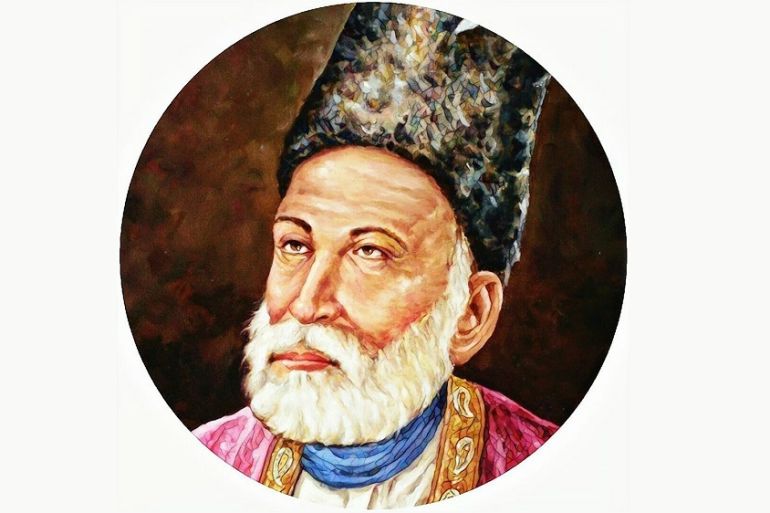
Mirza Ghalib
Indian poetWikipedia
4
MENTIONS
4
EPISODES
4
PODCASTS
Search complete. 4 mentions across 4 episodes found for "Mirza Ghalib".
Sep 8, 2026

Mahmood FarooquiGUEST
For instance, you know, in Banaras, for instance, it's not uncommon for people to be quoting Ramcharitmanas and Kabir and Ghag and Gang, these medieval poets.
Mahmood FarooquiGUEST
It's not uncommon for people in Delhi to be quoting Mir and Ghalib or people to be quoting Shakespeare.
Mahmood FarooquiGUEST
But these things don't necessarily come together on stage in a single presentation.
Mahmood FarooquiGUEST
And we are able to do that in part because I was just blessed.

Jacob KoshyHOST
And outside of physics, he loved Woodhouse.
Jacob KoshyHOST
Ghalib, the Urdu poet Rumi.
Jacob KoshyHOST
He'd recite Persian poetry in a Pakistani accent to entertain colleagues' mint calculation.
Jacob KoshyHOST
He worked best with a partner, arguing out an idea out loud like a friendly street fright.

Riz AhmedGUEST
Um, I feel that the poetic metaphor of love and relationship and longing is something that I grew up around in the tradition of Urdu poetry and then reading it and studying it a little bit more as an adult.
Riz AhmedGUEST
Um, you know, a lot of Sufi poetry, if you look at Rumi or if you look at Ghalib or if you look at, you know, um, ghazal writing from South Asia and the Middle East, from Iran, it's often love poetry, and love is used as a metaphor, and the relationship and the beloved is, is a metaphor for God.
Riz AhmedGUEST
But it can also be used as a metaphor for, for other things.
Riz AhmedGUEST
So I, I, I kind of feel like it's something that I wanted to borrow from that poe-poetic tradition, and in fact, "The Breakup," it, uh, has an alternative title in brackets, which is Shikwa, and shikwa means complaint, and, um, that's because a very famous poem by, uh, Muhammad Iqbal, he, he has a famous poem called "Shikwa" and then "Jawab-e-Shikwa," which is complaint and response to complaint.

Manish SabharwalGUEST
I mean, what are daffodils? We don't have daffodils in this.
Manish SabharwalGUEST
No, I knew daffodils, and that's when I discovered Dinkar, that's when I discovered Ghalib, that's when I discovered all these people who are as wise, if not, um, I mean, who are as wise, we don't need to say wiser, who are as wise as any person in the world.
Manish SabharwalGUEST
So society and economy were unpacked in my mind at that point.
Manish SabharwalGUEST
I said, "I'm gonna rage and rant about regulatory cholesterol.