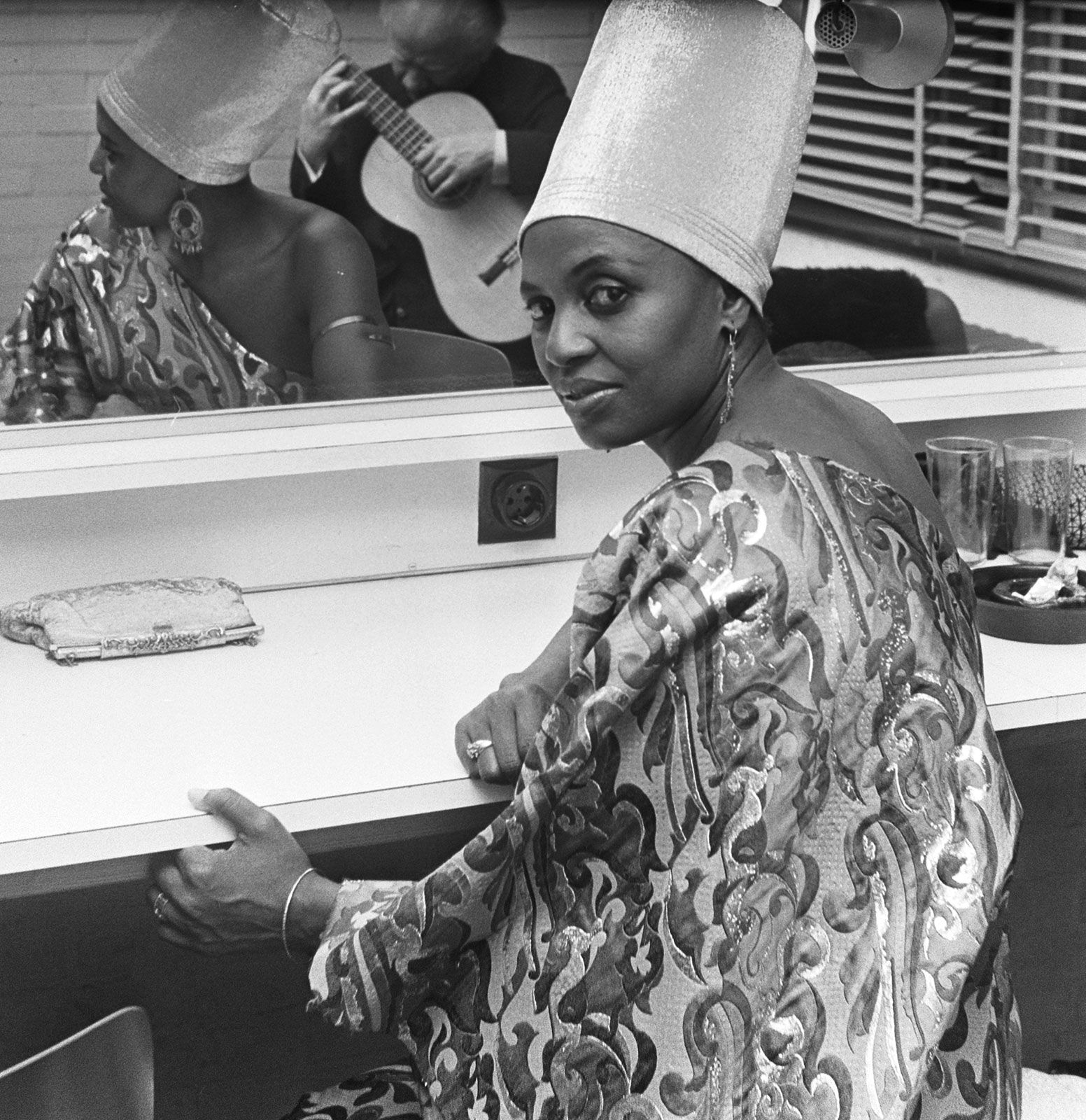
Miriam Makeba
South African singer-songwriter and actressWikipedia
39
MENTIONS
24
EPISODES
21
PODCASTS
Search complete. 39 mentions across 24 episodes found for "Miriam Makeba".
Oct 7, 2026

Jack CoyneHOST
Mm-hmm
Ashley KahnGUEST
... that the tour associated with it was gonna become this huge celebration, not just of the album, as most touring, you know, tours are, but of South African heritage, of South African music in general, especially when he has Hugh Masekela, Miriam Makeba, all of Ladysmith Black Mambazo, 24 musicians in total touring the world.
Ashley KahnGUEST
And of course, that l- led to, uh, the need for various staff people, et cetera, and support, and that's where I stepped in, and I was very, very lucky in 1988 to take over the tour managing duties with Ladysmith Black Mambazo, who were establishing their own career-
Jack CoyneHOST
Yeah
42 MINS LATER
speaker_3SOUNDBITE_SPEAKER
We're still crazy after all these years.
Bakithi KumaloGUEST
But it was, um, it, it was, it was a game changer.
Bakithi KumaloGUEST
And then the fact that I spent time with Hugh Masekela and Miriam Makeba, they'd been in exile for, like, 30-something years.
Bakithi KumaloGUEST
And Ladysmith Black Mambazo together.

Alison StewartHOST
With page numbers so readers can follow along as, and, and they can, as it trav- of they, as they read through the book.
Alison StewartHOST
There's an example of an Erik Satie piece, a Miriam Makeba piece, Chopin.
Alison StewartHOST
S- what do you hope readers experience by listening to the music as they go along?
Barbara KingsolverGUEST
Well, it's optional of course, but a lot, um, the b- because she's a very serious musician, you get to read about her experience of creating music, practicing these pieces, performing these pieces, and what they specifically mean to her.

Angélique KidjoGUEST
I've been saying this for decades.
Angélique KidjoGUEST
People looking at me, some journalists very-- with a smile, "Yeah, okay." I'm like, "You're gonna see it." Even without internet, it was a revolution in the making because people like me, like Youssou N'Dour, like Salif Keita, like Miriam Makeba, we that have come before, they heard about our struggle.
Angélique KidjoGUEST
My interview, they listen to it in and out to understand the hell that you can go through to become an artist and still be defined only as an African artist, not an artist that is worth sharing the stage with other artists.
Angélique KidjoGUEST
And they decided, "Hey, you know what? When we come out, we're gonna, we're gonna go to the biggest stage like anybody else without going to any radio, without going to any TV show, and we're gonna fill it up." That's what they are doing.

Charlie RoseHOST
[laughs] Yes.
Robin WilliamsGUEST
It's like getting Miriam Makeba's answering machine.
Robin WilliamsGUEST
[speaks gibberish]
Charlie RoseHOST
[laughs]

John SchaeferHOST
I'm John Schaefer.
John SchaeferHOST
During her two-decade career, the singer, actor, and playwright Somi has blended the sounds of America and African music, jazz and R&B, but also Afrobeat and highlife.
John SchaeferHOST
Her last album was a tribute to the South African singer Miriam Makeba.
John SchaeferHOST
That record also served as a companion to an off-Broadway musical that Somi wrote under her full name, Somi Kakoma, called Dreamings and Zile.
John SchaeferHOST
But that was four years ago, and it's been even longer since her last visit to our studio.
19 MINS LATER
John SchaeferHOST
Mm
SomiGUEST
... that aren't necessarily always the healthiest, you know? So, um, I love to sort of check in from time to time.
John SchaeferHOST
So when you were looking for teachers, were you specifically looking for a, a certain genre? I, I want a, I want an operatic teacher, I want a jazz singer.

Isaac MugabeCORRESPONDENT
Well, this was not a routine police raid.
Isaac MugabeCORRESPONDENT
Unlike in South Africa, where we, when you talk about music for-- by the late Lucky Dube and late Miriam Makeba, talking about injustices, talking about apartheid, it's different here in Europe.
Isaac MugabeCORRESPONDENT
[chuckles] I mean, authorities, like you mentioned, from five countries coordinated searches targeting an alleged network involving the production of neo-Nazi music.
Isaac MugabeCORRESPONDENT
Well, here, to be specific, in Germany, prosecutors believe that four main suspects formed an organized kind of structure around twenty twenty and have been working together to manufacture and sell recordings that promote national socialist ideology, antisemitism, racism, and hatred against minorities, including those with, um, a background-- migrant back, background.

Camille Rondeau-Saint-JeanGUEST
So lately during annotating, I've been listening at, uh, just a lot of different African artists because I realized that I didn't know them so much.
Camille Rondeau-Saint-JeanGUEST
Um, so I've been listening to a lot of Miriam Makeba lately, and also, of course, the Kenyan classic Sauti Sol, um, Florence Kijio as well.
Andrew GlesterHOST
Though if you're sitting on a harbor side looking at harbor porpoises, but you could have a little music on then, couldn't you?
Camille Rondeau-Saint-JeanGUEST
Oh, I see.

Joseph BrownGUEST
...
Joseph BrownGUEST
I did it yesterday listening to Miriam Makeba and some other drum music on my CD player, 'cause I wanted to get in the mood for it.
Joseph BrownGUEST
But the, the idea of being open to wisdom are those pillars at the top, open the eyes, the mouth, and to be not compelling, but inviting with just the face.
Joseph BrownGUEST
And I showed this to my former graduate student assistant last night, and he said, "Oh, I'm glad you put color in it." I said, "Walk around the house and see some of the masks I have hanging on the, on there." Now, on the other side, I hope you can see this.

Aubrey MasangoHOST
And I suppose I'm of the generation that started to appreciate...
Aubrey MasangoHOST
The fact that the world appreciated our stuff when groups like Black Mambazo, Ladysmith Black Mambazo was making the headlines all over the world.
Aubrey MasangoHOST
And prior to that, I mean, the greats, the Miriam Makebas, the Huma Sikelas, I mean, the list goes on and on.
Aubrey MasangoHOST
And you're right when you say that it was the authenticity, not only of the of the message in those artists' music or artist's expressions, but it was the tone of it.
Aubrey MasangoHOST
It was the way that African artists were able to tell their story without just dealing with the intellectual side of things, but also your soul, just the way that you feel as a human being.

Aki NawazGUEST
So we were using that as almost like the foundation.
Aki NawazGUEST
And then we got 20 Zulu singers, which were amazing, because I'd worked with Miriam Makeba's backing band in South Africa, because we were fundamentally one of the first bands to go as Nelson was brought into power.
Aki NawazGUEST
Oh, wow.
Aki NawazGUEST
Nelson Mandela.
Aki NawazGUEST
A big shout out to him.
Aki NawazGUEST
And we went there and...
Aki NawazGUEST
I'd worked on There Shall Be Love with Miriam Makeba's backing track.
Ammar VianneyHOST
There Shall Be Love is a fundamental album, right?
14 more episodes mention Miriam Makeba.
Create an account to see the whole feed, search across every transcript, and follow the entities you care about.