Miocene
Geologic periodWikipedia
131
MENTIONS
58
EPISODES
54
PODCASTS
Search complete. 131 mentions across 58 episodes found for "Miocene".
Sep 14, 2026

KellyHOST
That fossil is about 14 million years old.
KellyHOST
Middle Miocene, long before there were human beings anywhere on Earth.
KellyHOST
Why this rewrites the history book.
KellyHOST
Until that moment, every known honeybee fossil came from Asia or Europe.

Ben TuckerVOICE_ACTOR
When Lake had satisfied the first keen edge of his curiosity, he scribbled a message in his notebook and had young Moulton run back to the camp to dispatch it by wireless.
Ben TuckerVOICE_ACTOR
This was my first word of the discovery, and it told of the identification of early shells, bones, and ganoids, and the placoderms, remnants of labyrinthodonts and thecodonts, great mosasaur skull fragments, dinosaur vertebrae and armor plates, pterodactyl teeth and wing bones, archaeopteryx debris, Miocene sharks' teeth, primitive bird skulls, and skulls, vertebrae, and other bones of archaic mammals such as paleotheres, xiphodons, dinocereses, eohippe, oreodons, and titanotheres.
Ben TuckerVOICE_ACTOR
There was nothing as recent as a mastodon elephant, true camel, deer, or bovine animal, hence Lake concluded that the last deposits had occurred during the Oligocene age, and that the hollowed stratum had lain in its present dry, dead, and inaccessible state for at least thirty million years.
Ben TuckerVOICE_ACTOR
On the other hand, the prevalence of very early life forms was singular in the highest degree.

Amy AtwaterHOST
Okay.
Megan WetherellHOST
However, the earliest fossils are from the Miocene, and I mostly work in the Oligocene.
Megan WetherellHOST
So I'm really working, like, 15 million years too early for a skunk.
Amy AtwaterHOST
You're looking for grandpa.

Amy AtwaterHOST
Okay.
Megan WetherellHOST
However, the earliest fossils are from the Miocene, and I mostly work in the Oligocene, so I'm really working, like, 15 million years too early for a skunk.
Amy AtwaterHOST
You're looking for grandpa.
Megan WetherellHOST
Yes.

Martin PickfordGUEST
In the Leucan formation where we found Ourorin, we also found other mammals such as elephants, horses, hippopotamus, pigs and so on.
Martin PickfordGUEST
And by the evolutionary stage of those creatures, those fossils, we can also guess the age, and as soon as we found Aurarin, we looked around and found other fossils, and we could say straight away, yeah, this is late Miocene age, so it's gotta be around about six million years.
speaker_2NARRATOR
The fossilized remains of these animals and...
speaker_9ADVERTISER
Low energy? Unfocused? Foggy? You might be dehydrated.

speaker_2NARRATOR
No, no, tampoco sobrevivirías al ataque de un bebé lodón.
speaker_2NARRATOR
El megalodón se hizo realmente dominante durante el período Mioceno, entre veintitrés y cinco millones de años atrás.
speaker_2NARRATOR
Al inicio de dicha era, la Tierra era cálida, pero luego se fue haciendo cada vez más fría.
speaker_2NARRATOR
Por ese entonces, este animal se adaptaba mejor a las aguas tropicales y vivía en diversas regiones del planeta.
speaker_2NARRATOR
Al megalodón le bastaba con que hubiera alimento suficiente.
speaker_2NARRATOR
Entonces, ¿qué pudo haber provocado la extinción de una criatura tan poderosa y letal, dueña de seis de los siete mares? Probablemente, el cambio climático.
speaker_2NARRATOR
Durante el Mioceno empezó el enfriamiento que persistió durante todo el Plioceno, desencadenando un gran congelamiento.
speaker_2NARRATOR
Durante la era siguiente, hace unos dos coma seis millones de años, empezó una era de hielo.

speaker_9NARRATOR
you could give australia another one hundred million years of perfect conditions and it still wouldn't evolve humans independently because the basic genetic architecture isn't there to work with but all of this raises a deeper question Why did only Africa have the right primates to begin with? This is where we need to talk about the primate prerequisite, and it takes us back even further in time.
speaker_9NARRATOR
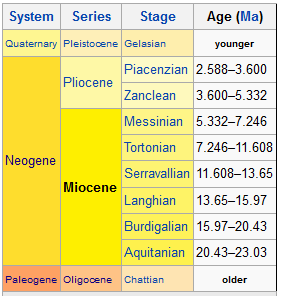
Around 23 to 5 million years ago, during the Miocene Epoch, Africa experienced something unique.
speaker_9NARRATOR
A combination of climate conditions, forest coverage, and geographic positioning that allowed primates to diversify in ways they couldn't anywhere else.
speaker_9NARRATOR
the continent had extensive tropical forests that provided the complex three-dimensional environment where primate traits like grasping hands stereoscopic vision and large brains first evolved but it also had enough climatic variability to create selection pressure for adaptability rather than overspecialization This created what evolutionary biologists call an adaptive radiation.

CHOST
But in time, natural selection adapted and refined its evolutionary blueprint into one of the largest and fiercest marine hunters that has ever roamed the seas, the infamous mega-tooth shark, the megalodon.
CHOST
[gentle music] Megalodon is thought to have lived for a relatively brief period between 3 million and 23 million years ago, from the early Miocene to the Pliocene.
CHOST
In that time, this apex predator's tyranny spread throughout the globe, with its fossils found on every continent today, including Antarctica.
CHOST
The overwhelming majority of these fossils are its gargantuan teeth.
speaker_7NARRATOR
Tropical preservation conditions prevented it from forming.
speaker_7NARRATOR
geological upheaval buried it or tilted it or fractured it until it became unreadable we are left with a crucial period in earth's history that we can only partially reconstruct a climate transition we desperately need to understand but can't fully explain the eocene stands as a massive gap in our understanding of how earth's climate and ecosystems function under extreme conditions twenty-two million years of hot-house conditions that produced life-forms we can barely imagine and then wiped them away in a geological instant a period when palm trees grew at the poles and crocodiles swam in arctic rivers when bizarre mammal lineages rose and fell without leaving clear explanations for their existence and perhaps most importantly a period that contained the evolutionary origins of our own lineage somewhere in those eocene rainforests among those fragmentary fossils and massive gaps in the record our ancestors were evolving the characteristics that would eventually make humans possible enhanced vision grasping hands larger brains social complexity the foundations of human evolution were being laid and we can barely see it happening because the earth itself has erased the evidence leaving us with questions we may never fully answer now we need to talk about one of the most frustrating periods in earth's entire history not because nothing happened but because almost everything that happened left virtually no trace Welcome to the Oligocene and Miocene epochs, 34 million to 5 million years ago, nearly 30 million years of Earth history that should be absolutely packed with answers to our biggest evolutionary questions.
speaker_7NARRATOR
Instead, it's like someone took the most important chapters of Earth's autobiography and fed them through a shredder.
speaker_7NARRATOR
Here's what we know was happening during this time.
speaker_7NARRATOR
What we have instead are snapshots.
speaker_7NARRATOR
brief windows into this thirty million year period separated by enormous gaps.
speaker_7NARRATOR
We have forest ecosystems from the early Oligocene, then millions of years of nothing, then suddenly in the late Miocene we have vast grasslands with completely different animal communities.
speaker_7NARRATOR
The transition between them, the actual process of transformation, is largely missing.
48 more episodes mention Miocene.
Create an account to see the whole feed, search across every transcript, and follow the entities you care about.