Minimum efficiency reporting value
17
MENTIONS
8
EPISODES
8
PODCASTS
Search complete. 17 mentions across 8 episodes found for "Minimum efficiency reporting value".
Sep 12, 2026

Jason FoxGUEST
Okay.
Jason FoxGUEST
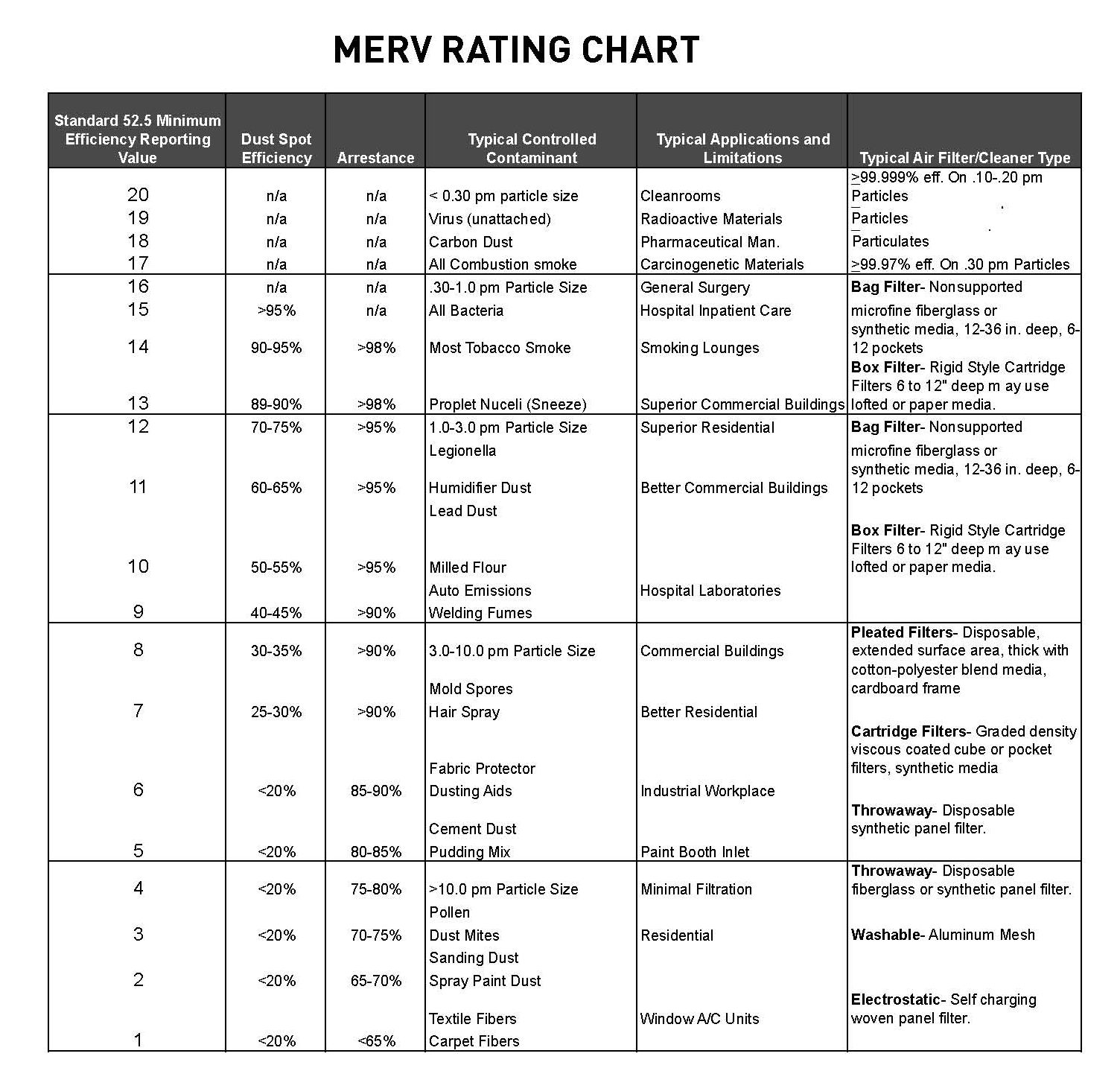
And I always recommend MERV 8.
Jason FoxGUEST
Now, if your system is designed for a better, higher MERV rating, that's fine, but make sure it is because if you put too restrictive of a filter, you'll cause a lot of damage to your system, right? Is there a way you
David NasonHOST
can find that out? Well, if you have one of our bionifications, we'll know exactly because we're going to come out and
Jason FoxGUEST
test your system and make sure it's working within the manufacturer's specifications, right? So if you want to get real science-y, your furnace filter should not be more than 0.1, a tenth of an inch of static for proper airflow through the filter.

NikkiGUEST
Yeah, I wouldn't use the little fiberglass filters because that really doesn't stop the flow.
NikkiGUEST
That doesn't catch the larger particles from getting into your duct system, and it doesn't stop the larger particles from getting to your evaporator coil, but I would definitely, you know, go and get a pleated filter like a MERV 8 filter.
NikkiGUEST
That would be perfect.
NikkiGUEST
You know, it's not going to restrict your airflow and it's going to, you know, keep the larger particles from getting to your equipment and into your duct system.

Michael RubinoGUEST
I think the price point is sort of why people are so scared to manufacture them.
Michael RubinoGUEST
Because let's just say most filters are about MERV 13.
Michael RubinoGUEST
You can go up to MERV 17 currently.
Michael RubinoGUEST
Um, nobody has yet.
Michael RubinoGUEST
And I've done some research.

Rajasekhar BalasubramaniamGUEST
And of course, air conditioners are meant to provide good thermal comfort.
Rajasekhar BalasubramaniamGUEST
But if they have good air filters, we usually go by MERV rating.
Rajasekhar BalasubramaniamGUEST
If the MERV rating is 14 and above, and air conditioners may also be good but usually the move rating could be low for normal in air conditioning system it could be seven eight or you know nine something out and around that number so we cannot generalize and say that air conditioners of all types are very effective in capturing particles that would depend on the kind of filter contained in air conditioning units.
Rajasekhar BalasubramaniamGUEST
And like you pointed out, we have to make sure that the filters are replaced from time to time and air conditioning systems are well maintained during smoke case episodes.
Rajasekhar BalasubramaniamGUEST
So we cannot take for granted that all air conditioning systems will continue to be effective forever.

Ty PrinceGUEST
But when that air blows out, it stirs up a lot of stuff.
Ty PrinceGUEST
So our studies show that the air inside of a house, if you have a high-efficiency filter in there with a MERV rating of at least 12 to 14... that your room air will be just as clean as if you stuck a filter in there with a MERV rating of 18 to 22, which is what those expensive allergy filters are.
Bob ThomasHOST
Ah, okay.
Bob ThomasHOST
So what are you seeing most right now? Is it the typical ragweed and stuff that come into your office? What are you treating most?

Joe PizzornoGUEST
Incense is nice, but a lot of toxic substances there.
Joe PizzornoGUEST
Anyway, so they have something called MERV rating.
Joe PizzornoGUEST
And you only get a MERV rating of at least 12.
Joe PizzornoGUEST
One we're using has a MERV rating of 16.
Joe PizzornoGUEST
That means that 99.9% of the PM2.5 is cleared out by the system.
Joe PizzornoGUEST
So the worst stuff is cleared.

Jim KlaukHOST
But Rusty, let's go to that question.
Jim KlaukHOST
Again, Steve from Tomball, "I see all kinds of air filters at the hardware store, different sizes, MERV ratings, HEPA filters.
Jim KlaukHOST
What should I be using and how often do we really need to change them?"
Rusty MillerGUEST
That's a great question.

Mark SchwartzGUEST
My knowledge and understanding has improved, and in hindsight, wish it had been better 15 years ago.
Mark SchwartzGUEST
But we've gone from a MERV 14 to a MERV 16, and, you know, to understand there is no such thing as this absolute filter, whether it's precipitation or the fiberglass filter.
Mark SchwartzGUEST
We're dealing in log reductions all the time, whether it's HEPA, 16, 14, et cetera.
Mark SchwartzGUEST
So we've learned a lot in understanding, and, and really, you think about it, a 5,000 sow farm, for example, at minimum ventilation is almost 200 or over 200 million cubic feet of air being exchanged through that barn every 24 hours.
Montse TorremorellGUEST
So very high.
Montse TorremorellGUEST
So we know then when the virus challenged the system, it would be removed, right? All a matter of quantity, but we felt confident about that measurement.
Montse TorremorellGUEST
And then in terms of how it compares with the filters, actually they compares very similarly, right? Uh, but the, the other thing that we are learning, so very high collection efficiency and compares very well and with the MERV 16 filters in particular.
Montse TorremorellGUEST
But one thing we are learning is that collection efficiency doesn't stay as, um, fixed value all the time.