MIND diet
85
MENTIONS
11
EPISODES
10
PODCASTS
Search complete. 85 mentions across 11 episodes found for "MIND diet".
Oct 6, 2026

Joel KahnHOST
Uh, shout out to my sister-in-law for being co-, uh, producers of the whole event.
Joel KahnHOST
And this week in BMJ Journals, Neurology, Neurosurgery & Psychiatry, is an article, Adherence to the MIND Diet, that's M-I-N-D, and Brain Structure Changes Over a Decade: Framingham Study.
Joel KahnHOST
So this was 1,647 individuals.
Joel KahnHOST
They filled out food questionnaires, what they ate.
Joel KahnHOST
You can figure that out, 10 years apart.
Joel KahnHOST
They were followed overall for about a dozen years.
Joel KahnHOST
And there is a famous diet called the MIND diet, developed in Chicago at a university, for optimal brain health, very much like the Mediterranean diet with a few differences in terms of green tea, salmon, and blueberries being even higher on the list.
Joel KahnHOST
And what they were able to judge is how much did the people in this study adhere to the MIND diet and what happened to the brain.

Stephanie WierzbickaGUEST
So besides physical activity, nutrition.
Stephanie WierzbickaGUEST
So there is a relatively new diet, though, that's backed by science called the Mind Diet.
Stephanie WierzbickaGUEST
And actually, I had an opportunity to listen to Maggie Moon, which is a researcher and creator behind it.
Stephanie WierzbickaGUEST
speak to it.
Stephanie WierzbickaGUEST
And this is something that we do have to look at and be very intentional about it.
Stephanie WierzbickaGUEST
What is your blood sugar? do you know what your A1C is? Do you know your cholesterol, your blood pressure, all of those things that can make an impact on overall brain health, um, is also very important and also knowing how to best, um, manage it, right? Because all of that has, um, an impact on overall brain health.
Stephanie WierzbickaGUEST
The thing I love about the mind diet.
Stephanie WierzbickaGUEST
So if, you know, you've never heard of it.

RonHOST
Ron: Unfiltered, Uncensored.
RonHOST
The MIND diet, ultra-processed foods, and what the headlines are not telling you.
RonHOST
But I wanna tell you that I'm having fun doing these podcasts, and that this podcast is for educational purposes only and not medical advice.
RonHOST
And always consult your physician before making health decisions.
RonHOST
So let me start with a question.
RonHOST
What if some of what we're doing to our brains every day isn't happening in the doctor's office? What if it's happening at the breakfast table? What if it's happening in the grace- grocery cart? What if, if it's happening every time we reach for something because it's convenient, it's packaged, it tastes good, and somebody told us it was healthy? There are, there are headlines making the rounds right now about something called the MIND diet.
RonHOST
One headline says that people who follow the MIND diet more closely appear to have brains that are about two and a half years younger based on measures of brain structure.
RonHOST
And almost at the same time, we're seeing more research connecting higher consumption r- consumption of ultra-processed foods with cognitive impairment.

Sarah KeoghGUEST
If you actually think about the fact your body is built out of what you eat, that we are updating and remodeling all the time, not just as kids, but as adults, it makes sense that what we're eating on a daily basis is literally building our brain, building our nervous system, and building how we are gonna respond to what's out there, and there's phenomenal research on this.
Sarah KeoghGUEST
And one of the big projects we've seen recently is one called the Mind Diet, and that's reading it, really looking into whole dietary patterns as well as individual nutrients, and they're seeing huge benefits around mental health when people adopt this way of eating.
Ciara KellyHOST
So [clears throat] when it comes, I suppose, how you feel, is it that when we go through periods of stress in our life that we tend to pick the wrong foods, pick quick foods, comfort foods, convenience foods, or is it that the eating of those foods at certain points in our lives, or perhaps in an ongoing way, is causing the stress?
Sarah KeoghGUEST
It's actually both.
Ciara KellyHOST
... studio for the shop that I intend to do in about an hour and a half.
Sarah KeoghGUEST
There's nothing wrong with supplements if somebody wants to use them, and I am a big fan of fish oil supplements or a general multivitamin if you're going to do that, but you don't need to go out and buy 16 separate boxes.
Sarah KeoghGUEST
But if you can look at your food, your, you know, what we see with the Mind Diet is it's very food-based because you're looking at whole grains, bringing in, like, if you're going for the brown bread and your nice bowl of porridge in the morning, that you're getting your fruit and veg in.
Sarah KeoghGUEST
People talk about vitamin C and immune system a lot.

Gil CarvalhoHOST
We released a video very recently about diet and dementia, like Alzheimer's, and in that video, we talked about a number of dietary patterns.
Gil CarvalhoHOST
We talked about Mediterranean diets, DASH diet, the MIND diet, ketogenic diets, et cetera.
Gil CarvalhoHOST
Here we are, only two weeks later, and a brand-new trial just came out looking at the MIND diet that shook this entire field.
Gil CarvalhoHOST
It's a randomized control trial with 600 people, very respectable scale, followed over three years.
Gil CarvalhoHOST
So they were split randomly.
Gil CarvalhoHOST
Half were put on the MIND diet, which if you don't know, is a blend of Mediterranean and DASH with some changes to emphasize foods that are thought to be particularly protective for brain function, like berries and leafy greens, for example.
Gil CarvalhoHOST
And the other half were told to just keep eating their regular diet, which wasn't great.
Gil CarvalhoHOST
The participants were typical Westerners living in the US, overweight, many with high blood pressure and other risk factors.

Chris CoragioHOST
New research shows a certain kind of diet slows down brain aging.
Chris CoragioHOST
What's called the MIND diet was linked to less brain tissue loss over time and helps with memory, decision-making, and learning.
Chris CoragioHOST
The new research in the Journal of Neurology, Neurosurgery, and Psychiatry estimates the MIND diet over time slows down brain aging by two and a half years.
Chris CoragioHOST
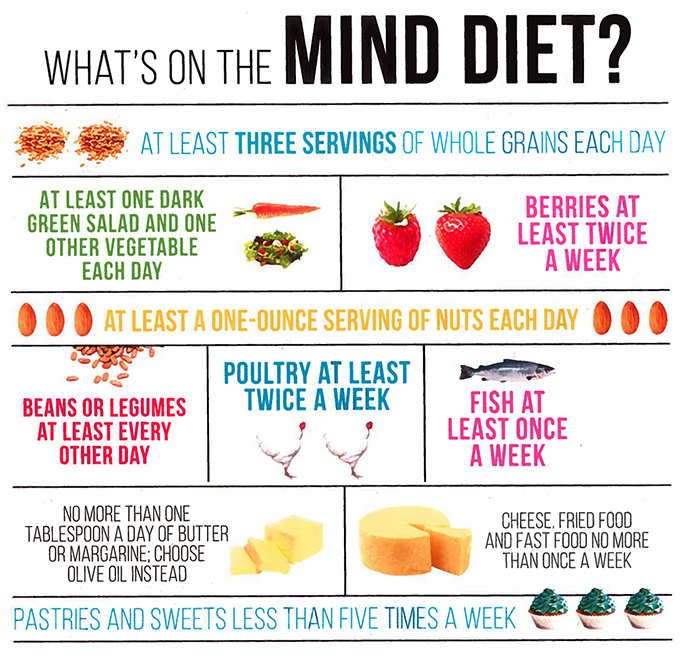
The MIND diet is mostly plant-based.
Chris CoragioHOST
It consists of green leafy vegetables, nuts, whole grains, but also includes fish, vegetables, poultry, and some other food groups.
Chris CoragioHOST
I'm Chris Coraggio.

speaker_2NARRATOR
And obviously we talk diet.
speaker_2NARRATOR
Barbie walks us through the mind diet, the foods that she wants us eating more of.
speaker_2NARRATOR
We talk about coffee, alcohol, creatine, and which supplements are actually worth considering.
speaker_2NARRATOR
Plus we get into menopause and brain health and fact check the very comforting claims circulating online that during menopause, your brain starts to eat itself.
51 MINS LATER
Barbie BoulesGUEST
Yeah.
Victoria GaspariniHOST
I love it.
Victoria GaspariniHOST
I want to talk about the MIND diet.
Victoria GaspariniHOST
What is that, first of all? And then also, you know, are we implementing this for patients? How do we even begin to implement it? Give us kind of the details around this dietary approach.

Shelley RaelHOST
Today's episode, episode 260, is the fourth episode in a mini series I've been doing about diets.
Shelley RaelHOST
So the last few episodes, I've talked about what the word diet actually means, what makes an eating pattern reasonable or supportive of health, and some of the dietary patterns that consistently show up when we're looking at eating patterns with a strong research base, including DASH, MIND, Mediterranean-style eating, and flexitarian approaches.
Shelley RaelHOST
So those were the last three episodes.
Shelley RaelHOST
Today's episode is going to look at a different angle here, because one of the things that I find fascinating in nutrition is that some of the diets and eating patterns that are extremely popular today do not actually start out as weight loss diets.

BlackHOST
Some very clever researchers asked an interesting question.
BlackHOST
What if we took the parts of the Mediterranean diet and the DASH diet that seemed most protective for the brain and combined them into one eating pattern? The result was the MIND diet.
BlackHOST
That's the Mediterranean Dash Intervention for Neurodegenerative Delay.
BlackHOST
And they studied rates of development of dementia, and the results were, quite frankly, astonishing.
BlackHOST
This episode is personal, and I plan to take everything we learn together to heart, and I hope you will too.
BlackHOST
What exactly is dementia? I think most people have a general idea of what dementia is.
BlackHOST
But before we dive into what the MIND diet is and what the research shows, let's spend just a couple of minutes talking about dementia itself.
BlackHOST
Dementia isn't actually one specific disease.
Shelley RaelHOST
Welcome to the latest episode of the Real World Nutrition Podcast.
Shelley RaelHOST
This is episode 259, the best diets, DASH, MIND, Flexitarian, Mediterranean, and why they consistently rank well.
Shelley RaelHOST
Hi everyone, welcome to Real World Nutrition.
Shelley RaelHOST
I'm Shelley Rael, Registered Dietitian Nutritionist, and this is episode 259 of the podcast.
6 MINS LATER
Shelley RaelHOST
You don't have to wait until you have hypertension to do this.
Shelley RaelHOST
Everybody can benefit from this with or without high blood pressure, with or without blood pressure concerns.
Shelley RaelHOST
Okay, next up is the MIND diet.
Shelley RaelHOST
So the MIND diet is another acronym, and this one's a long one.
1 more episode mentions MIND diet.
Create an account to see the whole feed, search across every transcript, and follow the entities you care about.