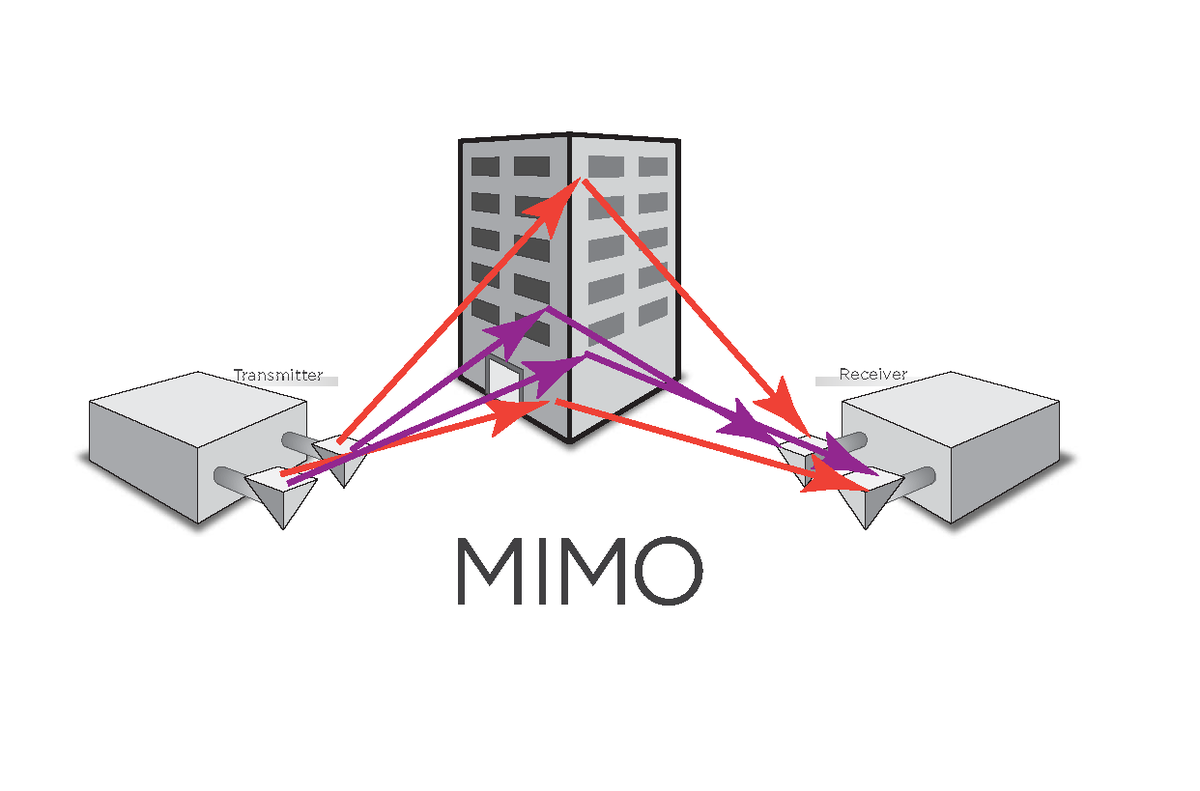
MIMO
53
MENTIONS
14
EPISODES
12
PODCASTS
Search complete. 53 mentions across 14 episodes found for "MIMO".
Sep 10, 2026

King YellaGUEST
You watch the interview.
King YellaGUEST
Look, did Mimo just ...
King YellaGUEST
He did that on ...
King YellaGUEST
Who? He did it on your channel?
Big Homie CCGUEST
Oh, shit, Yella.
King YellaGUEST
Mimo just did that about me on your shit.
King YellaGUEST
Come on, man.
Big Homie CCGUEST
Yeah.

Anshel SagHOST
That's not in this specific report, but at the Qualcomm thing, they were doing 7 gigahertz and 13.
Anshel SagHOST
And the goal is to basically have these massive MIMO.
Anshel SagHOST
I want them to call it supermassive MIMO.
Anshel SagHOST
Qualcomm calls it giga MIMO.
Anshel SagHOST
Somebody else calls it, I think we talked about it, different MIMO.
Anshel SagHOST
kind of type of extra ultra MIMO.
Anshel SagHOST
The more MIMO antennas they can get, so they can beam form better and perform in C band like coverage.
Anshel SagHOST
So they don't have to densify the networks.

Low LevelHOST
i don't know it's like a newer netgear a newer ubiquity something like that and put that in place of your like your home wi-fi router um if you have or your isps rather if you have to use your isp literally i did this back in my house when i was in georgia like at t required us to use at t router which by the way like gave them access to my house i would literally like get notifications when my internet went down they're like oh yeah we had a hard time getting into your router to do maintenance and i'm like i don't like that at all so you can do is put a router behind it and some kind of firewalling where you can basically block all the traffic that the IP address of the outer router has from going into your house for sure.
Low LevelHOST
There's still the question of RF, right? If you're really nitty-gritty, you can take that bitch apart and, like, ground the antennas, right? Or, like, at least put some kind of, like, metal shielding around it so, like, at least the MIMO, the RF protocol or, I guess, like, spec that they use to do this gets interfered with.
Low LevelHOST
There are ways to get around this.
Low LevelHOST
My large complaint is that, like...

UrbanHOST
Section 10
UrbanHOST
talks about cell-free massive MIMO.
UrbanHOST
MIMO, it's an acronym that means multiple input, multiple
UrbanHOST
output.
UrbanHOST
See if I got the album.
UrbanHOST
User-centric.
UrbanHOST
Access points.
UrbanHOST
Network MIMO.

Darian Graham-SmithPANELIST
bands but you pay for that um generally six gigahertz um in the mid-range consumer market is a compromise and the problem with it is although it does support higher speeds in general it has visibly worse penetration and so you'll you'll only get good speeds if you're in the same room or maybe one room away from the router um and otherwise it will the performance will drop off very sharply and you're actually better off normally on a five gigahertz network So I'm not I'm not digging it for not having six gigahertz, especially because now this is the interesting thing.
Darian Graham-SmithPANELIST
It's got most Wi-Fi seven routers either use two by two MIMO or four by four MIMO.
Darian Graham-SmithPANELIST
MIMO, of course, meaning multiple in multiple outs, which is where you have MIMO.
Darian Graham-SmithPANELIST
a pair of multiple antennae and transmitters and receivers, which connect at once and do parallel data streams to multiply up the amount of information that can be exchanged between the router and the clients.
Darian Graham-SmithPANELIST
If you have a 4x4 router, then...
Darian Graham-SmithPANELIST
And you still get a benefit from a 4x4 router, even if you're connecting from a 2x2 client.
Darian Graham-SmithPANELIST
What this router does, which I've never seen before, is it actually adds a fifth radio chain as well.
Darian Graham-SmithPANELIST
It doesn't implement 5x5 MIMO, though it could, but it just has that extra transmitter and antenna assembly, which gives it an improved ability to... to kind of to shore up the signal, to do even better, you know, parallelism, error correction, stuff like that.

Dan BarreraGUEST
Um, so and this is not new with Wi-Fi 6, 6E, or 7.
Dan BarreraGUEST
It's been around for a while, but something called MIMO or MIMO, depending on how you pronounce it, but that's multi-in, multi-out.
Dan BarreraGUEST
So what that means is that the Wi-Fi access point has multiple antennas in it, and it can talk to multiple devices at once.
Dan BarreraGUEST
So you might see a, a two by two, which means it can talk in, in, uh, transmit and receive to two devices.

Earl LumGUEST
Like New York City or Boston or San Francisco or LA, uh, or Dallas.
Earl LumGUEST
Those are the cities that have massive MIMO primarily-
Dan JonesHOST
Yeah
Earl LumGUEST
... which is where you want, you're going to want to deploy this.
Dan JonesHOST
Yeah
Earl LumGUEST
...
Earl LumGUEST
in that massive MIMO only constitutes roughly 20 to 25% of the total network over there.
Earl LumGUEST
So the rest of it is just macro radios where you may not necessarily need to deploy, uh, unless you're doing it for energy, in which case you care about every site because it all adds up for you as operational expenses as an operator.

Holly PodbilakHOST
Um, but again, like all of these things, how to spec it is so dependent on what the client experience is going to be.
Holly PodbilakHOST
Um, and then it starts getting into other things such as, like, are they, like the MIMO that we discussed previously, which is-
Ethan BanksHOST
Mm-hmm
Holly PodbilakHOST
...
Holly PodbilakHOST
the, the number of spatial streams.
Holly PodbilakHOST
Do you want two by two? Do you want three by three? Do you want four by four? And this is important based on the density of the deployment, i.e., how many clients are going to be c- be connecting to a single access point at, at, at the same time, so concurrent connections.
Ethan BanksHOST
And so if I've got a higher MIMO count, like, uh, like four by four-
Holly PodbilakHOST
Yeah

Holly PodbilakHOST
Um, but again, like all of these things, how to spec it is so dependent on what the client experience is going to be.
Holly PodbilakHOST
Um, and then it starts getting into other things such as, like, are they... like the MIMO that we discussed previously, which is-
Ethan BanksHOST
Mm-hmm
Holly PodbilakHOST
...
Holly PodbilakHOST
the, the number of spatial streams.
Holly PodbilakHOST
Do you want two by two? Do you want three by three? Do you want four by four? And this is important based on the density of the deployment, i.e., how many clients are going to b- be connecting to a single access point at, at, at the same time, so concurrent connections.
Ethan BanksHOST
And so if I've got a higher MIMO count, like, uh, like four by four-
Holly PodbilakHOST
Yeah

Holly PodbilakHOST
But again, like all of these things, how to spec it is so dependent on what the client experience is going to be.
Holly PodbilakHOST
And then it starts getting into other things such as like, are they like the MIMO that we discussed previously, which is...
Holly PodbilakHOST
the number of spatial streams.
Holly PodbilakHOST
Do you want two by two? Do you want three by three? Do you want four by four? And this is important based on the density of the deployment, i.e.
Holly PodbilakHOST
So concurrent connections.
Holly PodbilakHOST
And so if I've
Ethan BanksHOST
got a higher MIMO count, like four by four would be supporting a dense environment, I'm assuming? Yes,
Holly PodbilakHOST
exactly.
4 more episodes mention MIMO.
Create an account to see the whole feed, search across every transcript, and follow the entities you care about.