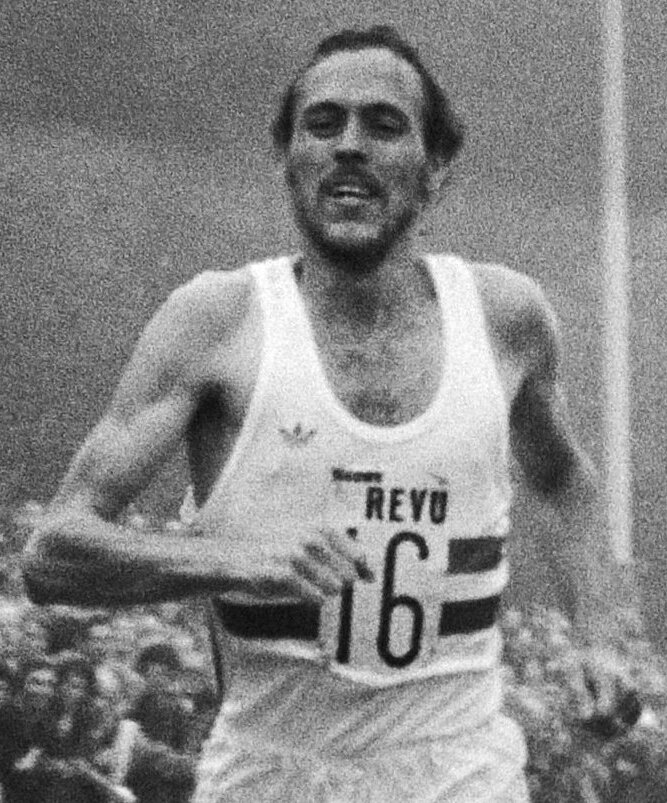
Mike McLeod
British former athlete
13
APPEARANCES
10
PODCASTS
Jul 21, 2026

Shanna MickoHOST
So I was wondering if you could give us a couple examples of how parents might help their kids strengthen these executive functioning skills.
Mike McLeodGUEST
So what I just described are known as the four pillars of executive functions, self-awareness, self-regulation, self-motivation, self-evaluation.
Mike McLeodGUEST
Pillars always need a foundation to stand upon, and the foundational skills of executive function are known as non-verbal and verbal working memory.
Mike McLeodGUEST
If you wanna learn more about that, definitely, you know, go on, go to YouTube, type in Dr. Russell Barkley, Sarah Ward.
9 MINS LATER
Laura BirekHOST
Can you tell us a little bit about your stance on screen time? Give us some insight into what happened with my kids and why it's particularly tricky for kids with ADHD.

10 MINS LATER


Jesse WeberHOST
Like, uh, what made you take the camera out? When did you see something was off? And how did you charge in?
Mike McLeodGUEST
Well, my wife saw the bison coming into camp, and she said, "Grab your camera." Um, so I did and went outside, and I saw the bison charge some boys that were not provoking it.
Mike McLeodGUEST
The young boys scattered, and the bison was, because he became agitated, uh, it's the rut, so he wants to fight something.
Mike McLeodGUEST
He ran and chased another young couple out of their campground, and then he settled down.
Mike McLeodGUEST
And if you watch bison behavior, when they settle down into the dust, that usually means it's pretty good.
Mike McLeodGUEST
Uh, Carl and his grandson started walking along the road, and the bison saw them, and for whatever reason, he got up and charged.


Mike McLeodGUEST
Well, for one, the truck you just saw in the video, um, I didn't hear it, but I had a woman screaming in my ear, or lots of people really.
Mike McLeodGUEST
Um, but what he heard was the, the white pickup honking its horn, and then squealing its tires.
Mike McLeodGUEST
And what he th- wondered is if that, when the tires squealed, if it didn't kick up dust to look like a, another angry bison and kinda trigger an angry response.
Mike McLeodGUEST
Um, he, he and his, uh, grandson saw it while they were eating dinner, and it went, uh, right past their campsite, and the, the people who were next to them, uh, told me on Instagram the very same thing.

Mike McLeodGUEST
Everything pretty much today with parenting revolves around, "I need my kid to be more independent." 'Cause that's pretty much what we're dealing with right here, is we're dealing with a youth mental health crisis, a parenting crisis, and a lot of this is due to the lack of executive functioning skills, and these skills that are so crucial to being able to take charge of your own life, to execute, to notice and do, to not be so prompt-dependent on the adults in your life, the parents, to be the executive functioning system for you.
Mike McLeodGUEST
So, so many of these kids just need prompt after prompt after prompt to get up in the morning and get to school on time, to set play dates and start hanging out with their friends, to get to bed on time, to do their homework, to do basic chores.
Mike McLeodGUEST
Parents are just doing too much, and the mental load for, you know, most often is one of the parents or sometimes both of the parents, uh, the e- absolute exhaustion.
Mike McLeodGUEST
How many parents today, how many parents listening to this podcast right now are the executive functioning system for their entire family?

Bill RancicHOST
I mean, you saw the, the road, you know, that we were going down as a society, but just tell everyone kinda how you got into this and, and how you've become such an expert.


Tom LlamasHOST
Walk us through how all of this started and, and what we're seeing in your videos.
Mike McLeodGUEST
Uh, it was still light in Montana, and the bison is approaching a bunch of boys, and I'm taking pictures, and suddenly the bison, unprovoked, charges these boys.


Heather ChauvinHOST
So can you talk a little bit about the history per se? Not so much, we don't have to go into the nitty gritty of the history, but what, you know, maybe trends or what you're seeing over the last 10 to 20 years or so, or why it seems to be more of a term people are using?
Mike McLeodGUEST
Yeah, so overall, you can really make a pretty strong argument that there's really never been a harder time to be a parent than now.
Mike McLeodGUEST
How many parents now can't pick up their phones without getting yelled at by another parenting guru and parenting influencer? And this whole concept of the perfect parent, which we all know does not exist.
Mike McLeodGUEST
So there's constant strategies thrown at you, constant diagnostic labels thrown Some of them aren't even real diagnostic labels.
7 MINS LATER
Heather ChauvinHOST
So maybe can we talk a little bit about what executive functioning skills are and the practical maybe applications of what we can do as parents, educators, and guides for these kids?


Lynn LyonsHOST
People are trying to rearrange the world in order to manage the ADHD symptoms without teaching the internal skills that these kids need.
Mike McLeodGUEST
It's always that high theory, lack of practicality over-accommodation of the issues.
Mike McLeodGUEST
Stems from, and this is what's happening on social media now, what we're seeing with all of this low-demand parenting, gentle parenting being completely twisted into what it truly isn't, and we're just over-accommodating.
Mike McLeodGUEST
Like, we look at schools, what have we seen with IEPs and 504 plans? We've seen them grow.
Mike McLeodGUEST
504 plans went from 10 pages to 50 pages, and it's every accommodation in the book.

Greg RempeHOST
So just to tail back on that for a second, why not finish it in October and, uh, versus bringing it into that following year and having, I, I guess a decent amount of time lapse in between the two?
Mike McLeodGUEST
We used to do it, um, in 20- up, up until 2018, we always had the final table as the last day of a, a three-day event.
Mike McLeodGUEST
And as we grew and realized to really give everyone a fair shot, um, mathematically and operationally, uh, it, it was just too big.
Mike McLeodGUEST
It was a scenario where you had to go into Monday, Tuesday with, with your final table, um, unless you started on a Monday, Tuesday of the week and make it an entire week of competition.
Mike McLeodGUEST
So [clears throat] we, we took a page from the World Series of Poker and from NFL, and we decided, okay, uh, we're gonna look at the main event as an opportunity for people to earn their, their seat by being a category champion, and then we're gonna take some time off, and we're, we're going to spend, uh, four to five months marketing this, this final challenge.
Greg RempeHOST
When you look back a little over a week ago as the final table comes to an end, what are one or the two of the most impressive things that you recall from that weekend?


Thomas CaleelHOST
What is the difference when we think about like ADHD and executive function? Are those two different things? Are they interrelated? How does that look? So that's a great first step question.
Mike McLeodGUEST
So number one overall, part of the reason that got me so involved in this and everything as an individual with ADHD myself and so passionate about helping kids Part of what helped me develop the internal skills model is just how unbelievably misunderstood both ADHD and executive functions truly are.
Mike McLeodGUEST
We have to understand, and I highly recommend anyone interested in this, look up the names like Dr. Russell Barkley.
Mike McLeodGUEST
The great Sarah Ward and Kristen Jacobson, Dr. George McCloskey, just incredible people that have influenced me in my career.
6 MINS LATER

Mike McLeodGUEST
And part of this is helping to understand what you're describing, this future emotion of motivation.
Mike McLeodGUEST
Motivation is, you know, this concept of, uh, of, of motivation and, uh, you know, best self and all of that.
Mike McLeodGUEST
All of it is really, uh, fancy terms, fancy language for emotion of the future.
Mike McLeodGUEST
There is no motivation unless you have the ability to see yourself in the future accomplishing that goal, or maybe even avoiding a negative consequence and feeling good about it.
Mike McLeodGUEST
Or maybe attaining a negative consequence, not feeling good about it, a negative future emotion, so it motivates you now to put in the work now so you can not feel that negative emotion later.
Mike McLeodGUEST
Like, "I better get ready in the morning without driving my mom crazy, or else I'll miss the bus, and I won't like how that feels, so I'll let me, you know, do this correctly." Or, "I really want to go to my friend's birthday party this weekend, so I better get my homework done and my chores done, and make sure I don't attack my sibling, so I can feel good at the birthday party this weekend" kind of thing.
31 MINS LATER
Ginny YurichHOST
It wasn't fully understood, so people and kids were not properly cared for, and this kind of set you on your life path.
Mike McLeodGUEST
This was probably one of the hardest things about the book, was actually talking about myself for the very first time.
Mike McLeodGUEST
I, I never wanted Grow Now and our mission to be about me and my experiences, but that's, you know, that tends to be what happens, is people end up asking you about your own life and your own experiences.
10 MINS LATER
Ginny YurichHOST
Can you talk about what is going on with kids with ADHD and the struggles that they may be having with non-verbal working memory and verbal working memory?
Mike McLeodGUEST
shiftIt's a massive shift, and it's, it's so far, it's so far beyond just the basic dysregulation.
Mike McLeodGUEST
You know, I've, I've spoken to police officers where they've said, you know, over the past year, the majority of the calls that they've made have been to private homes for dysregulated, angry kids that are attacking their parents physically, property destru- destruction, all of those things, and that's really what's happening now.
Mike McLeodGUEST
The amount of parents who have had to call 911 on their own kids has greatly increased, and so much of this is that dysregulation in the home.
Mike McLeodGUEST
And then when the school finds out that this happened at home, they're like, "Oh, we, we don't see that here at all.
29 MINS LATER
Ginny YurichHOST
You could just see it, you can see the importance of it in these simple interactions, and how with the screens they just get none of that.