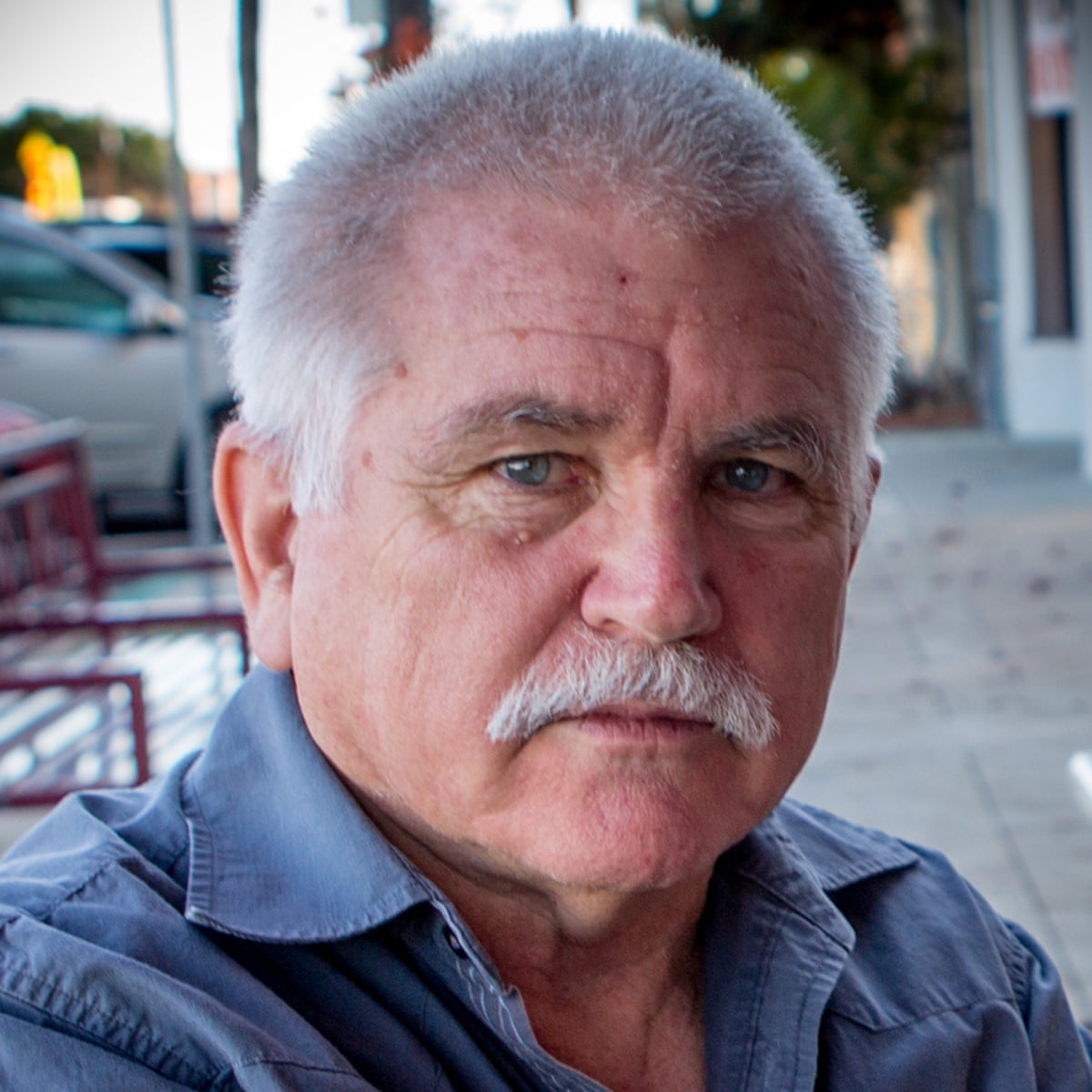
Mike Davis
American writerWikipedia
33
MENTIONS
25
EPISODES
24
PODCASTS
Search complete. 33 mentions across 25 episodes found for "Mike Davis".
Nov 2, 2026

Lillian CicerchiaHOST
like the California equivalent of that is what we were talking about before the show, which is like, The Homeowners Association and zoning meetings in the city council.
Owen Glyn-WilliamsHOST
This was Mike Davis, the greatest Los Angelian maybe ever.
William ParisHOST
Imagine thinking perhaps the new form of a free life beyond liberalism will look like the Homeowners Association.
William ParisHOST
Bleed.

Carlos Barrios PolancoHOST
In the U.S. borderlands, the myth of the Chupacabra came to embody the government's war against the welfare state and rising anti-immigration sentiment.
Carlos Barrios PolancoHOST
The historian Mike Davis described the Chupacabra phenomenon in California as a byproduct of the increasingly hostile environment for migrants and the violence that the state was imposing on them.
Carlos Barrios PolancoHOST
Quoting Calvoquiros here, at a base level, monsters and the phantasmagoric allow for the out-of-this-world atrocious experiences in daily life to become a collective spectacle that comes to represent the social relations and realities imposed over the community.
Carlos Barrios PolancoHOST
Therefore, as a collective entity, the Chupacabras calls attention to the atrocities experienced by small farmers and those at the vulnerable and peripheral edges of society.

Carlos Barrios PolancoHOST
In the U.S. borderlands, the myth of the Chupacabra came to embody the government's war against the welfare state and rising anti-immigration sentiment.
Carlos Barrios PolancoHOST
The historian Mike Davis described the Chupacabra phenomenon in California as a byproduct of the increasingly hostile environment for migrants and the violence that the state was imposing on them.
Carlos Barrios PolancoHOST
Quoting Calvoquiros here, at a base level, monsters and the phantasmagoric allow for the out-of-this-world atrocious experiences in daily life to become a collective spectacle that comes to represent the social relations and realities imposed over the community.
Carlos Barrios PolancoHOST
Therefore, as a collective entity, Chupacabras calls attention to the atrocities experienced by small farmers and those at the vulnerable and peripheral edges of society.
Carlos Barrios PolancoHOST
In the U.S. borderlands, the myth of the Chupacabra came to embody the government's war against the welfare state and rising anti-immigration sentiment.
Carlos Barrios PolancoHOST
The historian Mike Davis described the Chupacabra phenomenon in California as a byproduct of the increasingly hostile environment for migrants and the violence that the state was imposing on them.
Carlos Barrios PolancoHOST
Quoting Calvo Quiroz here, "...at a base level, monsters and the phantasmagoric allow for the out-of-this-world atrocious experiences in daily life to become a collective spectacle that comes to represent the social relations and realities imposed over the community." Therefore, as a collective entity, the Chupacabras calls attention to the atrocities experienced by small farmers and those at the vulnerable and peripheral edges of society.
Carlos Barrios PolancoHOST
However, as Jordan talks about in his thesis, the Chupacabras can also be seen as a symbol of resistance against the very imperialism that kind of created it.

Rebecca KarlGUEST
I'm having trouble even addressing it because I can't wrap my mind around it.
Rebecca KarlGUEST
I think any system that leads to this kind of mass death, whether it is, I just happened to be rereading Mike Davis's Late Victorian Holocaust.
Rebecca KarlGUEST
I was going to
Richard HamesHOST
say, I was going to bring it up.
Rebecca KarlGUEST
I can't answer the question as posed.
Rebecca KarlGUEST
Sorry.
Richard HamesHOST
So just to say what we're looking at here on the map is, so these are what Mike Davis describes as the late Victorian holocausts.
Richard HamesHOST
So this collection of famines down here in India and the collection of famines here in India as well.

Tejasvi NagarajaGUEST
And so I think that's one of the books that's most extraordinary in both having focused studies of local people, working people, but in this global capitalist, global imperial context.
Tejasvi NagarajaGUEST
And then, you know, another book that I have to mention is Mike Davis's Prisoners of the American Dream, a really sweeping take on U.S. labor history in relation to war, in relation to comparison and connection.
Tejasvi NagarajaGUEST
to Europe and Latin America and other sites, a really sort of bold essayistic take.
Tejasvi NagarajaGUEST
And even that title, Prisoners of the American Dream, sort of the tensions that are within it, the unsettled questions that are within it.

Tejasvi NagarajaGUEST
And so I think that's one of the books that's most extraordinary in both having focused studies of local people, working people, but in this global capitalist, global imperial context.
Tejasvi NagarajaGUEST
And then, you know, another book that I have to mention is Mike Davis's Prisoners of the American Dream, a really sweeping take on U.S. labor history in relation to war, in relation to comparison and connection.
Tejasvi NagarajaGUEST
to Europe and Latin America and other sites, a really sort of bold essayistic take.
Tejasvi NagarajaGUEST
And even that title, Prisoners of the American Dream, sort of the tensions that are within it, the unsettled questions that are within it.

Viral MistryGUEST
And.
Viral MistryGUEST
Mike Davis has articulated this so beautifully in late Victorian holocausts of just the sheer number of South Asians that died as a direct result of man-made famines in El Nino cycles where there was huge decrease in crop productivity but the British Empire needed its crops and so the priority went to the metropole and so millions of South Asians starved and I think that's so relevant in this current moment in 2026 because we're living through a super El Nino.
Viral MistryGUEST
In fact, I've heard some climate scientists say it's not even really appropriate to call it a super El Nino because what we're in is truly has no historical precedent, is so extreme that it can't be directly compared to.
Viral MistryGUEST
And you know, a lot of people are almost certainly going to die as a direct result of both that super El Nino and also the imperialist war the United States is waging and Israel is waging against Iran.

Dan WilburHOST
right that's where i learned that bookworms are a real oh yeah that's where a bookworm in your head i was like oh yeah there's always a cartoon worm eating through a book and it's no there were you would find worms and papyrus and they would chew through the book and then the book doesn't exist anymore that's crazy so yeah that's a real thing
Zach PughGUEST
yeah and then um you know i feel like uh I'm a little biased because being an L.A. guy, but Mike Davis.
Zach PughGUEST
Okay.
Dan WilburHOST
He made Garfield.

Tejasvi NagarajaGUEST
And so I think that's one of the books that's most extraordinary in both having focused studies of local people, working people, but in this global capitalist, global imperial context.
Tejasvi NagarajaGUEST
And then, you know, another book that I have to mention is Mike Davis's Prisoners of the American Dream, a really sweeping take on US labor history in relation to war, in relation to comparison and connection.
Tejasvi NagarajaGUEST
to Europe and Latin America and other sites, a really sort of bold essayistic take.
Tejasvi NagarajaGUEST
And even that title, Prisoners of the American Dream, sort of the tensions that are within it, the unsettled questions that are within it.
15 more episodes mention Mike Davis.
Create an account to see the whole feed, search across every transcript, and follow the entities you care about.