Migratory Bird Treaty Act of 1918
25
MENTIONS
19
EPISODES
19
PODCASTS
Search complete. 25 mentions across 19 episodes found for "Migratory Bird Treaty Act of 1918".
Sep 14, 2026

Jeff FinchGUEST
And starting in kindergarten is when I first started to see him.
Jeff FinchGUEST
He would come to schools in our area and he had pre-act golden eagles, eagles that he had obtained prior to the Migratory Bird Treaty Act.
Jeff FinchGUEST
Goshawks, Ravens, Great Horned Owls, Saker Falcons, Jeer Falcons.
Jeff FinchGUEST
I mean, at one point when I was a kid and I started to get a chance to visit him and start helping him take care of some of his birds, he had 21 birds at the time.
Jeff FinchGUEST
and explored the idea of falconry from what they can read, because no one was doing it here.
Jeff FinchGUEST
And they were loving something that not many people talked about.
Jeff FinchGUEST
When that Migratory Bird Treaty Act came along, which everybody agrees is a good thing, it was recognized by them that Laws were about to take away something that would be unintentional.
Jeff FinchGUEST
Nobody would know about it if they didn't become active and find each other and pull together.

Lisa WexlerHOST
Do the laws protect these birds, even though it doesn't seem like they've been terribly effective? Do they? Are there laws that protect these birds?
Jeremy CohenGUEST
Yeah, so in the United States, I'm not as familiar in Canada, but in the United States, we have the Migratory Bird Act, I think has been in place for almost 100 years.
Jeremy CohenGUEST
And it forbids the purposeful killing of any bird other than an invasive species.
Jeremy CohenGUEST
So there are a couple of birds that are invasive that were put here by humans that are not actually native to the United States.
Jeremy CohenGUEST
Really? But those birds are not protected by the act.
Jeremy CohenGUEST
So it's all of our native birds that are protected.
Jeremy CohenGUEST
It's called the Migratory Bird Act, but whether they migrate or not, they're still protected as long as they're native.
Lisa WexlerHOST
It doesn't seem to have really worked, though.

Robert RileyGUEST
Purpose made quite a few photos out there.
Robert RileyGUEST
But anyways, it was a picture that had this little bronze plaque on it and said, you know, to my four friends, and it had their names on it, I leave to you my life's work, right? And so to kind of see the resource go down to the point that they, you know, even the government got involved with, you know, some of the Migratory Bird Act and, you know, you know, Pittman Robertson, a few of those other things to try and help conserve wildlife in general to see that.
Robert RileyGUEST
Yeah, I definitely think that shaped it.
Robert RileyGUEST
And then I think it shaped the generation of stewards that came after them.

TowerHOST
The third piece falls under a category that doesn't get nearly enough attention in general aviation discussions, wildlife overflight regulations, specifically what federal law says about flying near certain protected species and where that intersects with fall migration season.
TowerHOST
The Migratory Bird Treaty Act is a 1918 federal law that has been significantly expanded over the decades.
TowerHOST
Its central premise is that migratory birds are protected species and that certain activities which disturb or harass them can carry federal penalties.
TowerHOST
For pilots, the practical question is, does low flying near migratory bird populations create legal exposure? The short answer is that it can.

Sue AndersonNARRATOR
Hence, bird investigations are made by the U.S.
Sue AndersonNARRATOR
Fish and Wildlife Service, the arm of the Department of Interior charged by Congress under the Migratory Bird Treaty Act with the duty of protecting these avian species that, in their yearly journeys, pass back and forth between the United States and other countries.
Sue AndersonNARRATOR
In addition, the federal government, through the activities of the Biological Resources Division of the U.S. Geological Survey, also promotes basic research on migration.
Sue AndersonNARRATOR
Federal agencies cooperate with their counterparts in other countries, as well as with state agencies, academic institutions, and non-governmental groups to gain understanding and for the protection of migratory species through such endeavors as Partners in Flight, a broadly based international cooperative effort in the Western Hemisphere.

Jim TrothHOST
So here in Ohio, you cannot early April to like late October, you cannot disturb them or remove them.
Laura TrothHOST
So they are actually protected under federal law by the Migratory Bird Treaty Act.
Laura TrothHOST
So it is illegal to remove or disturb nests, eggs, or birds.
Laura TrothHOST
You have to wait until they leave before you can get your chimney clean, before you can have a scope done, before you can have anything done.

speaker_3VOICE_ACTOR
It's possible.
Evan DaltonHOST
They're like, well, we've already violated the Migratory Bird Treaty Act, so let's just kill some cows.
Evan DaltonHOST
So, yeah, you get this weird shot of, you know, dead cows on someone's lawn.
Evan DaltonHOST
And then you have an interview, which I think is an all-time performance, quite frankly, for Walker, which is this crazy lady describing the aliens.

KirstenHOST
And those are all protected by federal laws.
KirstenHOST
Migratory Bird Act,
Tim BrysGUEST
yeah.
KirstenHOST
All right, excellent.

Kevin BurkeHOST
That September fourteenth date wasn't arbitrary, and it wasn't a Texas decision.
Kevin BurkeHOST
It sat inside the federal framework under the Migratory Bird Treaty Act.
Kevin BurkeHOST
And here's the thing that most hunters don't know.
Kevin BurkeHOST
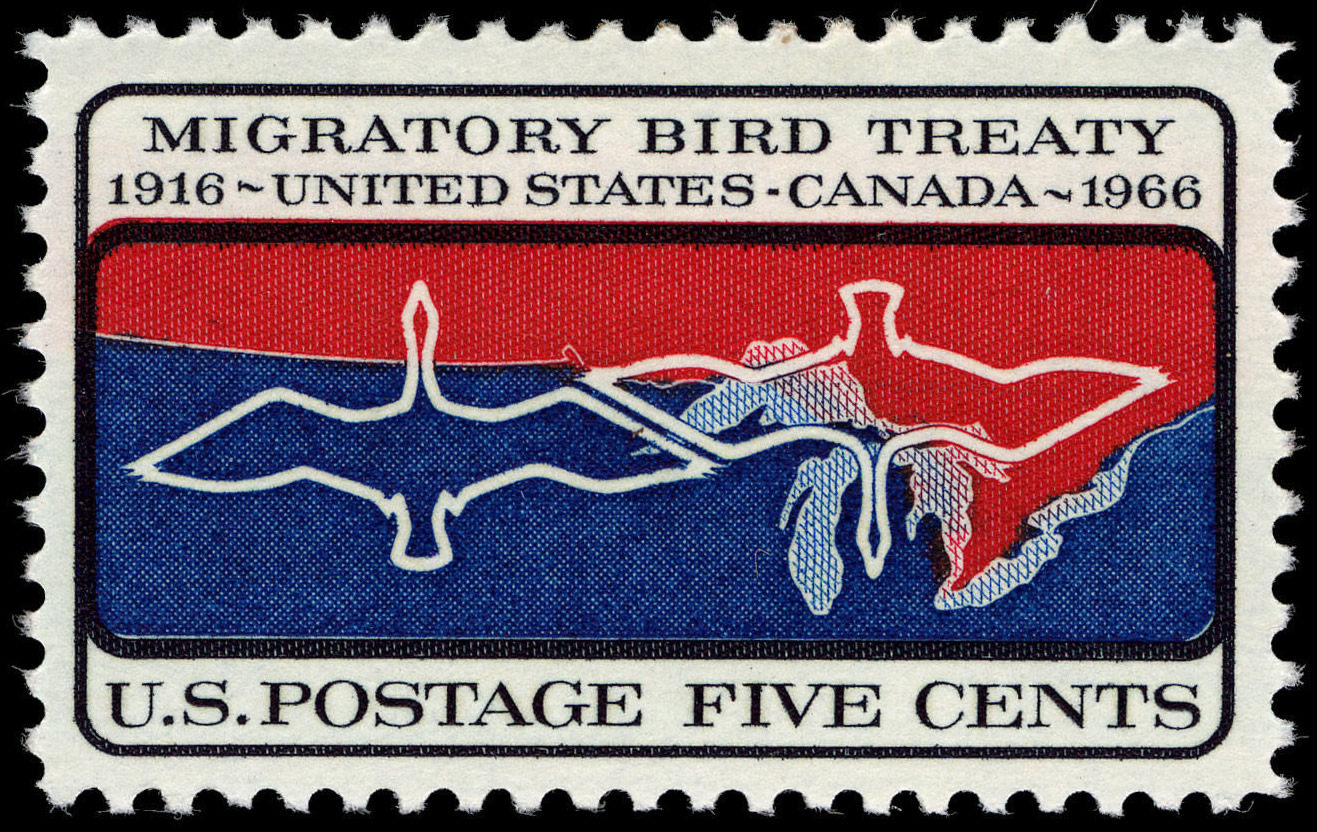
The nineteen sixteen treaty and the nineteen eighteen act that followed it specified that no state may open a season on migratory birds before September first.

HannahHOST
Yeah.
HannahHOST
And it's cool that the, the trade and the anger and the outrage, it involved creating these conservation societies that people could be more actively involved in, but it also created real legislation that, So there's the Lacey Act, the Weeks-McLean Act, and the Migratory Bird Treaty Act, which we've referenced the Migratory Bird Treaty Act before.
HannahHOST
It's why some birds that we've already talked about, it's illegal to hunt them and different things like that.
HannahHOST
So these are real, real actions that were taken, not just clubs that were formed for like good times, but instead like actual conservation movements that that really created more environmental protection rather than environmental... objectification, I guess, like enjoying the environment for the, the vibes, the aesthetics, but instead enjoying the environment and protecting what we have and trying to conserve that.
9 more episodes mention Migratory Bird Treaty Act of 1918.
Create an account to see the whole feed, search across every transcript, and follow the entities you care about.