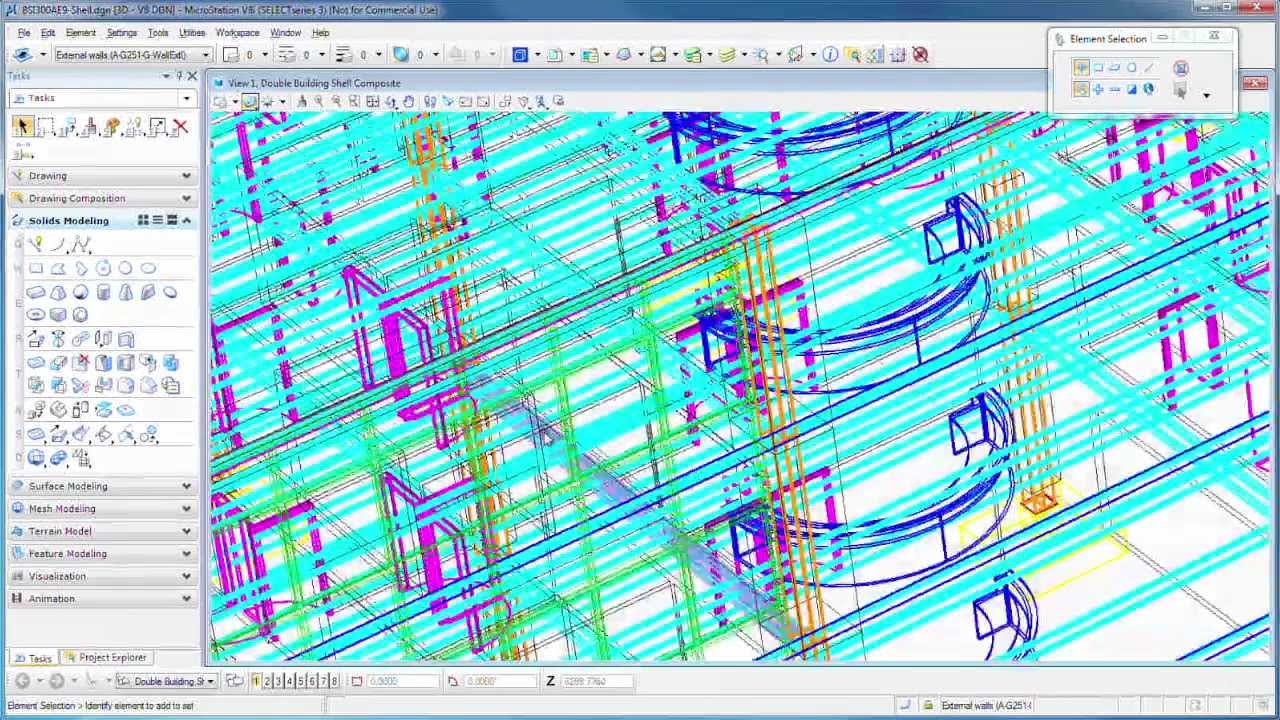
MicroStation
SoftwareWikipedia
7
MENTIONS
4
EPISODES
3
PODCASTS
Search complete. 7 mentions across 4 episodes found for "MicroStation".
Sep 24, 2026

Greg DemchakGUEST
Uh, when we get into, like, agentic workflows, this is where you almost start to imagine that the, that the software itself, um, is not something that you're directly maybe interfacing with kind of in a direct way, like pushing buttons and icons and, and operating it like that, or even talking to it with chat.
Greg DemchakGUEST
It's more like you've got this engine that can be called and running, you know, a headless version of MicroStation or, or STAAD, which is the structural engineering package.
Greg DemchakGUEST
And then an agentic system through an, you know, model context protocol can communicate with that system, and it can start generating results, many, many results, and try and optimize those results, and then feed the results back to whatever interface makes sense.
Greg DemchakGUEST
Could be a web app.
1 HR 46 MINS LATER
Greg DemchakGUEST
Yeah.
Greg DemchakGUEST
So, like, let's say you were, um...
Greg DemchakGUEST
Like, this whole idea of, like, building a plugin or Python, like writing a code snippet or building a Grasshopper node or, uh, building a customization on top of MicroStation or, or Revit.
Greg DemchakGUEST
Like, those things might have seemed a bit, you know, that's what the big firms do.

Alex ConacherHOST
Model context protocols, or MCPs, connect AI assistants directly to external applications.
Alex ConacherHOST
For infrastructure engineering, this means linking AI assistants directly to validated engineering software like Bentley's Stad Pro and MicroStation rather than relying on generalized web data.
Rhian OwenHOST
There really is no room for hallucinations when designing infrastructure.
Alex ConacherHOST
With tightening project timelines and more sophisticated built environments, this is a way of better utilizing our limited pool of engineers to tackle a growing number of problems.
Greg DemchakGUEST
Very practical use of machine learning.
Greg DemchakGUEST
When we get into LLMs and the new large language models and also the diffusion models, this is something that we've made a very deliberate intervention with our core desktop software, so MicroStation.
Greg DemchakGUEST
STAD, which is a structural engineering package, to put a co-pilot interface into those applications.
Greg DemchakGUEST
So basically, the co-pilot, you can have a language conversation with it.
Greg DemchakGUEST
It can respond and basically do queries against what's in the 3D model or the environment and give you reactions back.
Greg DemchakGUEST
Increasingly now, we're getting into adding with things like Python, which is a programming language, chat interface inside of MicroStation.
Greg DemchakGUEST
You're describing what you want with natural language.
Greg DemchakGUEST
It's then instantiating Python code snippets and building little widgets within MicroStation.

Kent GrohHOST
Yeah.
Marisa DittmannGUEST
It's no different from going from MicroStation to CAD and you're like, "Oh my gosh, where is everything?" [laughs]
Kent GrohHOST
Yeah.
Kent GrohHOST
Yeah.