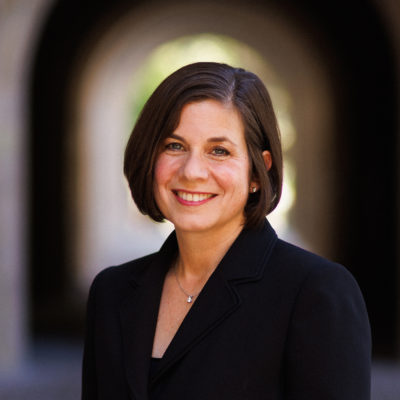
Michelle Mello
Professor
2
APPEARANCES
2
PODCASTS
Jul 21, 2026


Chip KahnHOST
On the other hand, if it, on average, does a better job of very specific things, do the providers or the clinicians have to have it there?

Michelle MelloGUEST
The answer is that if you're asking about the legal standard of care, courts will always continue to apply the standard of reasonableness.
Michelle MelloGUEST
What is a reasonable under the circumstances, meaning what would a reasonably competent practitioner in the same specialty have done in a similar situation? Now, the way that's been applied has drifted a little bit over time.
Michelle MelloGUEST
It used to be that you could just kind of make an argument about what was customarily done.
7 MINS LATER
Chip KahnHOST
You know, just as you pointed out in your JAMA article earlier, Is this going to be a problem with evaluation? And what does eliminating that disclosure mean for patients and ultimately for accountability?

speaker_2ADVERTISER
In
Michelle MelloGUEST
prior auth, there are a number of challenges that insurers confront in trying to adjudicate these requests with the limited information that they have in hand.
Michelle MelloGUEST
So from their perspective, AI might be really helpful in, first of all, finding requests for prior authorization that are incomplete or missing information, because that's a major reason why they have to initially say no and send it back to the doctor.
Michelle MelloGUEST
And then secondly, a lot of these requests are relatively straightforward in that they involve simple matching tasks.
Michelle MelloGUEST
Like, did Mike already have his 20 physical therapy visits for the year? Or was Michelle actually on our insurance plan on May 27th of this year? So for that kind of stuff, it's only natural that they would think about algorithmic determinations.
Michelle MelloGUEST
And the good news for patients and doctors is that most of the time for these kind of simple cases where medical necessity isn't really at issue, the answer is going to be yes.

Mike MiliardHOST
Is that where you see this going? Or do you think there's eventually going to be a balance of sorts where each side of the claims processing equation uses AI more or less in equilibrium?