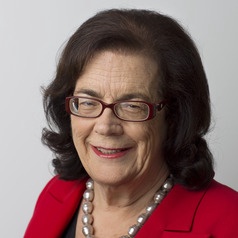
Michelle Grattan
Australian journalist
6
APPEARANCES
5
PODCASTS
Aug 31, 2026

Samantha HawleyHOST
So it doesn't necessarily mean that would translate on a national level, does it?

Michelle GrattanGUEST
No, but nevertheless, the, the polls that we're seeing show that One Nation is pretty strong nationally.
Michelle GrattanGUEST
On this point of listening, I think that this is quite interesting because when these reverses happen, politicians say, "We'll listen." But for many of these One Nation voters, they just dismiss this.
Michelle GrattanGUEST
They just see this as polit talk, and they feel that- Politicians say they'll listen, but actually they're not hearing these voters.
Michelle GrattanGUEST
That's the perception of many of these people who are voting for One Nation.
6 MINS LATER

Michelle GrattanGUEST
Look, I think it has a cumulative effect potentially, and I also think you need to divide the s- support for One Nation into two categories.
Michelle GrattanGUEST
The people who are really rusted on won't care about who paid for the trip, and after all, Barnaby Joyce has suggested he thinks it is Gina Rinehart, or a lot of these other comments, very, uh, controversial comments about domestic violence and other matters.
Michelle GrattanGUEST
But I think that those who are using Pauline Hanson as a protest vote, a grievance vote, will be more likely, over time, to become increasingly doubtful about her, especially as they near going into the ballot box.
Michelle GrattanGUEST
As for Hanson herself, I think the refusal to disclose who paid for the trip is another sign of her general defiance.
Michelle GrattanGUEST
She knows she's going to have to in- eventually declare this, but she's just saying, "I'm going to do it on my terms."

Sally SaraHOST
Michelle, with your experience, um, uh, what we've seen in these early couple of days, uh, with the ALP conference in Adelaide, how does that compare to times past?

Michelle GrattanGUEST
I think we've seen a, a major change in the Prime Minister, who very much in the first term stressed his word was his bond.
Michelle GrattanGUEST
Now, he did go back on the stage 3 tax cuts, but that was a special case and, at the time, appeared perhaps a one-off.
Michelle GrattanGUEST
It's been a big change to break his word, to break those election promises.
Michelle GrattanGUEST
Why did he do it? Probably because of the considerable pressure from the, the Labor base, uh, and also commentators who were saying the government was too slow, it was standing for nothing.
17 MINS LATER

Tom McIlroyHOST
Do you see, uh, difficult waters for the government getting these big things through?

Michelle GrattanGUEST
I think we've seen a, a major change in the Prime Minister, who very much in the first term stressed his word was his bond.
Michelle GrattanGUEST
Now, he did go back on the stage three tax cuts, but that was a special case and at the time appeared perhaps a one-off.
Michelle GrattanGUEST
It's been a big change to break his word, to break those election promises.
Michelle GrattanGUEST
Why did he do it? Probably because of the considerable pressure from the, the Labor base, uh, and also commentators who were saying the government was too slow.
17 MINS LATER

Tom McElroyHOST
Do you see, uh, difficult waters for the government getting these big things through?


Michelle GrattanGUEST
It was important the other day that, uh, uh, the ones coming to New South Wales were, uh, whizzed away and you didn't get airport scenes.
Michelle GrattanGUEST
Now, there was some criticism that they were receiving special treatment, but I think that treatment, uh, was justified, and it did mean that, uh, there weren't clashes, and it, it minimized the, uh, optical problem of, uh, of their return.
Michelle GrattanGUEST
But perhaps the more, uh, important issue, the greater attention should be focused on the hearings this week at, at the, uh, Anti-Semitism Royal Commission where various security agencies appeared, and we got a bit of an insight into some of the lack of coordination between security agencies dealing with counter-terrorism, dealing with potential threats.
17 MINS LATER
37:31

Michelle, what do you think? Has this been very damaging to the Anti-Corruption Commission, or will it just sort of wash past most people? What do you think?
Michelle GrattanGUEST
Well, it may wash past most people, but I do think this has been something of a disaster.
Sam HawleyHOST
They're not the figures I assume the government would want to be seeing at this point.
Michelle GrattanGUEST
They perhaps did not anticipate that some of these changes, especially around capital gains tax, would get into such detailed and negative critiques.
Michelle GrattanGUEST
It's affecting people, uh, in estate planning, leaving estates to their children.
Michelle GrattanGUEST
Now, Jim Chalmers says that there'll be consultation with that sector, but meanwhile of course, there's a lot of negative feedback, and that's proving difficult to deal with.
Michelle GrattanGUEST
And Jim Chalmers is saying, "Well, I'm not talking about the politics, I'm talking about the substance."
Sam HawleyHOST
So do you think, though, that this is the way to keep Australians interested in their parties? Do you think particularly younger voters will buy this?