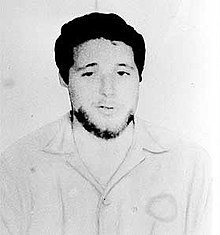
Michael Schwerner
14
MENTIONS
14
EPISODES
14
PODCASTS
Search complete. 14 mentions across 14 episodes found for "Michael Schwerner".
Oct 16, 2026

speaker_1HOST
[chuckles] Um, civil rights workers, both Black and white, went to Mississippi to register Black voters.
speaker_1HOST
Three of those workers, man- uh, Chancey, Goodman, and Schwerner, were murdered by Klan members working with local law enforcement.
speaker_1HOST
Remember, many of your local sheriffs and sheriff's deputies were members of the Klan because the Klan was the Democrat, you know...
speaker_1HOST
They w- elected sheriffs would've been Democrats, and the Klan was Democrat.

Andrew JohnstonGUEST
It was, it was very symbolic.
Adrian HarewoodHOST
Schwerner, G- uh, Goodman and Chaney.
Andrew JohnstonGUEST
Absolutely.
Adrian HarewoodHOST
That's right, yeah.

Rip DanielsHOST
They came down here.
Rip DanielsHOST
Schwerner and Goodman, go look them up.
Rip DanielsHOST
Or the two white preachers there in Selma.
RoeHOST
Why didn't white folks murder them? [laughs]

Jim EmisonGUEST
Two reasons.
Jim EmisonGUEST
Number one, this man is a civil rights hero on the order of a Medgar Evers or James Chaney or Mickey Schwerner or Andrew Goodman, and he deserves to be honored as that.
Jim EmisonGUEST
He got no honor.
Jim EmisonGUEST
He got buried in an unmarked grave without his family there, without a service, without anything.

Tiffany ReeseHOST
The civil rights movement was challenging America's institutional racist beliefs and policies.
Tiffany ReeseHOST
Then the murders of civil and voting rights activists James Chaney, Michael Schwerner, and Andrew Goodman in Mississippi on June 20th, 1964 demanded the attention of the federal government.
Tiffany ReeseHOST
A gang of over 20 KKK members killed the boys with the aid of a local deputy sheriff because of the young men's local efforts to enable equal access to voting and education.
Tiffany ReeseHOST
In 1967, according to the Federal Bureau of Investigations, seven of the 18 defendants would be found guilty, including Deputy Sheriff Price, but none on murder charges.

Nadine SmithGUEST
Yeah, I mean, when I say this is an old tactic, again, economic reprisals, being, uh, debanked, all of these things were tactics used in the past.
Nadine SmithGUEST
In fact, in, in August of 1964, when the bodies of, uh, Chaney, Schwerner, and Goodman murdered by the Klan were found in Mississippi, the head of SNCC called Harry Belafonte and said, "We are...
Nadine SmithGUEST
It...
Nadine SmithGUEST
These are the last weeks of Freedom Summer.

James Brown Jr.HOST
Three young people were killed.
Mary Beth TinkerSOUNDBITE_SPEAKER
The three young men, their names were Chaney, Schwerner, and Goodman.
Mary Beth TinkerSOUNDBITE_SPEAKER
News of this went around the world, and my parents went to Mississippi then.
Mary Beth TinkerSOUNDBITE_SPEAKER
They weren't particularly political, but it was against their faith to treat people like this.

Will HaygoodGUEST
You know, so much in American history, when it comes to race, this nation takes two steps forward and then a step back.
Will HaygoodGUEST
It has taken a lot of bloodshed, Emmett Till, a lot of jailings, you know, Schwerner, Goodman, and Cheney, the three people who went from Oxford, who went down to Mississippi in 1964 and were murdered.
Will HaygoodGUEST
Race is the albatross around this country's neck.
Will HaygoodGUEST
And when you have race mongers in high positions who fan the flames of racial hatred, it sets the nation back.

speaker_3NARRATOR
Thomas Blanton and Bobby Frank Cherry were convicted in two thousand one and two thousand two for the nineteen sixty-three bombing of the Sixteenth Street Baptist Church in Birmingham, Alabama, the bombing that killed four young girls and became one of the defining atrocities of the Civil Rights Era.
speaker_3NARRATOR
And in two thousand five, Edgar Ray Killen was convicted of manslaughter for orchestrating the nineteen sixty-four murders of James Chaney, Andrew Goodman, and Michael Schwerner, three civil rights workers whose disappearance in Neshoba County, Mississippi, became known as the Mississippi Burning case.
speaker_3NARRATOR
Mitchell would later receive a MacArthur Fellowship, the so-called Genius Grant, with a five hundred thousand dollar award in recognition of his decades of investigative work.
speaker_3NARRATOR
Every single one of those convictions traced a line back to the Evers case, back to Jerry Mitchell's first story about the Sovereignty Commission, back to Myrlie Evers calling for the case to be reopened the next day, the first domino.

Howard ZinnSOUNDBITE_SPEAKER
My wife and I spent the summer of 64 in Mississippi, Freedom Summer, where people came from all over the country to work on the right to vote for black people and set up freedom schools for kids and did all sorts of things.
Howard ZinnSOUNDBITE_SPEAKER
And that was the summer in which that infamous incident took place with the murder of three civil rights workers, one black, two whites, Cheney, Schwerner, Goodman.
Howard ZinnSOUNDBITE_SPEAKER
That took place in June.
Howard ZinnSOUNDBITE_SPEAKER
At least they disappeared in June.
4 more episodes mention Michael Schwerner.
Create an account to see the whole feed, search across every transcript, and follow the entities you care about.