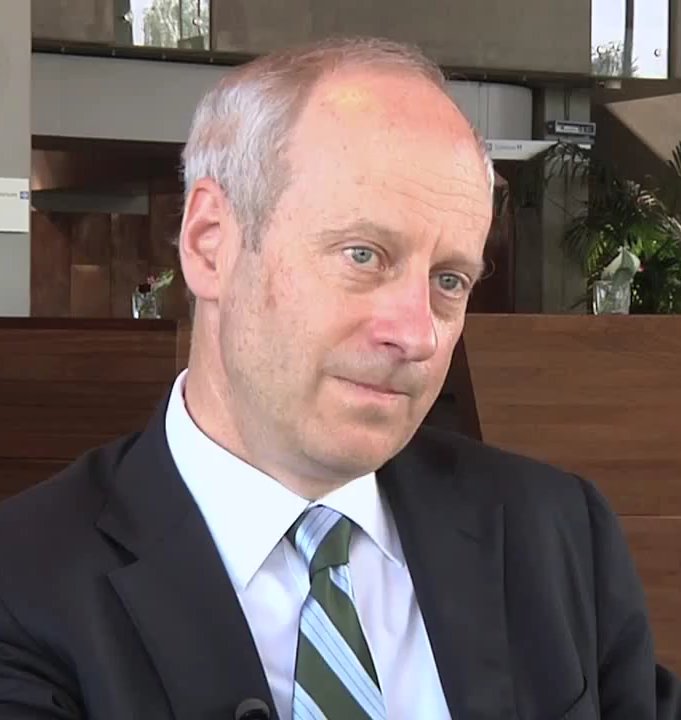
Michael Sandel
American philosopherWikipedia
23
MENTIONS
13
EPISODES
13
PODCASTS
Search complete. 23 mentions across 13 episodes found for "Michael Sandel".
Sep 23, 2026

Ian DuntHOST
Spends most of his time with just close friends, with family, very humble.
Ian DuntHOST
Here's the philosopher Michael Sandel on getting a phone call from him when he started as an assistant professor at in Harvard in the 1980s.
Ian DuntHOST
So by this time, John Rawls is the towering figure in all of Western political philosophy.
Ian DuntHOST
And he gets a call from him in his own university.

Mariana MazzucatoGUEST
Fast-forward, communitarian philosophers still talk about that.
Mariana MazzucatoGUEST
So Michael Sandel's whole critique of John Rawls' theory of justice is based on the fact you can't have a theory of justice if we don't value each other.
Mariana MazzucatoGUEST
But in economics, where even the public good, which sounds good, there's two word, one is good, is just correcting for a market failure, I say it's impossible to actually achieve good results 'cause you're always just filling the gap, correcting things after the fact.
Nick HanauerHOST
Yeah.

Britta BushnellGUEST
I think that the journey of birth into parenthood is a lot about that embracing the unbidden.
Britta BushnellGUEST
There's a quote by Michael Sandel who talks about, and I won't get the quote perfect, which, you know, is part of the point, right, is I can't do it perfectly.
Atoosa BenjiHOST
But
Britta BushnellGUEST
he speaks about how we choose our partners, we choose our friends, we choose our career, we hope, at least in part because they have characteristics or aspects to them that we enjoy and that we love.

Joseph HolmesHOST
Christopher Nolan, of all people, echoing Alex de Tocqueville's Democracy in America, argued that in a recent interview that democratic societies in general that believe in equality mean that people are disposed to have people have to apologize for greatness because otherwise they otherwise will reject it.
Joseph HolmesHOST
Similar ideas in Michael Sandel's Tyranny of Merit that proposes the values of meritocracy create hubris among winners and humiliation among the losers, which can cause resentment.
Joseph HolmesHOST
Edelman himself argues that elites are themselves to blame by creating real-life practical and moral institutional failures that lead people not to trust them.
Joseph HolmesHOST
Others argue the rise of the internet has made it easier to share information that real or fake runs counter to elite narratives, or that elites and non-elites increasingly lead very different lives and therefore increasingly can't relate to each other and their values, which fuels distrust.

Anchit SathiGUEST
I consume what I'm going to mention in the form of a podcast, but it's available in lots of different forms.
Anchit SathiGUEST
Michael Sandel's BBC series, The Public Philosopher, which I think is fantastic.
Anchit SathiGUEST
You know,
Lucy DallasHOST
he...

Karl FaaseGUEST
That's a problem.
Karl FaaseGUEST
I read a book by Michael Sandel a number of years ago called The Tyranny of Merit.
Karl FaaseGUEST
Now, I ended up agreeing with the book then a few years later, disagreeing with the book.
Karl FaaseGUEST
Whatever you think of it, it's a brilliant read, The Tyranny of Merit.
Steve McAlpineGUEST
And equity is burning a lot of people and it's burning them or it's raising up a lot of people who shouldn't be.
Steve McAlpineGUEST
And it's cancelling a lot of people who shouldn't be cancelled, but it just doesn't align with how things work, and that's the problem.
Karl FaaseGUEST
David, if I can just jump in quickly to say, if Michael Sandel was on this call, I think the point he would make is that the students at Harvard, a disproportionately high percentage of them, it's not just that they're white, they come from wealthy families who are worth a lot of money and high-end jobs, Ivy League, you know, schools, colleges, well, not Ivy League because that's universities and colleges like Harvard, but they actually come and there's a sense of that's not particularly just.
Karl FaaseGUEST
And I think that's, if Michael Sandel would say, you know, the tyranny of merit is that we congratulate ourselves that we live in a country that functions off merit and he would say, well, actually, if you look at a lot of the figures, it may not be merit, it may be just the family you were born in.

Constantine KarathanasisGUEST
But beyond that, you know how money pulls into the plan of the comic universe.
Constantine KarathanasisGUEST
protagonist there are just references everywhere how people are being cheap or being greedy and and how they use money And at that time, while I was reading that, my side reading that was for pleasure reading was a book by Michael Sandel.
Constantine KarathanasisGUEST
And I think it's called What Money Can't Buy.
Constantine KarathanasisGUEST
And there's this analysis of how our societies have drifted from being market economies to being market societies.

James WoodGUEST
Canadians should be very proud.
Sean WhatleyHOST
But you also have Michael Sandel, a Jewish
James WoodGUEST
philosopher at Harvard, who really helped coin the term the unencumbered self, which really maps well onto Charles Taylor's like buffered self idea.
James WoodGUEST
You know, and he has Sandel has the most probably the most popular philosophy.
James WoodGUEST
Um, recorded lectures of all time, uh, his class on justice, great little book.
James WoodGUEST
And I don't, I don't think he would call him.

Spencer CaseGUEST
Yeah.
Spencer CaseGUEST
So I, one thing I don't want to do is I don't want to rely on the communitarian kind of response way, way of trying to establish that there are patriotic duties that roughly the communitarian idea is that, um, It's a sort of an anti-contractarian move in political philosophy where, to put Michael Sandel's way of putting it, we are encumbered selves.
Spencer CaseGUEST
So we just, we enter the world within this normatively rich set of relationships, among them possibly the relationship to one's fellow citizens, one's family members, et cetera.
Spencer CaseGUEST
And we just have special duties.

Steven PinkerGUEST
That's the, uh, that's the quid pro quo.
Steven PinkerGUEST
But, you know, if, if, if, when, when this gentleman sat down, the president said, "Hey, if you give us, um, $150 million, then we'll name, uh, the, the program after you, and you can speak to, you know, Pinker and Michael Sandel and, um, uh, other Harvard faculty as often as you want," um, that would have put a kind of pall over the evening.
Shankar VedantamHOST
[laughs]
Steven PinkerGUEST
Uh, it would be-- you know, even though it would have cut out a lot of, uh, you know, time, these are busy individuals.
3 more episodes mention Michael Sandel.
Create an account to see the whole feed, search across every transcript, and follow the entities you care about.