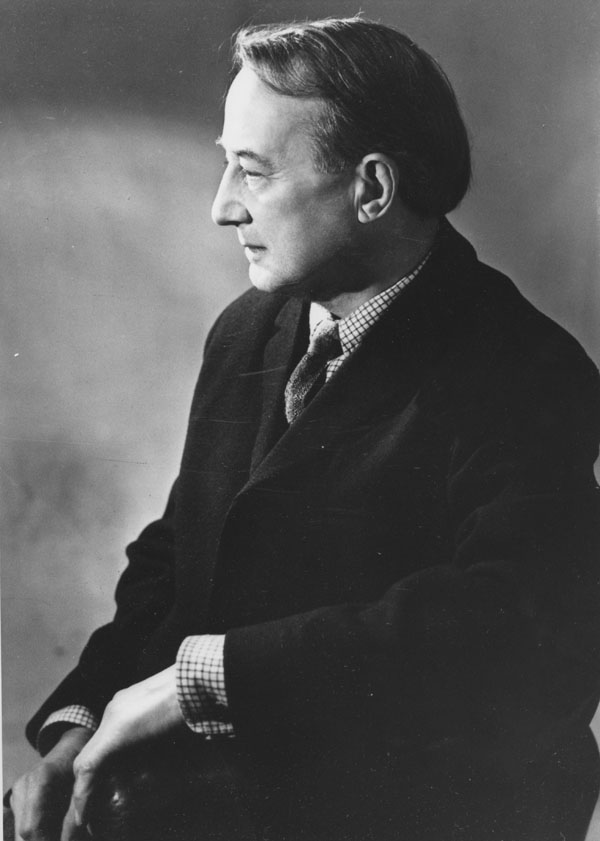
Michael Oakeshott
English philosopherWikipedia
39
MENTIONS
15
EPISODES
9
PODCASTS
Search complete. 39 mentions across 15 episodes found for "Michael Oakeshott".
Oct 18, 2026

Matthew Raphael JohnsonGUEST
And this abstraction, well, people don't live abstractly.
Matthew Raphael JohnsonGUEST
It just so happens I did my doctoral dissertation on this because this was a huge issue with Michael Oakeshott many years ago at the London School of Economics and Political Science.
Matthew Raphael JohnsonGUEST
That when you try to make, you know, ideology may sound nice on paper, but people don't live on paper either.
Matthew Raphael JohnsonGUEST
So how do you make it work in a society that already has a way of life? There's only one way, and that's violence.

Matthew Raphael JohnsonGUEST
And this abstraction, well, people don't live abstractly.
Matthew Raphael JohnsonGUEST
It just so happens I did my doctoral dissertation on this because this was a huge issue with Michael Oakeshott many years ago at the London School of Economics and Political Science, that when you try to make, you know, ideology may sound nice on paper, but people don't live on paper either.
Matthew Raphael JohnsonGUEST
So how do you make it work in a society that already has a way of life? There's only one way, and that's violence.
Matthew Raphael JohnsonGUEST
It's camps.
Matthew Raphael JohnsonGUEST
This is like, you know, this is what happens when you don't have the internet.
Matthew Raphael JohnsonGUEST
And, um, my dissertation on Michael Oakeshott-
Thomas777GUEST
Yeah
Matthew Raphael JohnsonGUEST
... from the London School of Economics-
46 MINS LATER
Matthew Raphael JohnsonGUEST
Well, um, this has been a, an obsession of mine from late grad school onward.
Matthew Raphael JohnsonGUEST
Um, you do reach a point of, of burnout.
Matthew Raphael JohnsonGUEST
As I said last week, I have, um, you know, I did my master's thesis on Hegel, but my doctoral, doctorate, doctoral, uh, dissertation on Michael Oakeshott, who was a British Hegelian, much later British Hegelian.
Matthew Raphael JohnsonGUEST
Um, I've spent the, the last few days going over some of my papers, sending them to you, which you'll, you'll post.
Matthew Raphael JohnsonGUEST
This is like – this is what happens when you don't have the internet.
Matthew Raphael JohnsonGUEST
And my dissertation on Michael Oakeshott from the London School of Economics, who was a British – a British idealist, a very late British idealist.
Matthew Raphael JohnsonGUEST
Yeah.
Matthew Raphael JohnsonGUEST
And, um, yeah, every once in a while that gets cited, I got most of my peer reviewed publications from, you know, pieces of that over the, uh, over the years.
45 MINS LATER
Matthew Raphael JohnsonGUEST
Well, this has been an obsession of mine from late grad school onward.
Matthew Raphael JohnsonGUEST
you do reach a point of burnout.
Matthew Raphael JohnsonGUEST
As I said last week, I did my master's thesis on Hegel, but my doctoral dissertation on Michael Oakeshott, who was a much later British Hegelian.
Matthew Raphael JohnsonGUEST
I've spent the last few days going over some of my papers, sending them to you, which you'll post.

Andrew James BrownHOST
In this highly diverse context, our kind of conversation, its acceptable terminology and its aims are inevitably going to be significantly different from those practiced in a strictly scientific or theological setting.
Andrew James BrownHOST
So how to describe the kind of conversation that has developed among us over the last 17 years? Well, the best general description I have ever come across is the one given in Michael Oakeshott's 1959 essay, The Voice of Poetry in the Conversation of Humankind.
Andrew James BrownHOST
I highly recommend reading the whole essay, but here is the spirit of what he says there, rewritten in my own voice for our free religious gathering.
Andrew James BrownHOST
In our conversations, we are not engaged in a debate or a rigid inquiry.
Matthew Raphael JohnsonGUEST
They're not really making any empirical statements here.
Matthew Raphael JohnsonGUEST
But, you know, I did my dissertation on Michael Oakeshott, the great, um, British, uh, Hegelian conservative, late Neo- Neo-Hegelian conservative from, um, London School of Economics.
Matthew Raphael JohnsonGUEST
And the thesis that I dealt with to great ex- to a great extent, it's on, my doctoral dissertation is online somewhere.
Matthew Raphael JohnsonGUEST
My website has a link to it, I think.
Matthew Raphael JohnsonGUEST
They're not really making any empirical statements here.
Matthew Raphael JohnsonGUEST
But, you know, I did my dissertation on Michael Oakeshott, the great British Hegelian conservative, a late neo-Hegelian conservative from London School of Economics.
Matthew Raphael JohnsonGUEST
And the thesis that I dealt with to a great extent, my doctoral dissertation is online somewhere.
Matthew Raphael JohnsonGUEST
My website has a link to it, I think.
1 HR 17 MINS LATER
Matthew Raphael JohnsonGUEST
It didn't matter.
Matthew Raphael JohnsonGUEST
And really, the Pharisees weren't that far behind.
Matthew Raphael JohnsonGUEST
Once you reject logos, anything is possible, as E. Michael Jones would say.
Matthew Raphael JohnsonGUEST
And of course, change their name.

Uday Singh MehtaGUEST
Now, there's a third kind of liberalism, uh, the kind of liberalism I like.
Uday Singh MehtaGUEST
And that is associated, in my head, uh, with, you know, people like Henry Adams, uh, Burke, uh, Michael Oakeshott.
Uday Singh MehtaGUEST
Uh, and what this kind of liberalism emphasized, uh, was a kind of e- e- education, um, becoming self-conscious.
Uday Singh MehtaGUEST
Uh, it, it didn't invoke, uh, language of rights.
29 MINS LATER
Ray BriggsHOST
Yeah.
Josh LandyHOST
Um, where, where would you recommend looking to, to build those virtues?
Ray BriggsHOST
[laughs] Well, uh, uh, I would recommend, uh, reading, uh, two authors, uh, Michael Oakeshott, uh, and Gandhi.
Josh LandyHOST
Mm-hmm.

Sean KeilenGUEST
Once it becomes a means to an end, um, you know, professional rewards of all kinds and so forth, um, uh, you have changed the way you are approaching the work, whether you realize it or, or not.
Sean KeilenGUEST
Um, actually, uh, Michael Oakeshott, who, uh, is a philosopher I don't know a great deal about, but which a dear friend has taught me quite a lot about, um, he really helps to bring into perspective how beleaguering it is to have an achievement focus when you think about human flourishing, right? It's too practical, I think he would say.
Sean KeilenGUEST
It's too directive, and it, um, impoverishes the way, and ways in which we can think about, um, uh, value in, in human life and in relationships with other people.
Sean KeilenGUEST
So, I, I don't know, I, uh, to be slightly cynical about it, I don't wanna be cynical, um-
Matthew Raphael JohnsonGUEST
And you have to be realistic in that sense.
Matthew Raphael JohnsonGUEST
You know, I did my doctoral dissertation precisely on this question, on Michael Oakeshott and the question of language.
Matthew Raphael JohnsonGUEST
That the ideology, you know, let's say any revolutionary ideology, when it's imposed on a group of people, um who already have a way of life it's not going to work there's always a gap between the ideology and how people actually live how do they close that gap violence and it could even be psychological violence not just physical violence so there's so many ways so many places we can go with this when it comes to the question of the person who's fighting and the society that they're fighting for.
Matthew Raphael JohnsonGUEST
So if everything is going well, you've done everything correctly, it may still turn you into a much harder, much more bitter individual.
5 more episodes mention Michael Oakeshott.
Create an account to see the whole feed, search across every transcript, and follow the entities you care about.