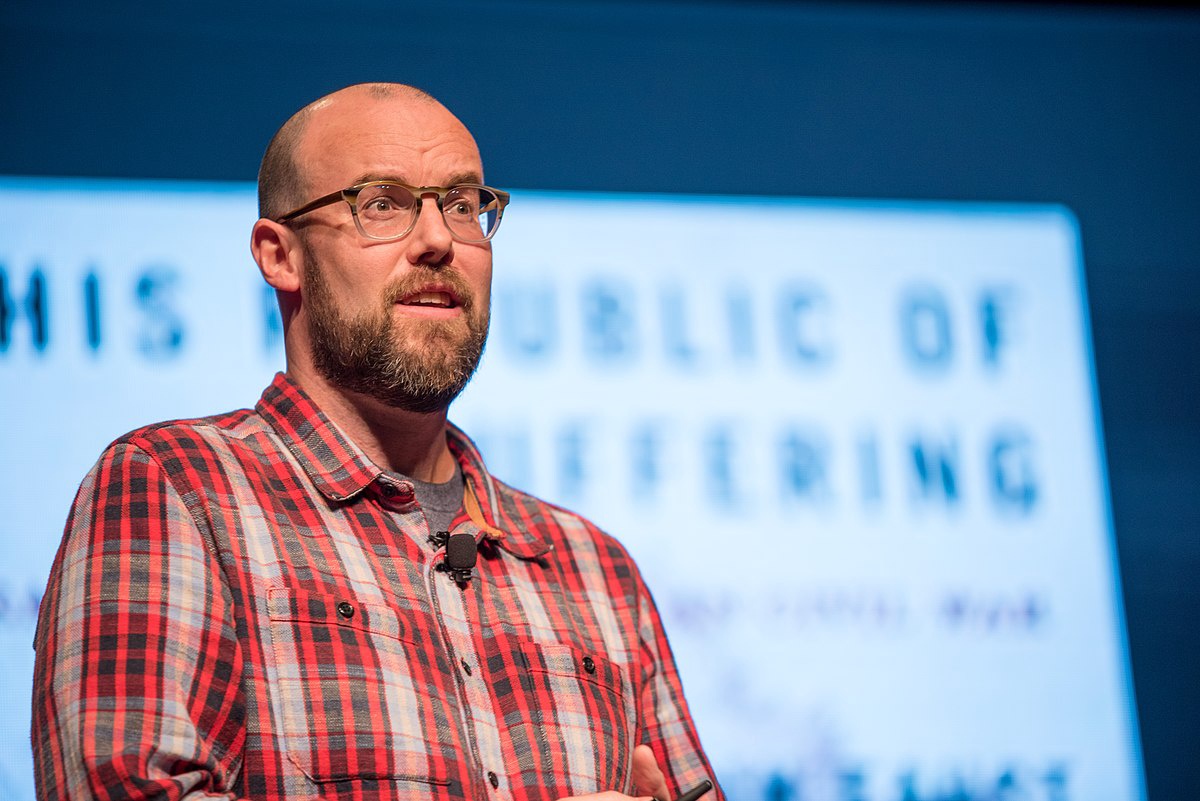
Michael Norton
ProfessorWikipedia
15
MENTIONS
11
EPISODES
11
PODCASTS
Search complete. 15 mentions across 11 episodes found for "Michael Norton".
Sep 13, 2026

ClintHOST
God is our provider.
ClintHOST
Hey, there's two psychologists, Elizabeth Dunn and Michael Norton.
ClintHOST
They spent years studying where happiness from money actually comes from.
ClintHOST
In one of their most cited studies, they gave people a small amount of money, five bucks, 10 bucks, 20 bucks, like small amounts of money.

Derrick KinneyGUEST
I talked about this in the book.
Derrick KinneyGUEST
A Harvard professor named Michael Norton did a couple of professors and a couple of experiments.
Derrick KinneyGUEST
And what he did was he went to a college and basically gave students a couple of different envelopes.
Derrick KinneyGUEST
And he basically said, okay, it's 10 o'clock now.

DylanHOST
And there's something else here worth knowing.
DylanHOST
A study by Michael Norton and Francesca Gino, published in the Journal of Personality and Social Psychology, in 2014, found that small rituals like this give people a sense of control during loss.
DylanHOST
Not control over what happened.
DylanHOST
Control over this one minute, this one threshold, this one sentence.

Jennifer BorgetHOST
Once you have money, does the way you spend it actually change how happy you are? Turns out, yes, just probably not in the way you'd expect.
Jennifer BorgetHOST
Michael Norton is a professor of business administration at Harvard Business School and co-author of Happy Money, The Science of Happier Spending.
Jennifer BorgetHOST
His research shows that spending on other people freely by choice, not out of obligation, tends to make us happier than spending on ourselves.
Jennifer BorgetHOST
It's a finding that holds across countries and income levels with amounts as small as $5.
27 MINS LATER
Michael NortonGUEST
So it's a very small change.
Michael NortonGUEST
It's just like an extra second in each purchase, but it can change your behavior in meaningful ways.
Jennifer BorgetHOST
That's Michael Norton, professor at Harvard Business School and co-author of Happy Money.
Jennifer BorgetHOST
So what do you think? Did that shift how you see your own spending? Because my biggest takeaway is this.

Grace BeverleyHOST
The basic finding, which wasn't a surprise to me, is that we value things more when we've had to work for them.
Grace BeverleyHOST
There's a famous later study called the IKEA Effect by Michael Norton at Harvard Business School, which found that people place significantly higher value on flat-pack furniture they'd built themselves, even when it was objectively worse than the preassembled version, just because they'd put the effort in.
Grace BeverleyHOST
Basically, it found that we are literally wired to find meaning in things that cost us something, particularly when that cost was an effort that we can't necessarily put a price to, which means that when everything is instant and effortless, our brains don't actually register it as valuable because that key signal of worth is missing.
Grace BeverleyHOST
But the piece of science I really want to spend time on because I think it's the most useful for actually doing something about this is the research on flow state.

Chuck StephensonNARRATOR
You're listening to a reading of articles and features from the Jamestown Post-Journal on the Niagara Frontier Radio Reading Service, where you can always listen to our live stream on our website, nfradioreading.org. Next up, the Article Mental Health Association welcomes the St. Susan Center Director.
Chuck StephensonNARRATOR
At the Mental Health Association in Chautauqua County's August Recovery Luncheon, Michael Norton, Executive Director, welcomed the return of volunteer and certified personal trainer Brian Mayo.
Chuck StephensonNARRATOR
All are welcome to Mayo's Boot Camp Fitness, classes that meets on Thursdays from 5 to 6 p.m. at the Jamestown Recovery Center.
Chuck StephensonNARRATOR
Norton also introduced Sherry Rowland, Executive Director of the St. Susan Center, that serves 4,900 meals last month.

Greg LeBlancHOST
The most recent book is called Leave the Lights On: How Joyful Decisions Can Save Our Species.
Greg LeBlancHOST
And the previous book, which you co-authored with Michael Norton, another guest on Unsiloed, is called Happy Money: The Science of Smarter Spending.
Greg LeBlancHOST
Welcome, Liz.
Elizabeth DunnGUEST
Oh, thanks so much for having me.

Jerry CunninghamHOST
It's called the IKEA effect.
Jerry CunninghamHOST
Researchers Michael Norton, Daniel Molkin, and Dan Ariely found that people place a much higher value on something that they helped create than on the exact same thing that someone else built for them.
Jerry CunninghamHOST
That's why when you spend four hours putting together an IKEA bookshelf, and you step back and you look at that one shelf that's upside down, and you still say, in kind of a pride voice, "Yep, that's a custom bookshelf." Your spouse, Mandy in my case, walks in, stares at it for about three seconds, and asks, "Is this supposed to lean like that?" You and me, we immediately get defensive because that crooked bookshelf isn't just furniture anymore.
Jerry CunninghamHOST
It's our crooked bookshelf.
1 more episode mentions Michael Norton.
Create an account to see the whole feed, search across every transcript, and follow the entities you care about.