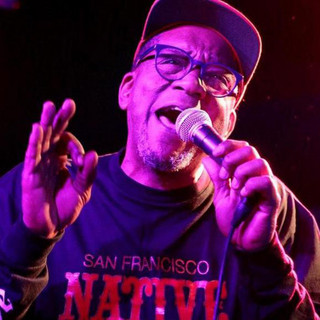
Michael Marshall
American singer-songwriter
15
APPEARANCES
5
PODCASTS
Aug 31, 2026

CecilHOST
And it was found that that wasn't the case.
Michael MarshallGUEST
So up here, not far, well, I actually worked for LJMU at one point, in fact.
Michael MarshallGUEST
And when there were question marks asked about whether there was plagiarism in that thesis, LJMU did an investigation and they cleared him.
CecilHOST
And now we're going to point out why you should have never had that job.

Michael MarshallGUEST
The Battle of Santiago is not the only World Cup game to earn itself a nickname.
Michael MarshallGUEST
In the 1982 World Cup in Spain, West Germany met their old pals Austria in the group stage.
Michael MarshallGUEST
And the way the World Cup groups work, each team in the group of four plays the other three teams in their group, and then the top two teams of those four go through the next round.
Michael MarshallGUEST
But what that can mean is, by the time the third match came around, teams already have a pretty good idea of how likely they are to qualify and what they need to do to secure it.
Michael MarshallGUEST
Now, these days, the four teams in a group play their last group game, all simultaneously kicking off at exactly the same time.
Michael MarshallGUEST
And the reason we do that now is a match now known as the disgrace of Gijon.

Michael MarshallGUEST
Well, if you give those dick bags even quarter of a chance, they're gonna tell you that not only is it possible that we are living in a computer simulation, but that it's outright likely.
Michael MarshallGUEST
Given that in a near infinite universe, it is statistically true that a civilization will arise that will be able to create a perfect simulation of life, and once that simulation is created, it's there forever.
Michael MarshallGUEST
The only argument that its proponents can muster is that you can't prove it isn't true, because every piece of disconfirmatory argument or logic can just be wrapped back into the, "Ah, but they designed the simulation to work that way," argument.
Michael MarshallGUEST
But the thing is, you could therefore make an identically strong case for the mutually exclusive ideas that the universe was, say, poofed into existence by a wizard, or imagined into being by a telepathic X-Man.
Michael MarshallGUEST
And then not long after she was married, she left her new husband, initially to go back to a family.
Michael MarshallGUEST
Though, according to the story she told when she was much older, she actually slipped away from her escorts and bribed the captain of a ship to take her to Constantinople, where she spent the next decade traveling the world.
Michael MarshallGUEST
alone with nobody who could verify any of the travels and keeping zero written account of any part of it.
Michael MarshallGUEST
Even historians of esotericism admit everything we know about this really genuinely pivotal time in her life is based on her, quote, largely uncorroborated accounts, which are marred by being, quote, occasionally conflicting in their chronology.
Noah LugeonsHOST
Yeah, no, it turns out all that globetrotting she was doing was actually just chasing down her furniture and running from squeaks.

Michael MarshallGUEST
To get your wireless plan for just 15 bucks a month, go to mintmobile.com/gam.
Michael MarshallGUEST
Upfront payment of $45 for three months, $90 for six months, or $180 for 12 months.
1 HR 3 MINS LATER
speaker_5UNKNOWN
the evil part.
Michael MarshallGUEST
So the News of the World would then soon be joined in Murdoch's News International Media empire by The Sun and also The Times and The Sunday Times, meaning that Murdoch owned the highest selling gutter rag tabloids of the week, but also the highest selling broadsheets of the week, and he'd use the latter to deflect criticism of his operation of the former.
Michael MarshallGUEST
How can he be a parasite in the media, cheapening public discourse and feeding an appetite for trash, when he was the proprietor of the most respected newspapers in the land? And meanwhile, the News of the World focused on more and more salacious stories, actually earning the nickname The News of the Screws due to its propensity for checkbook journalism.
Michael MarshallGUEST
You're paying surprisingly large fees to acquire stories of celebrity kiss and tells, and they even paid for the stories of key witnesses in notorious crimes like the Moors murders by mass murderers Myra Hindley and Ian Brady, or in 1999, the story of the pedophile pop star Gary Glitter.
15 MINS LATER
speaker_5UNKNOWN
[laughs]
Michael MarshallGUEST
Well, by the time he did go to prison, his employers at the News of the World had undergone their own moment of reckoning in what turned out to be the biggest media scandal in British history.
Michael MarshallGUEST
The News of the World had this reputation for breaking juicy, scandalous stories about people in the public eye, and there's only so many ways you can get those stories.
Michael MarshallGUEST
There's like a full stand to the side of the sta- Is it normal for a team like this to have such resources? Because they've got floodlights, a large stand, like lots of people in the stands watching them, but they had to recruit their coach by just seeing which men run around town regularly and see which one had the best running form.
19 MINS LATER
Michael MarshallGUEST
His analogy is if Jesus is Batman, and actually that's an accidentally good analogy because if Jesus was Batman, he'd also have the alter ego who's hugely more powerful, Bruce Wayne, which mean he'd have the power and resources to do all of the good in the world for the people who needed it, and he could be doing that if he wasn't obsessed with needing to be personally involved at an individual level.
Michael MarshallGUEST
... then there can be harmful mutations accumulating and any kind of, like, little, um, accident, any sort of little misfortune that befalls you can prove to be critical, whereas if there were loads of you, maybe you'd absorb it.
Michael MarshallGUEST
And so yeah, the fact that the neanderthals were in these small and isolated groups, that may well have been one of the factors that contributed to them disappearing, uh, 40,000 years ago.
Michael MarshallGUEST
So this is kind of, uh, you know, the, the end to a very long story, because the neanderthals had lived in Europe and Asia, in fact, for hundreds of thousands of years.
Michael MarshallGUEST
And previous studies of their DNA had sort of said, oh, yeah, something had happened to them genetically towards the end.
Michael MarshallGUEST
So we knew that the late neanderthals, and that's m- roughly those who lived after about 60,000 years ago, were quite genetically similar to each other, and they were quite different from those who came before.

Penny SarchetHOST
And so to understand this a bit more, the team have, um, married some of their genetic data to archaeological data, haven't they, to sort of map it onto what we know from, from what we've found?
speaker_5UNKNOWN
Why, though?
Michael MarshallGUEST
First of all, he was persuaded by a 1914 theory from a German scientist named Theodor Boveri, which pointed out that cancer cells, they often contained an abnormal number of chromosomes, which is a trait known as aneuploidy.
Michael MarshallGUEST
So Duesberg reasoned that while there were too many chromosomes in a cell, that cell would then start to divide uncontrollably, which would therefore cause cancer.
Michael MarshallGUEST
Now, according to other researchers, aneuploidy was actually a consequence of the cancer and not a cause of the cancer.
Michael MarshallGUEST
Essentially, once a cell gets hit by a mutation or a virus, it then can't reproduce healthily.
Michael MarshallGUEST
It becomes cancerous, and when you look at it, you start to see signs of aneuploidy.
6 MINS LATER
Michael MarshallGUEST
And look, before we get to some of the specific medical claims about the placebo effect, it is worth reflecting on why people are so willing to believe that doing nothing can do something if you just do nothing the right way.
Michael MarshallGUEST
And, and look, part of it stems from the spread of New Age culture from the late '60s onwards, with its focus on being able to affect reality with the power of thought.
Michael MarshallGUEST
But also, a solid chunk of the acceptance of the placebo effect is based on the scientific literature itself, particularly the work of one man, Henry Beecher.
Michael MarshallGUEST
Henry Beecher was an American medical doctor and anesthetist who wrote extensively about the placebo effect, including his 1955 paper, The Powerful Placebo, which almost every subsequent mention of the placebo effect in the medical literature cites.
Michael MarshallGUEST
And more specifically, people cite Beecher's inspiration to even start looking into the amazing impact of placebos, which stemmed from his time serving with the United States Army during the Second World War.
Michael MarshallGUEST
Beecher was working at a field hospital which ran out of morphine to use on the wounded soldiers, so out of desperation, he gave them injections of saltwater.
20 MINS LATER
speaker_12UNKNOWN
That's possible.

Tom CurryGUEST
And if there's anything that religious people of all faiths hate more than anything else, it's their same faith just in a different font.
Michael MarshallGUEST
Yeah, bringing up fonts around Catholics, it's still a bit of a sore spot ever since those Church of England heathens started worshiping God without dipping their fingers in the communal church washbowl first.
43 MINS LATER
Tom CurryGUEST
Guy Fawkes Day, or Bonfire Night, is still celebrated with fireworks, bonfires, and children running around with weird little Fawkes effigies and anonymous masks to merrily hurl them into a fire after the kids have begged their way into collecting some money.
Michael MarshallGUEST
It's, uh, "Remember, remember the fifth of November, Gunpowder Treason and plot, I see no reason why Gunpowder Treason should ever be forgot." And, like, Heath, I don't know if you remember, you went to dinner with Dr.
Michael MarshallGUEST
Mint Mobile is here to rescue you with premium wireless plans starting at 15 bucks a month.
Michael MarshallGUEST
All plans come with high-speed data and unlimited talk and text delivered on the nation's largest 5G network.
speaker_10PANELIST
But have you actually tried it?
Michael MarshallGUEST
So all that said, the first and most famous book, that came out in March 1968, and in November 1968, von Däniken celebrated its huge success by getting arrested again, this time for falsifying records at the hotel he was managing at the time, and also for faking credit references that he'd used in order to take out loans of more than $130,000 over the course of a decade.
Michael MarshallGUEST
And that was money that he claimed he used to fund the travel that was required to research the book, and that was an argument the court did not accept as sufficient for the fraud, especially when he tried to plead that he should have the charges annulled given he had no malicious intent when committing the fraud.
14 MINS LATER
Michael MarshallGUEST
And look, I wouldn't normally be this comfortable highlighting someone's oddly c- close working relationship with a former Nazi or accusing them of racism or pointing out just how many times in their life they were charged with fraud and how those times overlapped extremely neatly with the period in which they discovered that everything we thought we knew about history was false.
Michael MarshallGUEST
But I'm very happy to level those accusations against Von Däniken for a few reasons.
Michael MarshallGUEST
Firstly, he more than anyone else laid the groundwork in the second half of the 20th century for the dismissal of the achievements of non-white cultures.
Michael MarshallGUEST
And he did it hand-in-hand with somebody who'd been pretty committed to spending the first half of the 20th century doing something quite similar.

Penny SarchetHOST
So in short, if we were thinking about Stone Age people and sort of easy places to go by boat, the-- Malta would not be one of them.
Michael MarshallGUEST
No, I mean, it, it seems on the face of it, somewhere that would be really hard to get to, and it's generally been thought that particularly hunter-gatherers, you know, which is what humans were for most of our existence, just wouldn't have had the, the know-how to either build the craft or to navigate acr- across that sort of distance.
Michael MarshallGUEST
Uh, we know this 'cause a team of archaeologists led by Elena Sherry at the Max Planck Institute of Geoanthropology, excavated a sinkhole in northern Malta, and what they found there is abundant evidence of people being there.
Michael MarshallGUEST
So there were ash from hearths, there were stone tools, uh, butchered animal bones, like deer bones, and all this stuff is about eight and a half thousand years ago.
Michael MarshallGUEST
These were hunter-gatherers who had made this journey, we presume, from Sicily all the way to Malta.
Rowan HooperHOST
And w- you know, over the recent years, Mike, I gue- I guess we took them for granted a lot, but hunter-gatherers could do a lot more than we gave them credit for, right?
Michael MarshallGUEST
There are some hints from recent genetic studies of, like, earlier divergences and, like, earlier splits happening, particularly in, like, the, in the Homo sapiens population, there's evidence of, like, a split into two populations, like, one and a half million years ago.
Michael MarshallGUEST
Uh, and then those late, and later on, those populations sort of come back together and interbreed.
Michael MarshallGUEST
And we don't, we don't really know how to sort of fit all of that together.
Michael MarshallGUEST
But certainly, if you sort of take this at face value, then what it seems to imply is that there's a very long period when we're sort of missing a load of fossils.
Michael MarshallGUEST
You know, if, if the Homo sapiens group sort of splits from these other two groups 1.3 million years ago, that leaves basically a million years of missing fossils until we get to the oldest known Homo sapiens fossils 300,000 years ago in North Africa.
Michael MarshallGUEST
And we're not quite sure what, what, what to look for or what they would... or where, or where they would be.
Rowan HooperHOST
Um, or is that, you know, from your expert point of view, is that not entirely surprising, Mike?