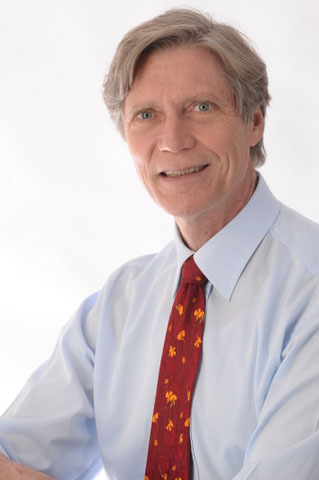
Michael Leiter
PsychologistWikipedia
14
MENTIONS
9
EPISODES
9
PODCASTS
Search complete. 14 mentions across 9 episodes found for "Michael Leiter".
Nov 3, 2026

Gabrielle KohlmeierHOST
Burnout researchers have pointed at this for a long time.
Gabrielle KohlmeierHOST
Christina Maslach and Michael Leiter, whose work is behind the most widely used burnout measure, describe workload as one of six drivers of burnout.
Gabrielle KohlmeierHOST
And right alongside it is control, whether you have a say in how the work gets done.
Gabrielle KohlmeierHOST
People can carry heavy loads when they choose them, and the loads mean something to them.

Danny BallanHOST
Very common, very natural, and slightly softer.
Danny BallanHOST
It's the phrase you use with a colleague when you don't want to sound dramatic.
Danny BallanHOST
I'm frazzled.
Danny BallanHOST
This one is wonderful.
7 MINS LATER
Danny BallanHOST
British speakers often say at the end of my tether, which is the same image, an animal tied to a post and it's gone as far as it can go.
Danny BallanHOST
Now here's my moment of uncertainty, and I'd like you to weigh in.
Danny BallanHOST
If a colleague asks how you are and you're genuinely struggling, which of these would you actually say? Depleted feels a bit too formal for a hallway.
Danny BallanHOST
At the end of my rope might sound alarming.

Jason van SchieHOST
I've actually got the two previous book signings in front of me as well.
Jason van SchieHOST
So you'd know Michael Leiter and Christina Maslach's book, The Burnout Challenge, and then we've got David Daniels' book here as well.
Jason van SchieHOST
So you're looking around.
Jason van SchieHOST
Do you have your signed copy of John? I do.

Cait DonovanGUEST
And the first breakthrough of the shame came when I read long-term burnout researchers.
Cait DonovanGUEST
They've been researching burnout since before I was born, Christina Moslock, Wilhelm Selfhilly, and Michael Leiter.
Cait DonovanGUEST
I was reading one of the things that they, one of the studies that they did, and it said, you know, 80% of your burnout is your workplace's fault.
Cait DonovanGUEST
That wasn't, it didn't allow me to eliminate shame completely because remember I worked for myself.

Jennifer LorenzGUEST
Um, I'm a big believer in Christina Maslach's work.
Jennifer LorenzGUEST
She's a burnout expert, has been working on that for 30 years, and her latest book, The Burnout Challenge by she and Michael Leiter, was really revelatory to me and spurred, uh, a whole lot of work that I do on the burnout s- on the burnout side.
Jennifer LorenzGUEST
Because what I was seeing with my clients is they get to a point of burnout for lots of different reasons, and when they get to that point, then there's this superfluous standard advice, take a vacation, work, work less, work out more, get more sleep.
Jennifer LorenzGUEST
These things that are... that everybody knows that we would be doing if we could, if we would, we could-

Wendi WilliamsHOST
This has been around.
Wendi WilliamsHOST
This has been around for a while.
Wendi WilliamsHOST
The six areas of work life that Maslach and Michael Leiters later work-- uh, raised, um, come from, from, again, Maslach's work and her, her, um, collaboration with Michael Leiters.
Wendi WilliamsHOST
Moral distress and the definition that I asked you to memorize comes from Andrew Jameton, again, developed in nineteen eighty-four, aga- a while ago, um, with moral residue from Webster and Bayliss in two thousand and the Crescendo Effect, uh, from Epstein and Hamrick in two thousand and nine.
Wendi WilliamsHOST
Moral injury has two founding lineages.

Jason KnightGUEST
Unfortunately, burnout and the conditions for burnout are probably not going away anytime soon.
Jason KnightGUEST
The Burnout Challenge by two incredibly talented organizational psychologists, Christina Maslach and Michael Leiter, transformed how I approached my own burnout because that book gave me the language that I needed to have more effective conversations with stakeholders who could impact my experience beyond me just saying, hey, I'm burned out.
Jason KnightGUEST
I don't feel well.
Jason KnightGUEST
What I believe is transformative about that book is that in that book, Maslach and Leiter create a framework that describes burnout as a mismatch between what a worker, regardless of the profession, needs and what the environment is providing.

Kate DonovanHOST
There was no information about whether or not the colors of the walls in our homes, uh, changes our stress levels.
Kate DonovanHOST
So when I started pulling apart mismatch, and the original mismatch sentence comes from the burnout researchers, the Christina Maslach, Wilhelm Schaufeli, and Michael Leiter.
Kate DonovanHOST
They wrote this sentence that basically sums up to, to this idea that the largest driver of burnout in a workplace is a mismatch between a person and their role, their job role.
Jess PettittGUEST
Hmm.

Danita CumminsHOST
So I want you to grab your cup of coffee, and let's get started.
Danita CumminsHOST
Last week, I had the opportunity to sit down with a group of CEOs and business leaders who are my friends and colleagues, and we got to talk about strategic planning for their company.
Danita CumminsHOST
We talked about strategy, goals, growth, where their company was going, what they wanted to accomplish, what they needed to change, what opportunities were in front of them, all the things we're supposed to talk about while we're building strategic plans.
Danita CumminsHOST
And it was a really good conversation, and we had some really good barbecue.