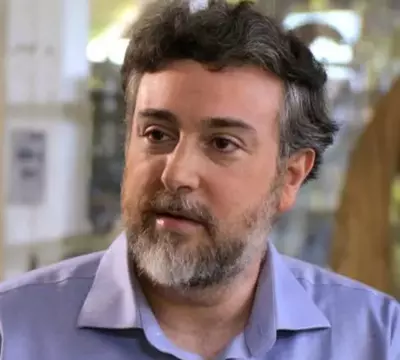
Michael Graziano
American scientist and novelistWikipedia
16
MENTIONS
10
EPISODES
10
PODCASTS
Search complete. 16 mentions across 10 episodes found for "Michael Graziano".
Oct 27, 2026

Judd RosenblattGUEST
Uh, psychopaths, in fact, also, uh, they, they defect in repeated games earlier than they should, even when it's not in their best interest, uh, unless they're reminded that something is in their best interest.
Judd RosenblattGUEST
Uh, and, uh, there's, there's also, uh, there, there's, there's a lot of relevant, interesting research that we're doing with regards to AI alignment here, actually, uh, One of our neglected approach visionaries is a guy named Michael Graziano, who has a theory of consciousness called attention schema theory.
Judd RosenblattGUEST
And I can explain it as well, but the reason I bring it up is because one of his larger theses here is that if AI is not conscious, it will be a psychopath.
Judd RosenblattGUEST
As you were talking about, if it's just trying to fulfill this specific goal that it's been RL to try to go achieve, then it'll psychopathically go try to achieve exactly that goal.
Judd RosenblattGUEST
And so interestingly, in attention schema theory, it is fairly similar.
Judd RosenblattGUEST
So you have your attention and then you have your imperfect model of your attention.
Judd RosenblattGUEST
And Michael Graziano posits that your imperfect model of your attention is which is the only thing you can ever engage with really ever anyway, is your consciousness.
Judd RosenblattGUEST
And interestingly, he identifies that this is in the same place in your brain as your model of other people's consciousness as well.

RoseHOST
So if the thing has pain and emotion or agency or whatever, then it has some properties of consciousness.
RoseHOST
You know, and Michael Graziano, my PhD advisor said, indicating that consciousness is attention, which is essentially, in a way, awareness.
RoseHOST
Awareness.
RoseHOST
And so, you know, if we're talking semantic difference, maybe it's less of...
34 MINS LATER
RoseHOST
We have a lot of differing perspectives.
RoseHOST
What would happen if AI were conscious and should AI be conscious? So we have groups of people highlighted by big voices in tech.
RoseHOST
For example, Mustafa Suleiman, CEO of Microsoft, versus, for example, Michael Graziano.
RoseHOST
my PhD advisor and a neuroscientist and psychologist of consciousness.

Sam HankinHOST
I've spent years trying to figure out what is the seed of human consciousness, starting with solipsism, which would be the easiest one, but is a dead end.
Sam HankinHOST
But I've interviewed David Chalmers, the hard problem, Michael Graziano, Philip Goff, John Parrington, Andy Clark, Raphael Eustace, a whole bunch of people.
Sam HankinHOST
And the thing that's interesting is each of them has their own understanding of human consciousness and they all think they're right.
Sam HankinHOST
And they're all slightly different, which puts me in a very perplexing situation.

Don HoffmanGUEST
It's going after a theory of the observer.
Don HoffmanGUEST
and also an understanding of consciousness but we can separate the two notions we can just talk about the notion of an observer as we need it in in science but i'm also interested in consciousness and and we can tie the two notions or separate them for whichever audience that we were talking to for those who don't believe in consciousness fine we need an observer in science and everybody has to agree on that we need the notion of an observer in science And for those who don't think that there's something called consciousness, so Michael Graziano and Dan Dennett, for example, said there's just the illusion of consciousness.
Don HoffmanGUEST
There's no real consciousness.
Don HoffmanGUEST
And that's fine.

Jay DyerHOST
He's sort of a Nostra Aetate proponent prior to Nostra Aetate.
Jay DyerHOST
And we saw that from the Michael Graziano book, Aaron into the Wilderness, which surprised me, although it shouldn't surprise me because it makes perfect sense why these Catholics involved in Cold War operations would be ecumenists.
Jay DyerHOST
But Donovan served as an official, an operative, and an agent of the Rockefeller Foundation.
Jay DyerHOST
He was a worker who was sent on missions to various places to supply food.

Neil McRobertHOST
I throw this recommendation back at them.
Neil McRobertHOST
It's a book that came out the same year, and it's by a char- a, a writer called Michael Graziano, and it's called-
Will MacleanGUEST
Uh-huh
Neil McRobertHOST
...

Jules ClancyHOST
So the story behind this idea is that hunger is in our head.
Jules ClancyHOST
I first came across this, my friend Daria Rose, she had an article from... a guy called Michael Graziano, who is a professor of psychology at Princeton University.
Jules ClancyHOST
And he has a link to the article at the end, but he had this really compelling argument that he got himself into this situation where he was overweight and he had this theory that there's more to losing weight than just calories in, calories out, and that there's actually a psychological component.
Jules ClancyHOST
to hunger and given he's a psychologist of course he wants to look at the brain and what he discovered was eight months later as he said and 50 pounds lighter he found that by not restricting and actually making sure he felt satisfied at every meal he was able to lose weight really easily so Let's talk about the hunger that lives in your brain and not in your stomach.
Jules ClancyHOST
So this idea is that there's a psychological component to hunger.
Jules ClancyHOST
And he goes into detail, Michael Graziano goes into detail about the exact part of the brain that we don't need to know that.
Jules ClancyHOST
But the thing that we need to take away from this is that hunger isn't just about the physical hunger, that there's a mental component to it as well.
Jules ClancyHOST
And so that's why just telling yourself, I'm going to just going to eat less is actually a trap because, and actually it backfires and why all diets don't work for the longterm because they're relying on this idea of restriction.

Donald HoffmanGUEST
N- now, there are some who will say, "Ah, well, that's because you're talking about conscious experiences, and there are no such thing as conscious experiences.
Donald HoffmanGUEST
We have the illusion of conscious experiences." So Michael Graziano and, and others have, have said this kind of thing.
Donald HoffmanGUEST
So there are no conscious experiences.
Donald HoffmanGUEST
There's just the illusion of the taste of mint.