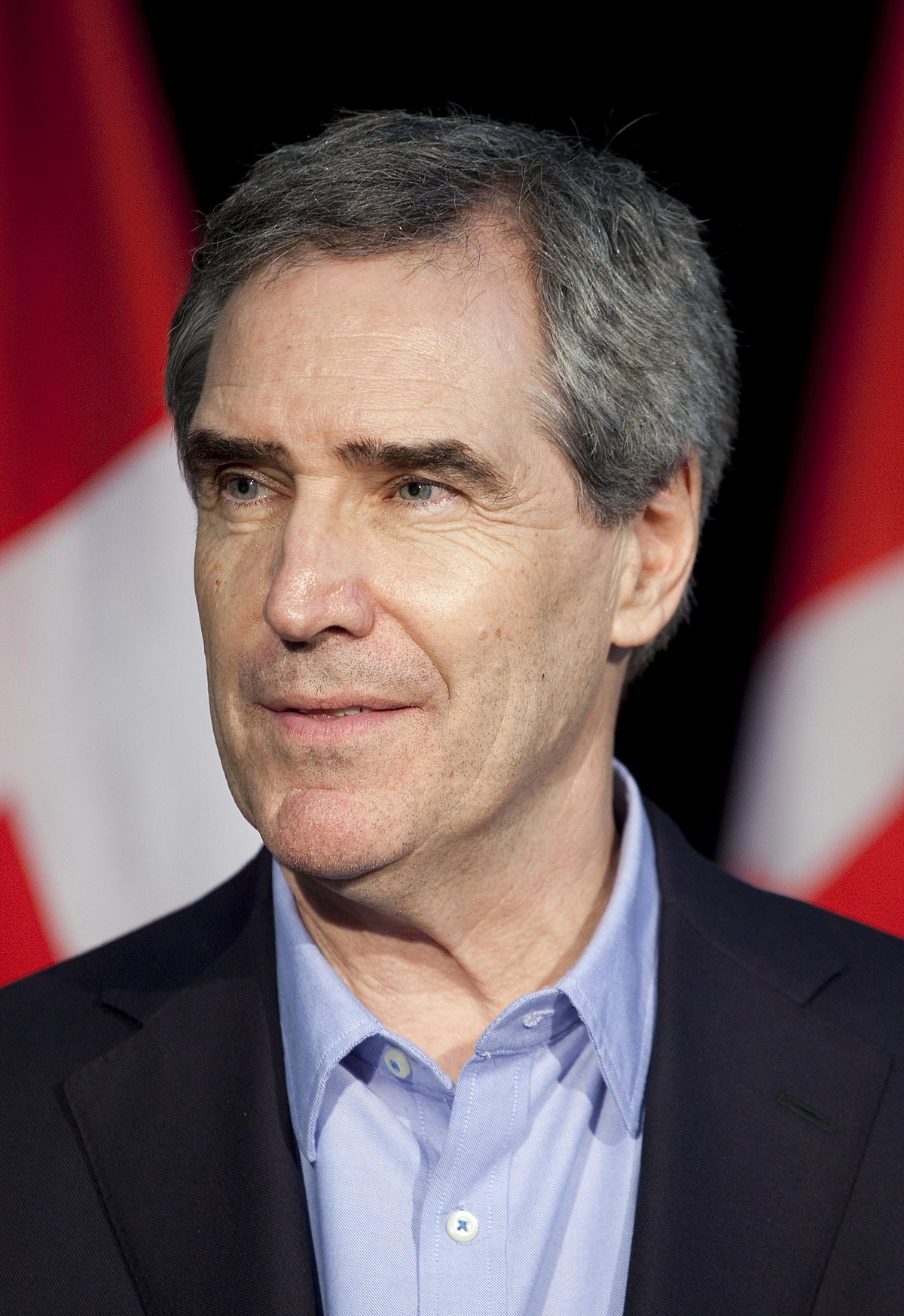
Michael Grant Ignatieff
Author and former Leader of the Official Opposition of Canada
11
APPEARANCES
10
PODCASTS
Oct 31, 2026


Michael IgnatieffGUEST
I think survival is a little dramatic and there may be listeners thinking, boy, he's had too much coffee this morning.
Michael IgnatieffGUEST
I do think, however, we're faced with an existential challenge, at least a challenge on both sides of the Atlantic.
Michael IgnatieffGUEST
It's having spent 80 years with Europe being essentially rebuilt by the Marshall Plan and protected by NATO and America's security guarantees, and suddenly feel all these dependencies are being weaponized has scared the hell out of Europe, given that Russia is currently attacking a sovereign state in Ukraine.
Michael IgnatieffGUEST
And it scared the hell out of Canada because, you know, 75, 80% of our exports go there.
Michael IgnatieffGUEST
And we've grown up simply taking that economic link for granted, and also the security protection we got.
9 MINS LATER

J.P. TaskerHOST
How would you describe Canada's place in the world at this moment in time as we grapple with the likes of President Trump?

speaker_2MODERATOR
Is illiberal democracy the most common and most successful form of government?
Michael IgnatieffGUEST
Well, I can't actually answer that question, but I can answer one right next to it.
Michael IgnatieffGUEST
Is there such a thing as a liberal democracy? And I would argue that it's a contradiction in terms.
Michael IgnatieffGUEST
A democracy either has checks and balances, free media, rule of law, the whole apparatus of power, controlling power to keep the people free, or it's not democracy at all.
10 MINS LATER

Darrell McClainHOST
www.patreon.com slash The Darrell McLean Show or go to Buzzsprouts and to The Darrell McLean Show and subscribe.

Michael IgnatieffGUEST
Well, I, I, I think first of all, Rune, it was the coming of age of my generation.
34 MINS LATER

Rune LykkebergHOST
What of, what of, what of the old UN do you see being revitalized in, in, in the next years? Uh, w- what would be the parts of the Wilsonian heritage that we could pick up and revitalize?


Michael IgnatieffGUEST
And the interesting thing about the stoic language is that all his male friends say, "Come on, Cicero, shape up.
Michael IgnatieffGUEST
What, what's your problem here?" He can't get over the loss of his daughter, and none of this stoic stuff, which is self-command, grin and bear it, reduce your expectations of life, self-control, resignation, all this stuff, none of it works when the fierce pain of losing his daughter occurs.
21 MINS LATER


Geraldine DoogueHOST
Why do you think Mark Carney wanted t- to communicate in that way to delegates at Davos? What did he need them to take away from his address?
Michael IgnatieffGUEST
Well, this is not a knock on Mark Carney, who, who I think is the right prime minister for my country right at the moment and I've known for a while, but he's a, he's a Davos guy.
Michael IgnatieffGUEST
He was essentially, as a medium-sized country, Canada's big in geography, but we're small, 40, 45 million people, so we need friends.
Geraldine DoogueHOST
"You cannot live within the lie of mutual benefit through integration when that integration becomes the source of your subordination." Now, you know, th- there was a tr- an awful truth in that, I'm afraid, um, that you can't just turn on a dime.

Quitterie HervouetVOICE_ACTOR
Do they contain enough good to compensate for their evils and make their preservation desirable?"
Michael IgnatieffGUEST
She's writing in the expectation that Nazism will be defeated and France will have the task of rebuilding itself after the defeat in 1940, and she's working off the back of the collapse of the Third Republic and the inability of the French political system to effectively resist Hitler and the inability of France to defend itself.
Michael IgnatieffGUEST
She's reflecting on one of the great catastrophes in French history, and she's asking herself, "What went wrong?" Like so many other people are asking what went wrong, and her answer is, "One of the things that poisoned us were political parties, and they poisoned us because they encouraged group think." They encouraged a political form of arguing about what is true and what is false, what is happening and what is not, that was propagandistic.
Michael IgnatieffGUEST
It, it said, "I'm gonna tell you what you ought to think," and since the real goal of all political parties is power, everything they said was oriented and driven by their desire for power.
16 MINS LATER
Nikola LuksicCORRESPONDENT
sympathy.If we were to beam her into the 21st century now, what do you think she would advise to those hoping to revitalize the health of their democracies?
Geraldine DoogueHOST
Why do you think Mark Carney wanted to communicate in that way to delegates at Davos? What did he need them to take away from his address?
Michael IgnatieffGUEST
Well, this is not a knock on Mark Carney, who I think is the right prime minister for my country right at the moment.
Michael IgnatieffGUEST
He was essentially, as a medium-sized country, Canada is big in geography, but we're small, 40, 45 million people.
11 MINS LATER
Geraldine DoogueHOST
The citizenry of Canada, how do you think they're sitting around and talking about all of this, Michael?


Steve PaikinHOST
which case, I want to hear Michael Ignatieff then on whether Hungary or the U.S., which concerns you more in terms of its authoritarianism?
Michael IgnatieffGUEST
I've been agreeing with Janice for 40 years, so why don't I continue? I would add a caveat again.
Michael IgnatieffGUEST
One of the most extraordinary phenomena that nobody is watching but is crucial is Victor Orban is facing the most serious electoral democratic challenge in the 15 years that he's been in power.
9 MINS LATER
Steve PaikinHOST
Do we suspect that the administration is going to use this assassination of Charlie Kirk to do its worst?

Michael IgnatieffGUEST
I think, Vashti, the question for Canada has always been, right back to Confederation, can we maintain an independent national state and have economic integration with the United States? John A.
Michael IgnatieffGUEST
Macdonald was doubtful, so he put protectionist tariffs around the Canadian economy to build it up.
Michael IgnatieffGUEST
Then we had an election in 1911, and Laurier and Borden fought out this question.
Michael IgnatieffGUEST
In 1988, some of us will remember that election when, you know, Mulroney and Turner squared off.

Vassy KapelosHOST
Do you think that Canadians have settled on the answer to the most existential question that you pose there? Or do you think that there needs to be a very public conversation or debate about what the answer is?

Michael IgnatieffGUEST
I think it can manage a lot of things, um, but it all takes time, and the critical political question is how much time Mark Carney has got.
Michael IgnatieffGUEST
But fixing the productive challenges that an economy faces is, you know, takes five, ten years.

Fareed ZakariaHOST
Until the midterms, maybe four years till Trump, uh, leaves office, uh, and we can get through this"?


Gideon RachmanHOST
But then suddenly he's talking about economic pressure in the context of making Canada the 51st state.
Michael IgnatieffGUEST
Yes, I think that Canadians are aware that we actually have a pretty tight border.
Michael IgnatieffGUEST
There are a couple of places where there are holes in Quebec where people squiggle in.
Michael IgnatieffGUEST
But anybody who's gone across the Canadian border knows it's a serious border with serious controls.
17 MINS LATER
Gideon RachmanHOST
Do you think they can revitalise before the election? And how much do they need to change the Trudeau formula?