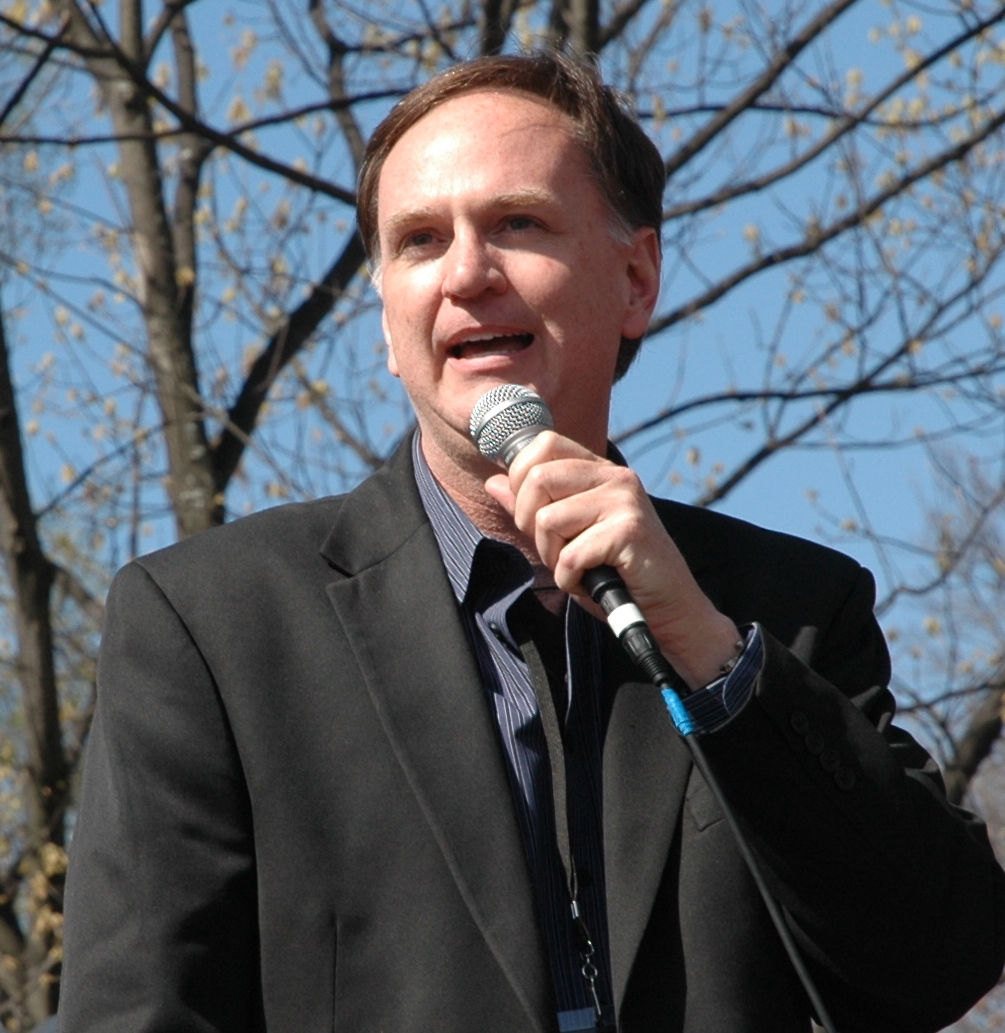
Michael Graham
7
APPEARANCES
7
PODCASTS
Aug 31, 2026

15:52

What should Christians take away from that? Like, should we all be users of DeepSeek R1 and stay away from the other models? What should we conclude as sort of normal Christians using LLMs from your benchmark project?
Michael GrahamGUEST
Yeah, definitely don't use deep seek because of the Chinese censorship piece.
Michael GrahamGUEST
And they're probably definitely feeding your data to the Chinese Communist Party.
Michael GrahamGUEST
I do think there's probably four big takeaways from the Christian benchmark report.
Michael GrahamGUEST
And that's basically the idea that as creatures, we're moving away from acquiring knowledge directly from primary sources to acquiring knowledge indirectly from from secondary sources, all mediated by generative AI.
38 MINS LATER
54:52
And what does a distinctively Christian hope for the future look like, distinct from the sort of techno-optimism you often see in AI circles?

speaker_5UNKNOWN
But Michael, what do you think about that new poll that we talked about, uh, University of New Hampshire?
Michael GrahamGUEST
They have a panel, group of, you know, 2,000 people who've agreed to be surveyed, that kind of thing.
Michael GrahamGUEST
So at NH Journal, our strategy is it's not great for location, but it's good for direction.
Michael GrahamGUEST
You know, it shows you, are, you know, are you, are you moving up or down? The, the mile markers aren't great, but you know if you're in the north or south lane.
Michael GrahamGUEST
And so the bad news for Democrats is that, uh, Representative Chris Papas, four-term representative, you know, viewed as a shoo-in to be the next US senator to replace Jeanne Shaheen, he's gone from 65% approval down to the 40s in this same panel.
speaker_5UNKNOWN
So when did the Republican super PAC get set up to help fund her campaign?

Michael GrahamGUEST
This is him at Club Matlock, you know, doling up the tapioca, and I was at the first house party he did in Nashua, and I left it, and all these reporters are going, "Oh my God, he's so good.
Michael GrahamGUEST
You think they're gonna n- they're gonna nominate that guy? Look how old he is." And that was in 2020.


Michael GrahamGUEST
Um, a- and then we were under DOT at the time, and then eventually in '74 Congress separated us out and said, "Wait, you know, all these regulatory agencies and transportation, uh, report up through the DOT, but yet we want a kind of an oversight agency-"
1 HR 5 MINS LATER
Michael GrahamGUEST
But when I sat down to brief a flight off a carrier, I always had just this little uneasy feeling in my gut.


Michael GrahamGUEST
... between large tech liking the AI trade and then, you know, feeling like, um, you know, as tensions ease in the Middle East, oils comes down, maybe the Fed gets a little more constructive, the other parts of the market are kinda performing well.
Mike SantoliHOST
There's a rational separation of relative winners and losers, but that also helps explain kind of the valuation compression, uh, as does, I guess, the market's unwillingness to sorta underwrite 24% earnings growth as if it's, you know, gonna be clear on from here multiple quarters, and that it's also free of these concerns that some of the groups driving it are over-earning.


Brian WoodruffHOST
So I think I'd love to just start out by just understanding how you became involved in medical legal research.
Michael GrahamGUEST
So yeah, like you'd mentioned, I've been a medical librarian meeting the information needs of a large medical group and healthcare system for 20 years.
Michael GrahamGUEST
And Eight years ago, I had an agency reach out to me completely out of the blue.
Michael GrahamGUEST
They have three attorneys, and they're really mired in a very medically complicated med mall case.
20 MINS LATER
Brian WoodruffHOST
Like I don't know if the nurses have, I guess I don't know exactly who else can have access to it.

Michael GrahamGUEST
I may have, I may have put, like, an X-ray or something [laughs] in there before.
Michael GrahamGUEST
SoUm, I have a pretty simple grid of how I think about just about everything, okay? So everything boils down to triangles for me, okay? And this comes from a theologian who used to be a professor at RTS Orlando named John Frame.
Michael GrahamGUEST
And John Frame has, has this thing called tri-perspectivalism, and here's how it works.
Michael GrahamGUEST
It's, you know, because humans are made in the image of God, and because God is triune, we reflect his triunity.
7 MINS LATER
Courtney DoctorHOST
But, but if we're gonna address some of the concerns too, because they are, there are concerns, um, do you, do you really identify job loss as something that should be one of our leading concerns? Or, or would you locate that somewhere else?