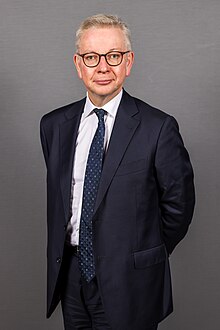
Michael Gove
Journalist and former Minister for Intergovernmental Relations of the United Kingdom
31
APPEARANCES
14
PODCASTS
Sep 13, 2026

Michael GoveGUEST
My point was that we needed to have an education system that was built around children.
Michael GoveGUEST
So there's a famous comment from an American teaching union leader when she said, "When children start paying union dues, then I'll listen to children." No, it was never said by any, uh, teaching union leader in the UK, and I don't think it would really have been thought by them.
Michael GoveGUEST
Everyone involved in education should be thinking, "How do we get the most out of children and provide them with opportunities?" And I wanted to work with teachers, and in fact, during the time that I was education secretary, there were a growing number of teachers who took to Twitter or who were, uh, writing blogs and Substacks or who were getting in touch with me and with others to explain how, uh, determined they were actually to raise the level of ambition.
Michael GoveGUEST
But the teaching unions saw what we were doing as an attack on the sort of model and relationship that they'd had in the past, which was one where there, there wasn't searching accountability for how well children were doing.
Michael GoveGUEST
They could blame poor performance on children's poverty and say, "What can you do with these kids?"
14 MINS LATER

Camilla TomineyHOST
And we still have that divide, and how can that bridge-- how can that gap ever be bridged, Michael?

Michael GoveGUEST
Uh, well, it's always terrifying when you know that Rod is going to, uh, write about anything that you're involved with or write about you directly.
Michael GoveGUEST
So I was lucky in one regard, in that, uh, Rod's approach towards or his views on education coincided broadly with my own, not perfectly, but broadly with my own.
Michael GoveGUEST
So he was actually quite supportive of some of the stuff that I was doing when I was education secretary.
Michael GoveGUEST
But there were other things for which I was responsible, including decisions when I was housing secretary over tenants' rights and so on, uh, where he absolutely flayed me alive.
Michael GoveGUEST
But the great thing was that with Rod, as Toby mentioned earlier, um, and as all our pieces bring out, there wasn't malice.
Michael GoveGUEST
There was a hatred of cant and hypocrisy, um, and there was an almost sort of visceral, um, as, as Freddy brings out, he's a, he was an emotional person, um, almost bilious reaction to what he considered to be a policy that was designed to please the chattering classes, but which actually caused pain, difficulty, or cost for others.
16 MINS LATER
Lara PrendergastHOST
D- I mean, did, did you ever think he went too far? Or did he ever think he went too far?

Michael GoveGUEST
Uh, well, it's always terrifying when you know that Rod is going to, uh, write about anything that you're involved with or write about you directly.
Michael GoveGUEST
So I was lucky in one regard, in that, uh, Rod's approach towards or his views on education coincided broadly with my own, not perfectly, but broadly with my own.
Michael GoveGUEST
So he was actually quite supportive of some of the stuff that I was doing when I was education secretary.
Michael GoveGUEST
But there were other things for which I was responsible, including decisions when I was housing secretary over tenants' rights and so on, uh, where he absolutely flayed me alive.
Michael GoveGUEST
But the great thing was that with Rod, as Toby mentioned earlier, um, and as all our pieces bring out, there wasn't malice.
Michael GoveGUEST
There was a hatred of cant and hypocrisy, um, and there was an almost sort of visceral, um, as, as Freddie brings out, he's a, he was an emotional person.
17 MINS LATER
Lara PrendergastHOST
D- I mean, did, did you ever think he went too far, or did he ever think he went too far?
Michael GoveGUEST
Arguments, especially political crusades, are often rooted in emotional responses, with the evidence assembled to justify a position which is heartfelt but often wrong-headed.
Michael GoveGUEST
So it is with the cry from politicians for more steps to be taken to safeguard the personal security of politicians.
Michael GoveGUEST
The killing of Anne Whittaker, like the deaths of Jo Cox and David Amess, has generated new demands for action and legislation to protect those in public life from risk and danger.
Michael GoveGUEST
The transparent nobility of Anne's life and the grotesque tragedy of her death make it emotionally difficult to resist the call for strengthened perimeters around our politicians.
Michael GoveGUEST
But someone has to stand out against a tide which, unless resisted, will lead to increased public expenditure, weaker protections for the majority of citizens, further impairment of our democracy, and the erosion of basic liberties.
28 MINS LATER
speaker_7ADVERTISER
Learn more at practicesafework.ca.

Michael GoveGUEST
Subscribe to The Spectator and get 12 weeks of Britain's most incisive politics coverage, unrivalled books and arts reviews, and so much more, all for just £12.
Michael GoveGUEST
Not only that, but we'll also send you a £20 Amazon gift card, absolutely free.
Michael GoveGUEST
reason david hume noted is a slave of the passions arguments especially political crusades are often rooted in emotional responses with the evidence assembled to justify a position which is heartfelt but often wrong-headed so it is with the cry from politicians for more steps to be taken to safeguard the personal security of politicians The killing of Anne Widdicombe, like the deaths of Joe Cox and David Amess, has generated new demands for action and legislation to protect those in public life from risk and danger.
Michael GoveGUEST
The transparent nobility of Anne's life and the grotesque tragedy of her death make it emotionally difficult to resist the call for strengthened perimeters around our politicians.
Michael GoveGUEST
But someone has to stand out against a tide which, unless resisted, will lead to increased public expenditure, weaker projections for the majority of citizens, further impairment of our democracy, and the erosion of basic liberties.


Michael GoveGUEST
So, uh, overall, the pressure on water companies through most of the time that I was in government, uh, was to keep bills low.
Michael GoveGUEST
Um, the last thing we need is to see water bills rise when there are other pressures.
Michael GoveGUEST
The water companies, understandably, but more importantly the regulator thought, "Fair enough, pretty clear.
Michael GoveGUEST
That's the priority." However, that meant both a lack of investment in dealing with, you know, the basics of infrastructure, leaks, because of the ancient nature of our water supply system, and also, as was subsequently shown, um, a lack of investment in effective, uh, uh, handling of wastewater and overflows.
Michael GoveGUEST
Um, I should say as a footnote that we are in a better position to know exactly what is happening in our water system as a result of some of the additional monitoring that was brought about by my colleague and predecessor at Defra, Richard Benyon.
45 MINS LATER

Michael GoveGUEST
So, uh, overall, the pressure on water companies through most of the time that I was in government, uh, was to keep bills low.
Michael GoveGUEST
Um, the last thing we need is to see water bills rise when there are other pressures.
Michael GoveGUEST
The water companies, understandably, but more importantly the regulator thought, fair enough, pretty clear.
Michael GoveGUEST
However, that meant both a lack of investment in dealing with, you know, the basics of infrastructure, leaks, because of the ancient nature of our water supply system, and also, as was subsequently shown, um, a lack of investment in effective, uh, uh, handling of wastewater and overflows.
45 MINS LATER


Nicholas MostynHOST
Why do you see that that was that sea change in the rate of adoption orders being made?
Michael GoveGUEST
made?I think that you, Sir James Munby, and others have observed that there were a variety of factors.
Michael GoveGUEST
So the more widespread availability of the contraceptive pill, the ability to, to terminate pregnancy, the, uh, wider availability of abortion, and of course, critically, alongside that, a change in social attitudes.
Michael GoveGUEST
So the removal or certainly the erasure of stigma that attached to a child being born who was illegitimate.
Michael GoveGUEST
All these things together made it easier for mothers who wanted to keep their child to do so, or to avoid falling into a position where they had to give birth to a child at a time or in a way that was not their wish.
Nicholas MostynHOST
Whereas now, adoption is used as a sort of adjunct to the care system, isn't it?

speaker_8UNKNOWN
[laughs]
Michael GoveGUEST
But because your presence here tonight demonstrates that you care about politics.
Michael GoveGUEST
You believe in democratic argument, and most of all, you believe in holding politicians like me to account.
Michael GoveGUEST
And it's because you believe in that, that I know that you will agree with this side of the motion.
Michael GoveGUEST
There is, however, one speaker I'd love to have here, one speaker who I know would prove that this side of the argument is wrong.
speaker_8UNKNOWN
[laughs]


Michael GoveGUEST
Well, the first thing is, you're right, and it's, it's an historic crime, but the killing of George Floyd was horrific.
Michael GoveGUEST
But the, uh, the reaction, uh, uh-Was, you know, a very, very odd thing in the UK because it was about American police brutality, not about police brutality in the UK.
Michael GoveGUEST
And ever since the Macpherson report, I think that the idea that, um, our police are institutionally racist, and that we need to have a, a sort of revolution to, um, make them more sensitive to these issues, not at all.
Michael GoveGUEST
In fact, as you point out, one of the dangers, and the Henry Novak case crystallizes this, is that the police leadership have been putting in place race action plans and other initiatives, well-intentioned, but what they've done is that they've had the effect of ensuring that the police in certain circumstances are more worried about being thought racist than they are about policing without fear or favor.
Michael GoveGUEST
And I think that Kemi Badenoch made a very good point in The Sunday Times yesterday when she said that we shouldn't blame the individual officers.
Michael GoveGUEST
There, there are gonna be mistakes, of course, under pressure at the scene of a crime.

Michael GoveGUEST
MakerfieldWhy doesn't Restore, and indeed the Conservatives, stand back and at least allow the person on the right that has got a hope of beating Burnham in this seat to storm ahead and try and win it for the sake of the future of the country? Because we know how this is gonna play out.
15 MINS LATER

Damien ThompsonHOST
... landscape in which there is literally no work in the conventional sense for people to do, might be.
Michael GoveGUEST
Well, you are absolutely right that the, the essence of the encyclical, its very name, is about human dignity, and human dignity involves both a, a recognition of limits, but also a, a recognition that it is through our actions that we are fully human.
Michael GoveGUEST
And one of the most important actions, one of the most important ways in which our relationships, and relationships are at the heart of Catholic social teaching, one of the most important ways in which they are manifest is through work.
Michael GoveGUEST
And the Pope quite rightly draws attention to the fact that in significant areas of our economy, jobs as we know them will disappear, that, uh, decisions over how people em- are employed, unless action is taken, will be concentrated in the hands of fewer and fewer, and he outlines an approach, a set of principles drawn from the church's teaching, which should shape how we respond.


Damian ThompsonHOST
... landscape in which there is literally no work in the conventional sense for people to do might be.
Michael GoveGUEST
Well, you are absolutely right that the, the essence of the Encyclical, its very name, is about human dignity, and human dignity involves both a, a recognition of limits, but also a, a recognition that it is through our actions that we are fully human.
Michael GoveGUEST
And one of the most important actions, one of the most important ways in which our relationships, and relationships are at the heart of Catholic social teaching, one of the most important ways in which they are manifest is through work.
Michael GoveGUEST
And the Pope quite rightly draws attention to the fact that in significant areas of our economy, jobs as we know them will disappear, that, uh, decisions over how people em- are employed, unless action is taken, will be concentrated in the hands of fewer and fewer, and he outlines an approach, a set of principles drawn from the church's teaching, which should shape how we respond.
Michael GoveGUEST
But you are right, what he does not do, uh, and what I think he would consider at this stage one step too far, is to sketch out exactly how society should be ordered economically in order to deal with this challenge.


Fiona BruceHOST
The question is, is modern politics making Britain ungovernable? As someone who had a kind of ringside seat at all that, what's your view?
Michael GoveGUEST
It's just been badly governed because we haven't had the leaders, uh, w- who are capable of imbuing, uh, government with a clarity of purpose, making their case with a quality of argument, and attending to detail.
Michael GoveGUEST
Being prime minister is a, uh, intense, grinding process that requires close attention to the work of change, and we have had leaders like that in the past.
Michael GoveGUEST
It used to be the case that Italy was a byword for political instability, with prime ministers changing with the seasons, but Giorgia Meloni has been a highly effective prime minister of Italy.
23 MINS LATER


Michael GoveGUEST
And I can understand exactly how David feels, because he'll be thinking about the people whom he represented and served.
Michael GoveGUEST
And he'll also be thinking inevitably, as anyone in politics will, about those who've stood on your side, on your team and who've lost.
Michael GoveGUEST
I don't know what the results will be in my own former constituency of Surrey.
speaker_4HOST
[clapping]
Michael GoveGUEST
Delighted to be on the same side as John, a distinguished broadcaster who's given his life to journalism, who is many, many things, but not a conservative.
Michael GoveGUEST
But the one thing that we do recognize is that those parts of British life which are plural, I hate the word inclusive, but sometimes there's no better term for it.
Michael GoveGUEST
And yes, the BBC may be biased, but Alison is wrong in thinking that it's suddenly lurched to the left.
Michael GoveGUEST
The BBC has always had a certain softish, leftish, liberal, metropolitan-ish flavor in a lot of areas.
28 MINS LATER


Michael GoveGUEST
One always goes for the eye-catchingSo it will be the naughty words, or it will be, "Ooh, uh, he said that Boris was a big, fat, blonde idiot," rather than necessarily some of the grittier detail that may illuminate how decisions are made.
Michael GoveGUEST
But generally, looking back on my own, you know, published WhatsApps and emails and all the rest of it, I think it gives a pretty fair view.
Michael GoveGUEST
So, you know, the, the, the criticisms that were made were merited, and it's a reflection of the fact that human beings under pressure, uh, weren't necessarily, you know, communicate in ways that are elegant or admirable.
15 MINS LATER
Michael GoveGUEST
... um, uh, poor old Alistair Darling found that the details, all our details on some HMRC disks had gone missing.
Michael GoveGUEST
But because Gordon Brown had moved from, in Vince Cable's memorable words, uh, Gordon Brown had moved from being a Stalin figure to Mr. Bean, then it became another crisis.

speaker_7UNKNOWN
[laughs]
Michael GoveGUEST
Um, I mean, we, we, we could have this show going on to Christmas next year and run through everything that went wrong during those 14 years.
Michael GoveGUEST
And of course, since I was a minister in the cabinet for 13 of those 14 years, I have to bear my share of responsibility.
18 MINS LATER
speaker_11UNKNOWN
[laughs]
Michael GoveGUEST
I mean, it's almost too obvious to say, but it's still necessary to say that some of the people who will have been on protests will be people who will be motivated by the, the most pure humanitarian motives, of course.
Michael GoveGUEST
But the marches that have taken place, the, uh, Palestine Solidarity Campaign marches that have taken place for two years now have attracted people who have been saying the most grotesque things, who've been making an equation between Israel, Jews, and Nazism, and whose rhetoric has been inflammatory, to put it mildly.
Michael GoveGUEST
You know, one of the inevitable questions that I have to ask is, it's entirely understandable that one might have wanted to go on one of those marches, but having seen the type of people who are organizing them and have seen, having seen the other people on those marches, would you really want to be associated with that? This Saturday, there is due to be, uh, an event in London, in Westminster, organized by Defend Our Jewries, which is essentially a front organization that supports Palestine Action, which is a proscribed group.
10 MINS LATER

Tim ShipmanGUEST
So, I think we... you know, the Tories were originally thinking of doing this in the autumn, but I think the, the opportunity to get Cleverly back on the pitch, you know, one of the star players, as, as one of the people close to the leader put it to me, uh, I think, uh, that was, uh... you know, they're gonna have a long and tricky summer and having a bit more, uh, weight and someone who's pretty decent on the media is, is, you know, is useful for them to have.
Michael GoveGUEST
And behind the scenes, uh, one of the concerns that a number of Conservatives expressed is that after, uh, the election defeat, the internal machinery of the Conservative Party needed an overhaul.
Michael GoveGUEST
So, it is significant that there's a new party chairman in Kevin Hollinrake, uh, who again is, uh, trusted very much by team Adnoch.
Michael GoveGUEST
Um, and it's also the case that his appointment follows on from the appointment of Mark McInnes, Lord McInnes, who was the architect of Ruth Davidson's electoral success in Scotland, um, and who brings a, uh, the experience of someone who knows about polling and, uh, grassroots campaigning to CCHQ.
Michael GoveGUEST
But there will be big expectations that both Lord McInnes and Kevin Hollinrake will deliver a machine when you've got elections next year, uh, in Scotland, in Wales, and across England, uh, which many people are turning into a test for the Tories.
Michael GoveGUEST
Can they see off the Reform challenge? And of course, just today, um, Nigel Farage has been at the Royal Welsh Show, uh, unveiling his latest, uh, defector, a Tory member of the, the Zenith, uh, who has, uh, joined Reform, uh, a- again, not a particularly, uh, no disrespect to her, high-profile figure, but it does show that Farage is continually, uh, uh, seeking to, uh, ensure that those elections can be seen as a test for the Tories and a Rubicon for him.
6 MINS LATER
Lucy DuneHOST
Um, but I sup- I was curious as to what you think about what we can surmise about Kemi's ba- uh, vision for the future and for the next couple of years from the current front bench that she's just selected.
Michael GoveGUEST
Well, she was elected as leader on the basis that it would be, um, uh, a marathon, a four-year exercise.
Michael GoveGUEST
And I think, uh, there is a, a direct impact on the credibility of the Chancellor and the government's economic strategy for the reasons that Tim outlines.
Michael GoveGUEST
So, it's perfectly possible, and indeed I share some of the concerns that, uh, Labour backbenchers have about the reforms.
Michael GoveGUEST
They were sold initially on the basis of a moral case that reform of welfare was required in order to get people back to work.
Michael GoveGUEST
But when DWP, uh, the, the department responsible for these reforms, put forward some changes before the Autumn Statement last time round, the Treasury said, "You're not cutting deeply enough." And so the moral case was replaced by a desire on the part of the Treasury to make savings to meet Rachel Reeves' fiscal rules.
Michael GoveGUEST
Fair enough you might say, but that means that the capacity to inspire or persuade Labour voters that this was all about getting people back into work rather than making savings, that case was damaged.
Michael GoveGUEST
Then you had at the time of the spending review an acknowledgement that Labour would go back on the winter fuel payment removal that was deemed necessary last year to, to meet the fiscal rules.
11 MINS LATER
Natasha FerozeHOST
We've actually invited John McDonnell on Spectator TV, he said, "No, thank you." We invited Jeremy Corbyn on, he said, "No, thank you." But I thought maybe they would agree with your piece.
Michael GoveGUEST
Well, I think that, um, for some of the, uh, people who've been Eurosceptic on the left, they've sort of, uh, either...
Michael GoveGUEST
One, some of them think, uh, you know, eh, the, the, the, these are old battles, there are new battles now to fight.
Michael GoveGUEST
Um, and I think the, the, the second thing is that there'll be some people on the Labour left, including those who have a sympathy with Brexit, uh, who will think, "I don't want to cause too much trouble for the leadership overall." But there's an interesting thing, and I think it's a generational thing, I think that what you do now have-...
6 MINS LATER
Michael GoveGUEST
Well, I feel William's pain, and I completely understand the anguish that lots of Conservatives feel about the position in which the party finds itself now.
Michael GoveGUEST
And, uh, I, I think that William is right to draw attention to the very difficult situation in which the party finds itself.
Michael GoveGUEST
But we first of all have to ask, would the situation be radically different under any other leader at the moment? What would be the means by which the Conservative Party, other than just being more energetic, could transform the political landscape? And here, I'm afraid I'm going to use the, uh, the weight of experience, uh, in order to try to persuade William, in whom I see much of my younger self, uh, to exercise just a little bit more strategic patience.
Michael GoveGUEST
So there've been moments in the past when the Conservative Party has been, uh, in even more difficult circumstances and even tougher straits.
Michael GoveGUEST
So when William Hague was leader, and of course, at the end of that, we didn't end up winning the election, but he laid some of the foundations for our eventual recovery.
14 MINS LATER
Michael GoveGUEST
... and so you can suddenly find yourself stuttering to try to come up with a reasonable answer to a, a, a question for which you weren't prepared.
Michael GoveGUEST
One other interviewer, now sadly no longer on the Today program, uh, whom I dreaded being interviewed by was Mishal Hussein because again she was calm, forensic, there wasn't, uh, any attempt to, uh, to be, uh, histrionic or performative about it, but she was, uh, persistent and deadly.

James HealeHOST
It was just the way in which you sort of had this, like, calmly delivered line with this sort of grim face was just beautiful.
Michael GoveGUEST
There's a Scottish comedian called Chic Murray who, uh, I think only older listeners will be familiar with, but Pat McFadden manages to, uh, have that, uh, that wonderful deadpan style when he offers a, uh, a witty line, which he does rarely and therefore they're all the more precious.
James HealeHOST
But how likely is it that his public sector reform agenda succeeds given the importance of the health service to voters?
Michael GoveGUEST
Well, his fate is, uh, absolutely central to, uh, the government's own destiny as well.
Michael GoveGUEST
We know that the three issues that matter most, come what may, are immigration, the cost of living, and the fate of the NHS.
Michael GoveGUEST
And certainly, it was the length and the number of people on waiting lists at the last election, consequence of COVID to an extent, uh, which was very difficult for the government, for which I was part.
Michael GoveGUEST
And the expectation in, uh, not just in Labour circles but amongst the population, is that a Labour government will invest in the NHS in order to make sure that those waiting lists are reduced, that more people are seen more quickly, and that we see a, uh, a restoration of confidence in the NHS.
Michael GoveGUEST
The high watermark of confidence in the NHS was at the end of the Blair, Brown years, and that followed both investment and reform.
Michael GoveGUEST
And some of the people who are influencing Wes Streeting now are people who were, uh, working with Blair and Brown at that time, Alan Milburn, the former Health Secretary, and a, a figure called Paul Corrigan, who has near legendary status within the Labour Party, uh, as a no-nonsense reformer.
6 MINS LATER
Scroll for more appearances