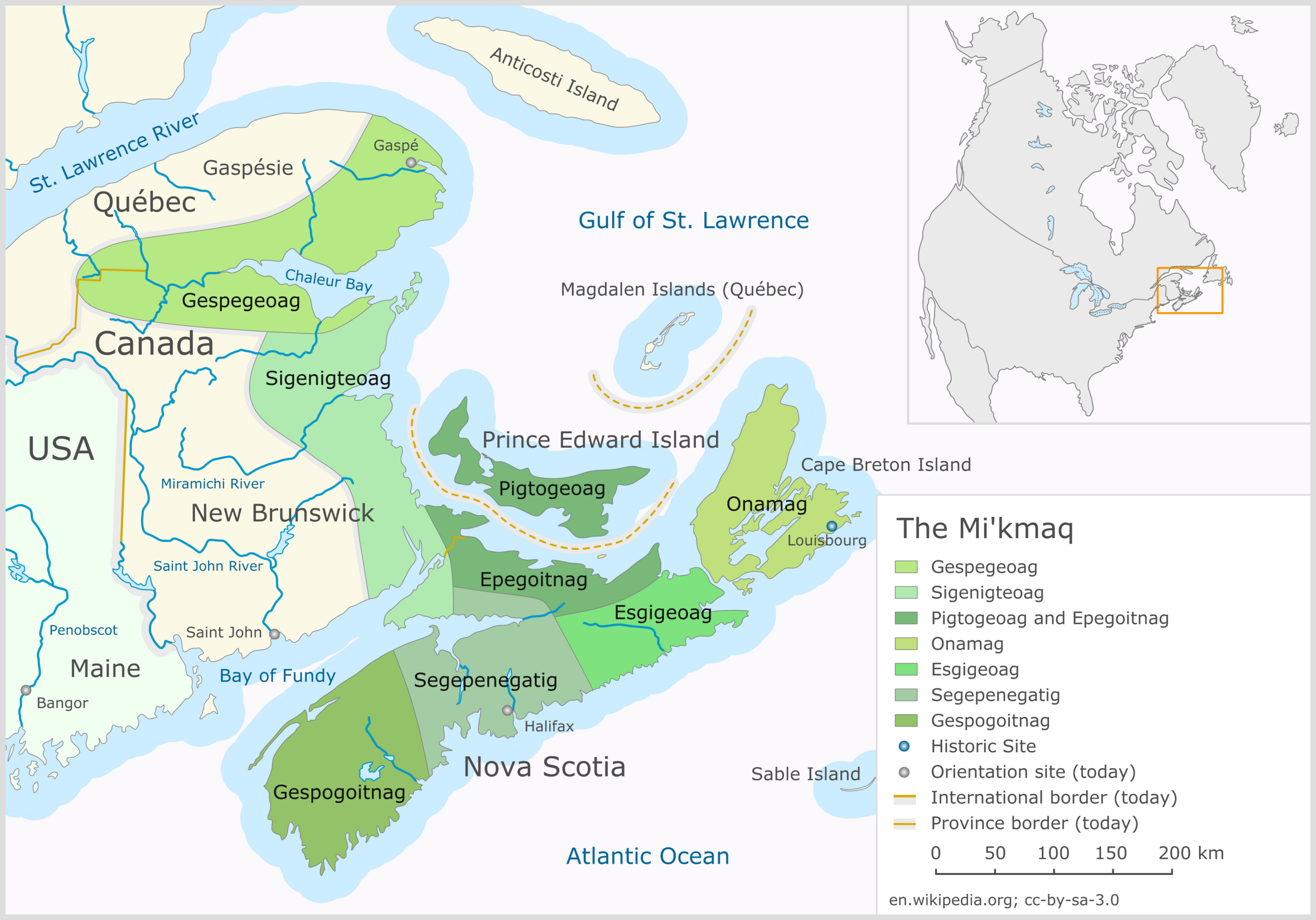
Miꞌkmaꞌki
26
MENTIONS
12
EPISODES
12
PODCASTS
Search complete. 26 mentions across 12 episodes found for "Miꞌkmaꞌki".
Oct 9, 2026

Duane JonesHOST
Welcome to a special series of Art Pays Me interviews with the winners of the 2025 Creative Nova Scotia Awards.
Duane JonesHOST
Presented annually by Arts Nova Scotia and the Creative Nova Scotia Leadership Council, these awards celebrate artistic excellence across Mi'kma'ki.
Duane JonesHOST
Award categories are as follows: Creative Community Impact, Prix Grand Prix, Established Artist, Emerging Artist, Black Artist, Indigenous Artist, and finally, the Portia White Prize that is given to a person who has made outstanding and significant contributions to Nova Scotia's creative community over a sustained career, much like the incredible woman that the award is named after.
Duane JonesHOST
The winner will also choose a protege, an emerging artist or cultural organization that will also receive funding.

Aaron ProsperGUEST
In terms of a, a two-way street, you have to think of it even in the context of, you know, how have, um, from the point of early settlers all through the 18th, 19th, and now 20, 21st century, you know, who has benefited from things like resources and resource extraction.
Aaron ProsperGUEST
And what you have, I suppose, in Mi'kma'ki, in academia we call this, like, a treaty denial period.
Aaron ProsperGUEST
Um, and for me, it, it's almost broken up into three different segments.
Aaron ProsperGUEST
You have every moment in time prior to the creation of the Indian Act, and that was created in 1876.

Sean DokeGUEST
And so I think it's really crucial that in order for people to understand why reconciliation is even needed, we have to understand where we come from, right? And there's a long history here, over 300 years between Mi'kmaq and non-Indigenous settlers.
Sean DokeGUEST
And so, you know, thinking about reconciliation, thinking about how Ebegwit and the wider Mi'kma'ki territory, which encompasses Atlantic Canada, is unceded territory.
Sean DokeGUEST
The Mi'kmaq had never ceded any of this territory.
Sean DokeGUEST
They never surrendered it.
6 MINS LATER
Sean DokeGUEST
I've worked with many historians, have consumed a lot of content in terms of Mi'kmaq history.
Sean DokeGUEST
I think when you go back, you have to view...
Sean DokeGUEST
Mi'kma'ki, this Atlantic region, Ebegwet, Prince Edward Island, all of this as the entry point to what became Canada.
Sean DokeGUEST
And so colonization happened here first.

Haydee AugustineGUEST
I feel it in the space between drumbeats, in my Mi'kmaw's voice when she sings, in the way water quiets something inside me.
Haydee AugustineGUEST
I'm a Mi'kmaw woman, born in Miꞌkmaꞌki, among the people of the dawn, where the sun touches the land first.
Haydee AugustineGUEST
There is something beautiful about belonging to a people named after the morning, when so much was done to keep us in the dark.
Haydee AugustineGUEST
Orange Shirt Day always brings me back to the children.

Amanda PetersGUEST
Because like I said, oral storytelling has been around since humans started communicating.
Amanda PetersGUEST
And in Mi'kma'ki, we have all those old stories are retold and retold and retold and retold.
Carol FitzgeraldHOST
And that's a culture that's built on storytelling.
Carol FitzgeraldHOST
So much of our culture today is not built on it.
9 MINS LATER
Amanda PetersGUEST
And I really get I get pleased because like the berry pickers is now in 27 languages, I think around the world.
Amanda PetersGUEST
And the birthing tree is at 11 right now.
Amanda PetersGUEST
So the world is learning that we're still here, that we're resilient and the Mi'kmaq are still here and we're still practicing our traditions and we're still alive and well and living in this land called Mi'kma'ki.
Amanda PetersGUEST
So yeah, I really love the idea that people are learning about the Mi'kmaq and hopefully things will like, ooh, I wonder in Google and learn all the good stuff.

LisaHOST
Wow.
Janelle NilesGUEST
I can do an hour easily in Mi'kma'ki.
Janelle NilesGUEST
Yes, because I like to talk.
Janelle NilesGUEST
I like to do crowd work.
Janelle NilesGUEST
I was just in Sabaik in the past Mi'kma'ki days, and I was able to perform an hour.
Janelle NilesGUEST
I incorporated a lot of youth.
Janelle NilesGUEST
into my act because last year i incorporated some of the youth but i had a long line of children who wanted to say a joke this year there was maybe two or three i'm like ah okay okay okay and but it was fun and um they they really like me coming down because i uh interact with the
LisaHOST
Yeah, we're all Wabanaki here.

Brian EngelmanHOST
Unify the country.
Carly McCannSOUNDBITE_SPEAKER
First, I acknowledge that we are in Mi'kma'ki, the traditional and unceded ancestral territory of the Mi'kmaq people.
Carly McCannSOUNDBITE_SPEAKER
I also recognize that African Nova Scotians are a distinct people whose histories, legacies, and contributions have enriched that part of Mi'kma'ki known as Nova Scotia for over 400 years.
Brian EngelmanHOST
This is a Saturday Night Live skit.
Brian EngelmanHOST
None of that other stuff was needed.

speaker_0NARRATOR
Welcome to United in Dance, a Dance Nova Scotia podcast.
speaker_0NARRATOR
we would like to acknowledge that this podcast was recorded in Mi'kma'ki, the ancestral and unceded territory of the Mi'kmaq people, which is covered by the Treaties of Peace and Friendship, which Mi'kmaq and Wailaskakwe people first signed with the British Crown in 1725.
speaker_1NARRATOR
Each episode Dance Nova Scotia brings you interesting and sometimes little-known facts about dance.
speaker_1NARRATOR
This episode we are proud to highlight the powerful positive effect of dance for those living with dementia.

Tiffany MorrisGUEST
My name is Tiffany Morris.
Tiffany MorrisGUEST
I am a horror writer, well, broadly speculative fiction writer and poetry from Chibuktuk, Mi'kma'ki.
Tiffany MorrisGUEST
I am Mi'kmaq myself, so that's First Nations people here.
Tiffany MorrisGUEST
um in atlantic canada also known as um i have recently released a sapphic cannibal novella called carnalis um that is a

Donna HattGUEST
Right.
Donna HattGUEST
And why, you may ask, why is it called Bijinawaska, and what does that actually mean? Well, For more than a millennia, members of our Mi'kmaq community here in Mi'kma'ki have been using this river as a means of transportation, as a source for food, as a place to recreate and enjoy and connect with Mother Nature, et cetera, for playing.
Stephanie BeaumontHOST
Right.
Donna HattGUEST
For us, when the park was being created 10 years ago, the town went out to the public to ask, what should this park be called? And more than 50 submissions were received.
Donna HattGUEST
But the one that really resonated was the one that honored this river's original name from our Mi'kmaq community.
Donna HattGUEST
And so the town felt at the time that this was the most appropriate way to acknowledge this special place, our place here in this area of Mi'kma'ki, etc.
Donna HattGUEST
And so that name was adopted.
Donna HattGUEST
And people do have...
2 more episodes mention Miꞌkmaꞌki.
Create an account to see the whole feed, search across every transcript, and follow the entities you care about.