Messier 13
11
MENTIONS
7
EPISODES
5
PODCASTS
Search complete. 11 mentions across 7 episodes found for "Messier 13".
Sep 11, 2026
Dark Forest Theory: Why Aliens Might Be Hiding From Us
S
18:28Simon WhistlerHOST
Any alien lifeform that intercepts this message will immediately learn how easily we can be bullied and destroyed by a superior being, and they will also learn our home address.
S
18:39Simon WhistlerHOST
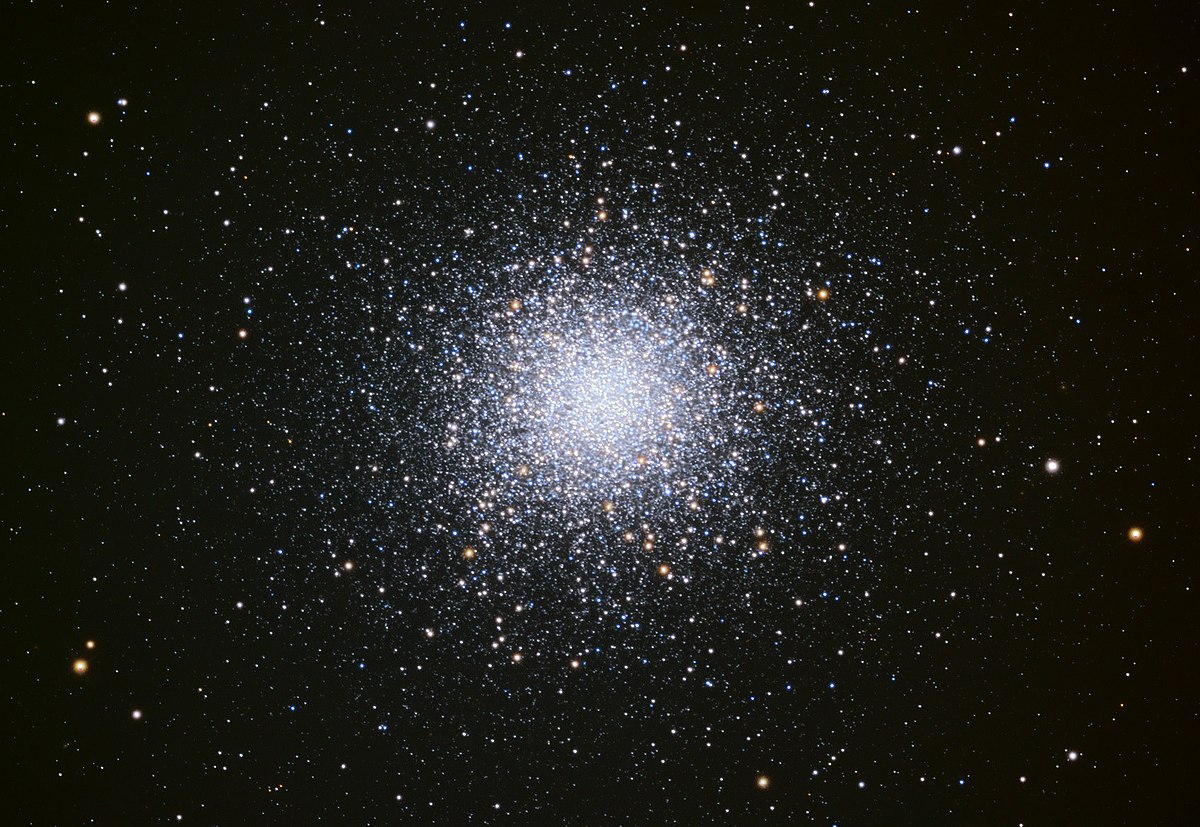
Which kind of feels like a recipe for disaster, doesn't it? The message is headed for the Messier 13 star cluster some 25,000 light years away, but anyone could intercept this message while it's en route.
S
18:50Simon WhistlerHOST
Since then, we've broadcast dozens of other messages too, emanating out from our tiny planet like proverbial lemmings leaping off a proverbial cliff.
S
19:00Simon WhistlerHOST
In 2008, NASA even broadcast a Beatles song, apparently entitled Across the Universe Into Space.
P
Unknown podcast
What_s Really Above And Below The Sun_
Sep 4 · 1 Mention
S
65:33speaker_4NARRATOR
They orbit high above and below the disk, some reaching distances of tens of thousands of light years from the galactic plane.
S
65:41speaker_4NARRATOR
The cluster, known as Messier 13, one of the most famous globular clusters visible from the northern hemisphere, orbits through the halo at a distance of roughly 22,000 light years from the Sun.
S
65:53speaker_4NARRATOR
These clusters are directly above and below the Sun in galactic terms, They are part of the vertical structure of the Milky Way, objects that exist in the directions the flat diagram never shows.
S
66:04speaker_4NARRATOR
When you look straight up from the galactic disk, you are looking into a sparse swarm of ancient star clusters orbiting the galaxy in three dimensions, tracing paths that carry them high above the disk, and then plunging them back through it.
P
Unknown podcast
The Dark Forest Theory_ Why One Signal to Aliens Could End Us
Sep 4 · 1 Mention
S
16:36speaker_0NARRATOR
The numbers 1 through 10, the atomic numbers of key elements in human DNA, a graphic of the double helix, a schematic of our solar system with Earth highlighted, and an image of the Arecibo dish itself.
S
16:50speaker_0NARRATOR
The message was aimed at Messier 13, a dense globular cluster of roughly 300,000 stars located approximately 22,000 light-years from Earth.
S
17:01speaker_0NARRATOR
Even travelling at the speed of light, the signal will not arrive at its destination for another 25 millennia.
S
17:08speaker_0NARRATOR
A reply, if one ever came, would not reach Earth for 50,000 years.
P
Unknown podcast
What_s Really Above And Below The Sun
Sep 1 · 1 Mention
S
74:02speaker_2NARRATOR
They orbit high above and below the disk, some reaching distances of tens of thousands of light years from the galactic plane.
S
74:09speaker_2NARRATOR
The cluster, known as Messier 13, one of the most famous globular clusters visible from the northern hemisphere, orbits through the halo at a distance of roughly 22,000 light years from the Sun.
S
74:22speaker_2NARRATOR
These clusters are directly above and below the Sun in galactic terms.
S
74:26speaker_2NARRATOR
They are part of the vertical structure of the Milky Way, objects that exist in the directions the flat diagram never shows.
Kingdom of the Heavens - Charles Nordmann
S
204:47speaker_1NARRATOR
And now we can follow Mr. Shapley in a more detailed study of one of the globular star clusters also situated in the constellation of Hercules.
S
204:57speaker_1NARRATOR
It is known by the name of Messier 13, which means that it is the 13th on the list of star clusters compiled by Messier.
S
205:05speaker_1NARRATOR
It is an object of impressive beauty, a swarm of silent and crowded celestial bees, each one of which is a gigantic sun.
S
205:14speaker_1NARRATOR
Many years ago I had occasion to photograph it with a long exposure by means of the wonderful 100 centimeter reflector of the Mudin Observatory.
S
205:51speaker_1NARRATOR
The great 60-inch telescope of the American Observatory of Mount Wilson lends itself even better than that of Mudin to the examination of this ant heap of stars.
S
206:01speaker_1NARRATOR
Thanks to its great focal length, which is 25 feet and can be lengthened to 80 feet, it easily separates the stellar images of the center of the mass.
S
206:12speaker_1NARRATOR
On a photograph of Messier 13 taken with this unique telescope, we can already find, after only two minutes exposure, more than a thousand stars.
S
206:22speaker_1NARRATOR
On prolonging the exposure to 11 hours, an image is obtained on which Professor Ritchie was able to count 30,000 stars brighter than the 21st magnitude.
P
Unknown podcast
The True Scale of the Universe_ How Small Is Earth Really_
Aug 24 · 1 Mention
K
48:39KeithNARRATOR
These are dense, spherical collections of hundreds of thousands or even millions of stars.
K
48:45KeithNARRATOR
M-13, also known as the Great Globular Cluster in Hercules Contains about three hundred thousand stars packed into a region about one hundred forty-five light-years across.
K
49:00KeithNARRATOR
At the center of M13, stars are so densely packed that if you lived on a planet there, your night sky would be filled with thousands of stars as bright as Venus appears in our sky.
K
49:13KeithNARRATOR
M13 is about twenty-two thousand two hundred light-years from Earth.
The Wow! Signal: 72 Seconds We Still Can’t Explain
R
12:41RenéHOST
Four, why was it never repeated? Some say a genuine extraterrestrial signal would be repeated, but we haven't done that ourself.
R
12:53RenéHOST
For instance, in 1974, the, uh, Arecibo Observatory sent a single message toward the globular cluster M13.
R
13:02RenéHOST
It was never repeated.
R
13:03RenéHOST
If somebody in the other side had caught it, uh, they now have their own Wow! signal.