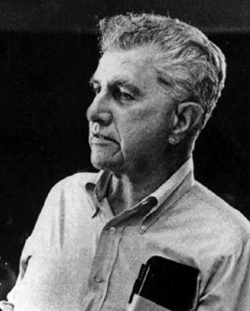
Merton Miller
American economistWikipedia
18
MENTIONS
11
EPISODES
11
PODCASTS
Search complete. 18 mentions across 11 episodes found for "Merton Miller".
Sep 8, 2026

Aswath DamodaranHOST
We've added a lot of stuff to that common sense, given you more tools, but at its core, it's common sense.
Aswath DamodaranHOST
You know how old corporate finance is as a discipline? It can be traced back to a paper written in 1958 by two professors at the University of Chicago then, Merton Miller and Franco Modigliani.
Aswath DamodaranHOST
1958.
Aswath DamodaranHOST
You say, what happened before 58? Corporate finance was this glorified accounting.

David BoothGUEST
The science we had in our hip pocket with, we had all these academics, they were helping us out.
David BoothGUEST
Gene Fama, Merton Miller, Myron Scholes, all of whom got Nobel prizes.
David BoothGUEST
And so the people, we had a lot of credibility because of the people we were associated with.
David BoothGUEST
But that isn't sufficient.

David BoothGUEST
And it was more than just Fama.
David BoothGUEST
It was... you know the finance faculty there were really amazing and being able to work with them present papers to them and then you know see their research as it was coming out it was incredibly stimulating and this was back before any of them had gotten nobel prize in in economics and you know a number of them went on to become nobel laureates In fact, other people I worked with way back then, I mean, three of them got Nobel Prizes, and then our mutual fund board has those in addition to the Merton Miller and Myron Scholes, and they've added Bob Merton and Doug Diamond over time, so...
David BoothGUEST
In total, we've worked with five Nobel laureates.
David BoothGUEST
And these are all young, bright people doing great research at the time.
David BoothGUEST
And, you know, if you could read the research, you could see it was explosive and incredibly important, which is eventually what I figured out was something that turned out to be good for me and good for the business school.
David BoothGUEST
I realized I probably was better off Trying to apply the ideas and letting people like Fama and Merton Miller and Myron Scholes develop the great ideas.
David BoothGUEST
And so that's how history unfolded.
David BoothGUEST
And these are still good friends.

David BoothGUEST
It was really the faculty and PhD students.
David BoothGUEST
So you got to know the faculty pretty well, and people like Merton Miller, you know, Nobel in 1990.
David BoothGUEST
Of course, Gene Foment, the guy I worked for, he got his in 2013.
David BoothGUEST
Myron Scholes was in and out, and he got his in 97.

David BoothGUEST
And none of them had it when we started the firm.
David BoothGUEST
And people like Merton Miller, he got his Nobel in 1990.
David BoothGUEST
Fama, we mentioned, 2013.
David BoothGUEST
Myron Scholes, 1997.

David BoothGUEST
And we brought in, to help us out, one of the first two people we talked to were Gene Fama, my mentor in the research side, and Mac McQuown, who by that time had left Wells as well.
David BoothGUEST
So that's how we—then we pulled together the other leading academics we worked with, you know, people like Merton Miller, who was, you know, a 1990 Nobel laureate, Myron Scholes, a 97, along with Fama.
Barry RitholtzHOST
So out of all of this, your first fund that you launched when DFA began in Brooklyn was a small cap or a micro cap
David BoothGUEST
strategy? Yeah, right.

David BoothGUEST
There's some pyrrhic victories in there [laughs] on the, on research.
David BoothGUEST
You know, I remember standing up there first time or two presenting a paper to people like Gene Fama and Merton Miller and Myron Scholes or whatever.
David BoothGUEST
And of course, they had a lot of, let's call it constructive feedback-
Benjamin FelixHOST
[laughs]
5 MINS LATER
David BoothGUEST
So I go, "I think I'm better off working for Gene Fama." When I came back the second year, I worked for Gene.
David BoothGUEST
[chuckles] So those people set it up, and Larry Fisher, he did some good research as well.
David BoothGUEST
Lowry also brought in, while he was an assistant dean, brought in, recruited Merton Miller, and Merton Miller was really Gene Fama's mentor.
David BoothGUEST
And so in some ways, Lowry had a huge impact on the University of Chicago.

Steve CurleyHOST
In this episode, David joins us as he approaches his 80th birthday, celebrates Dimensional's 45th anniversary, eclipsing more than $1 trillion in assets under management, and he prepares for the release of his new book, Stay Calm, which is a follow-on to his successful movie, Tune Out the Noise, which I highly recommend.
Steve CurleyHOST
We discuss the origins of evidence-based investing, the development of the CRISP database, lessons from the University of Chicago during the formative years of financial economics, and the founding of Dimensional alongside pioneering researchers and investing legends, Gene Fama, Merton Miller, and Myron Scholes.
Steve CurleyHOST
We also explore implementation, craftsmanship, trading flexibility, advisor-client alignment, market behavior, and speculation versus investing.
Steve CurleyHOST
We also discuss AI's future impact on innovation, David's reflections on wealth, family purpose, and what matters most after a lifetime in finance.
20 MINS LATER
David BoothGUEST
Fine, we have to have an independent board of directors.
David BoothGUEST
So we were on campus and we just walked across campus.
David BoothGUEST
First office we could walk into was Merton Miller.
David BoothGUEST
His office is right there by the front door.

Jason ParkerHOST
I wrote down some of the names.
Jason ParkerHOST
Your roommate was Roger Ibbotson, Merton Miller, Myron Scholes, Kenneth French.
Jason ParkerHOST
Well, Kenneth French, I don't know that he was there.
Jason ParkerHOST
He was a pop-up.
10 MINS LATER
David BoothGUEST
You can track the market.
David BoothGUEST
and so that's what the trust department so we have these two kind of competing groups within the and we both ended up leaving actually the trust department got sold a few times is now the cornerstone of BlackRock which is the largest money management firm you know with their iShares and that all comes traces back to Wells Fargo in 71 and then the other side you know the side I was working on eventually leads 10 years later to the creation of Dimensional.
David BoothGUEST
So we have in 81 then people like Myron and Gene Fama and Merton Miller and Mack McQuown and Rick Singfield and Roger Everson come huddle together and figure out the best way to really create a money management firm.
David BoothGUEST
And that's what created Dimensional.

David BoothGUEST
And my group got, eventually got shut down, and then we regrouped, uh, in '81 to start, uh, Dimensional, and with a lot of the same characters.
David BoothGUEST
You know, Myron Scholes, uh, unfortunately Fischer had passed away by then, and Merton Miller, Gene Fama, even Mac McQuown, who was my boss at Wells, all huddle together and try to figure out how to form a firm, sensible way to manage money.
Meb FaberHOST
So you guys launch this endeavor.
Meb FaberHOST
It's sort of like the Justice League of the finance and investing world.
1 more episode mentions Merton Miller.
Create an account to see the whole feed, search across every transcript, and follow the entities you care about.