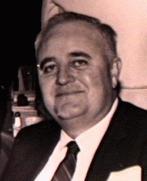
Mel Bradford
American authorWikipedia
20
MENTIONS
7
EPISODES
6
PODCASTS
Search complete. 20 mentions across 7 episodes found for "Mel Bradford".
Sep 9, 2026

Brian McClanahanHOST
Richard Weaver is one of them.
Brian McClanahanHOST
Mel Bradford's another.
Brian McClanahanHOST
These are good, rock-solid southerners that people should go out and read.
Brian McClanahanHOST
And then, of course, you get into things like literature, and you look at folkways, music, and other things.

Jon HarrisHOST
Because even the people that supposedly gave us these great ideas of equality and the participation in free markets and this individual liberty as framed by the Harry Jaffa side of things, which is not the same, I don't think, as the liberty that the founders really did conceive of, in my opinion.
Jon HarrisHOST
I think Mel Bradford's more right on this.
Jon HarrisHOST
But You can look up the again, the Jaffa Bradford debate in my book against the waves or or you can come to the Bradford Institute's conference that's coming up in November.
Jon HarrisHOST
I will be speaking about some of this.

Paul GottfriedGUEST
Now, the reason they want to get jobs in the National Endowment for Humanities would be very different, because there they just want patronage, which may have been one of the reasons they destroyed...
Paul GottfriedGUEST
Mel Bradford and people on the old right who were trying to take it over in the Reagan administration.
Paul GottfriedGUEST
That brings tremendous power to the neoconservatives in terms of being able to confer favors on their own followers and people who are willing to follow their party line.
Paul GottfriedGUEST
But in the case of the Department of Education, I think what they want is a more direct power in terms of being able to shape you know, shape public opinion about certain things.

Paul GottfriedGUEST
Now, the reason they want to get jobs in the National Endowment for Humanities would be very different, because there they just want patronage, which may have been one of the reasons they destroyed...
Paul GottfriedGUEST
Mel Bradford and people on the old right who were trying to take it over in the Reagan administration.
Paul GottfriedGUEST
That brings tremendous power to the neoconservatives in terms of being able to confer favors on their own followers and people who are willing to follow their party line.
Paul GottfriedGUEST
But in the case of the Department of Education, I think what they want is a more direct power in terms of being able to shape you know, shape public opinion about certain things.
Scott GreerGUEST
But I think over time, when conservatism adopted these ideas, you know, you could argue paleo-conservatives have won in a way, have never been more relevant.
Scott GreerGUEST
And you now see that all these old, forgotten paleo-conservative thinkers like Mel Bradford, Paul Gottfried, Sam Francis are now more popular than ever before.
Scott GreerGUEST
and especially more popular than when they were alive.
Scott GreerGUEST
Well, Paul Gottfried is obviously still alive.

Kim Phillips-FeinGUEST
And it's interesting because some of this is kind of overtly saying that the civil rights movement itself is raising expectations of Black Americans, in particular, in ways that are going to frustrate and disappoint them and lead to an intensification of racial hatred and antagonism.
Kim Phillips-FeinGUEST
So people like Mel Bradford, for example, writes a 1976 essay called "How Equality Is Misleading," and there's a whole kind of constellation of people, and part of what they start to turn to are ideas about meritocracy.
Kim Phillips-FeinGUEST
A-And they, they tie them to a set of ideas about race and IQ in particular.
Kim Phillips-FeinGUEST
And I will say that I found this part of the book probably the most depressing and difficult to write in certain ways because I think the ideas are both so ugly and so pernicious and also have had such lasting influence into our own moment that the know your enemy impulse to look at your opponent and write about them from the inside is much harder with this group of people.

Alan HarrelsonGUEST
But for that diaspora of people who still believe in the permanent things, in what's good and true and beautiful, the South still has a message that's worth listening to.
Alan HarrelsonGUEST
And so what we want to do with this new Bradford Institute that I've started is we want to help articulate that message.
Alan HarrelsonGUEST
It is a part of our program to articulate this message in a way that makes sense to young and old alike.
Alan HarrelsonGUEST
We don't want it to be divisive.
Steve CunninghamHOST
You have an elected one.
Steve CunninghamHOST
So how are you liking that one? I like them apples.
Steve CunninghamHOST
So, yeah, the Emmy Bradford Institute.
Steve CunninghamHOST
First off, for people that are listening, they may not know who he is.