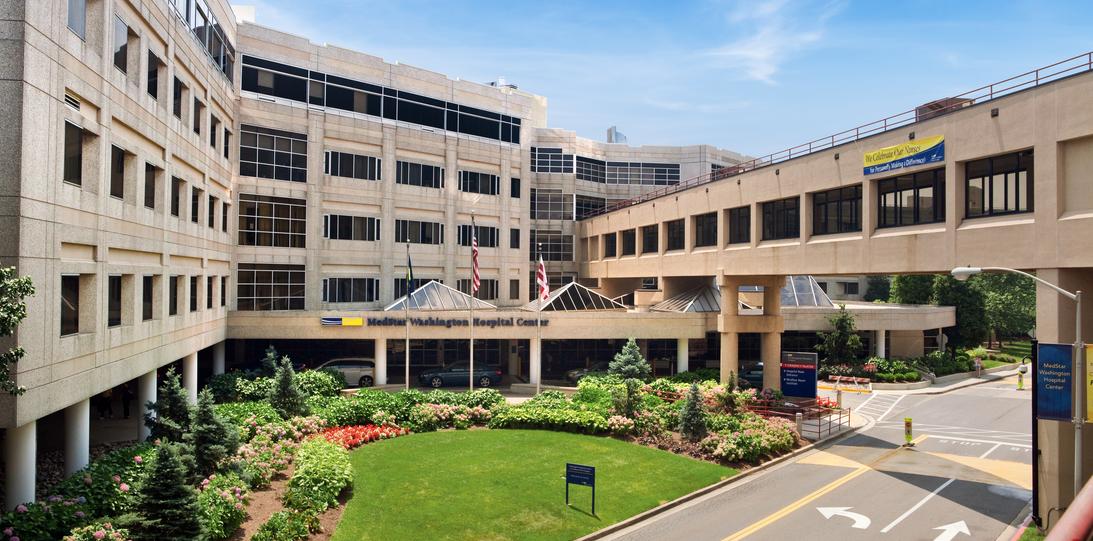
MedStar Washington Hospital Center
Hospital in Washington, D.C., United StatesWikipedia
17
MENTIONS
13
EPISODES
12
PODCASTS
Search complete. 17 mentions across 13 episodes found for "MedStar Washington Hospital Center".
Sep 29, 2026

James C. WittigGUEST
Well, then I decided to do my fellowship, and I did a specialized two-year fellowship in orthopedic oncology and sarcoma surgery with another pioneer in Washington, D.C.
James C. WittigGUEST
I worked at Washington Cancer Institute and the Washington Hospital Center, and we were sarcoma consultants to National Institutes of Health.
James C. WittigGUEST
I spent two years with Dr. Martin Malware, who brought limb-sparing surgery to the Washington, D.C. area many years ago.
James C. WittigGUEST
He actually trained under Dr. Markov, who was the innovator at Memorial Stone Kettering who I worked with at Columbia.

Brian CaseGUEST
We've been very successful.
Brian CaseGUEST
So again, we can offer this therapy at two locations within the MedStar Health System, D.C. at MedStar Washington Hospital Center and also in Maryland at MedStar Southern Maryland Hospital.
Brian CaseGUEST
And I'm confident to say that they've all been successful and we've all seen significant drops in blood pressure.
Brian CaseGUEST
Patients have been very satisfied with the procedure.
Debra SchindlerHOST
with medication and lifestyle changes.
Debra SchindlerHOST
To learn more about this treatment at MedStar Southern Maryland Hospital Center, call 301-877-5677.
Debra SchindlerHOST
And if Washington DC is closer, call 202-877-5975 and talk to the experts at MedStar Washington Hospital Center.

Dan PatrickHOST
So the helicopter support.
Brian BirdwellGUEST
Well, I would not fly in a helicopter until five o'clock that afternoon to the Washington Hospital Center, which houses the burn unit.
Brian BirdwellGUEST
I would be evacuated at it.
Brian BirdwellGUEST
And this is something that just, you know, the Lord's in charge of time and space.
Brian BirdwellGUEST
He had been brought over to Georgetown to begin the process of getting Georgetown emergency room from a level two to a level one trauma center.
Brian BirdwellGUEST
That's doctor training and equipment is what's the difference in the different levels of emergency room capability.
Brian BirdwellGUEST
Prior to his arrival at Georgetown, he had spent two years in a trauma fellowship working for Dr. Jordan and Dr. Jang at the Washington Hospital Center Burn Unit.
Brian BirdwellGUEST
And because when Flight 77 is crashed into the building, immediately after that, Vice President Cheney will turn to Secretary of Transportation Mineta and tell him to shut down all airspace in the United States.
Van-Khue TonHOST
And they are Dr. Erica Lees, transplant pulmonologist at the University of Washington and Dr. Marty Tam, transplant cardiologist at the University of Michigan, and Dr. David Chbilsky, a cardiac surgeon from Lucerne, Switzerland.
Van-Khue TonHOST
Special thanks as well to Max Fliegner, a general surgery resident at Georgetown University, Washington Hospital Center, for his technical support and editing of the podcast.
Van-Khue TonHOST
We are happy to welcome Dr. Hiroto Shimokawa of the Okayama Medical Center in Japan today.
Van-Khue TonHOST
will be discussing long-term outcomes of stent-based pulmonary angioplasty for isolated peripheral pulmonary artery stenosis, which appears in the September issue of GHLT.

Sarah MattGUEST
It was half clinical, half research.
Sarah MattGUEST
And during that time, I saw a lot of insane patient situations because being I was in D.C. at Washington Hospital Center, which is now MedStar.
Sarah MattGUEST
So being the nation's capital's burn center, we saw all sorts of interesting things, but also lots of terrible things, too.
Sarah MattGUEST
At the same time, I was helping them open a brand new burn research lab.

Geoff BennettHOST
What followed was a grueling recovery, one the News Hour chronicled at the time.
Geoff BennettHOST
Schaefer was rushed to the Walter Reed Medical Center initially, and then treated for months in the burn unit at the Washington Hospital Center.
Geoff BennettHOST
Schaefer suffered second and third degree burns over nearly 50% of his body, along with severe lung damage from smoke and jet fuel.
Geoff BennettHOST
He spent months in the hospital, much of that time on a ventilator, underwent nearly 20 operations and skin grafts, and twice came close to dying when his heart stopped.

Nick DanielGUEST
I'm a recent
Gavin ClarkGUEST
graduate, actually, from emergency medicine residency and now doing a sports medicine fellowship at Washington Hospital Center in Washington, D.C.
Patrick FinkHOST
Thank you both for joining us on the show.
Patrick FinkHOST
I came across your paper in Wilderness Environmental Medicine and had just recorded a podcast on heat illness.

Brian BirdwellGUEST
Prior to his assumption of duty there, because they're a level two trauma emergency room, And that level two is a standard based upon doctor training and equipment.
Brian BirdwellGUEST
And part of the reason for him being there was he'd spent two years in a trauma fellowship at the Washington Hospital Center, which is the main hospital complex here, 14 blocks north of the Capitol on North Capitol Street, was to get him trained up to get Georgetown to a level one.
Brian BirdwellGUEST
And Dr. Jordan and Dr. Jang are the directors at the Washington Hospital Center burn unit that for two years Dr. Williams will train under before he arrives at Georgetown.
Brian BirdwellGUEST
And because of the nature of the weapons used that day, Right after Flight 77 has crashed into the building, Vice President Cheney inside the White House Situation Room will tell Transportation Secretary Mineta to shut down all airspace in the United States.
Brian BirdwellGUEST
So there's no medevacs flying for many hours because of the calamity of what's happening with our airspace.

Nicholas GioniHOST
So these are learning points.
Nicholas GioniHOST
i usually have like an about me in here like who am i that kind of thing but i didn't this time sorry i'm assuming all you guys sort of know who i am to some degree but just as a sort of like a short intro i am nicholas gioni a pulmonary critical care doc currently in virginia in america because i think we have some international folks here so appreciate that i am in my fourth year of practice i went was in residency in Philadelphia, then did my fellowship in Washington, D.C. at Washington Hospital Center.
Nicholas GioniHOST
We sort of like have a pretty large vent curriculum that started there that's sort of branched out that includes a bunch of different fellowships throughout the country in America that we teach the ventilator to.
Nicholas GioniHOST
And sort of from that is where I sort of garner my expertise and have been teaching the vent sort of like on the socials for the past like almost like probably a year and a half because it's something that's obviously not taught that great.

Van QuaytonHOST
Our other co-host, Marty Tam, a transplant cardiologist at the University of Michigan, and David Chbilsky, surgical colleague in Lucerne, Switzerland, are taking care of patients and can't join us today.
Van QuaytonHOST
Many thanks, as usual, to Max Fliegner, a general surgery resident at Georgetown University Washington Hospital Center, for his technical support and editing of the podcast.
Van QuaytonHOST
This month, we're excited to focus on two studies about pulmonary vascular disease that appear in the September print issue of JHLT.
Van QuaytonHOST
Today, we welcome Dr. Paula Appenzeller, the first author of the manuscript entitled Long-Term Effects of Medical Therapy Pre and Post Pulmonary Endarterectomy, Insights from the UK Curate Registry.
3 more episodes mention MedStar Washington Hospital Center.
Create an account to see the whole feed, search across every transcript, and follow the entities you care about.